
Recent findings indicate that a comet airburst over North America nearly 13,000 years ago may have unleashed widespread devastation, contributing to the extinction of mammoths and mastodons as well as the disappearance of one of the continent's earliest human civilizations. Researchers uncovered evidence of intense heat and pressure, including shocked quartz, embedded within ancient sediment layers.
The research, published in PLOS One, bolsters support for the Younger Dryas impact hypothesis. This theory suggests that a fragmented comet exploded in Earth’s atmosphere, igniting fires, triggering a sudden cooling period, and potentially causing the rapid decline of the Clovis culture, a group renowned for their unique stone tool technology.
Under the guidance of geologist James Kennett from UC Santa Barbara, scientists analyzed samples from three significant sites: Murray Springs (Arizona), Blackwater Draw (New Mexico), and Arlington Canyon (California). Each site revealed a distinctive combination of debris indicative of a large-scale, high-velocity catastrophe.

Hidden Fire and Blast Evidence Within Prehistoric Sediments
All three locations shared a dark sediment layer known as the “black mat.” Rich in carbon, this layer corresponds with the onset of the Younger Dryas, a period marked by an abrupt return to colder climates following millennia of warming. The study details how this stratum contains high-energy impact materials such as nanodiamonds, metal fragments, and molten rock particles.
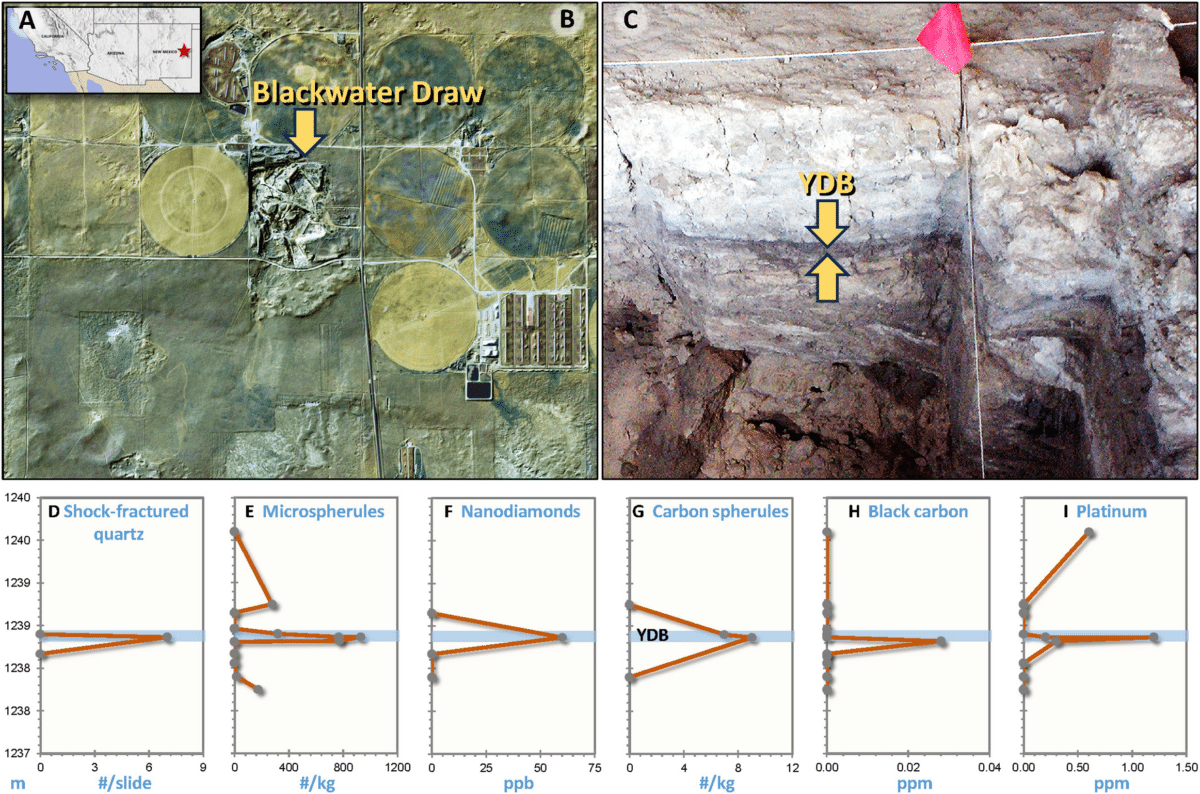
What intrigued the researchers most was the presence of shocked quartz, microscopic sand grains fractured under tremendous pressure. Advanced microscopy revealed melted veins within these grains, excluding volcanic or anthropogenic fires as sources. Instead, the evidence points to an enormous aerial explosion.
An Airburst Without a Crater
Usually, an event of this magnitude would leave behind an impact crater, but none has been found. The team explains this by proposing the comet detonated in the atmosphere before reaching the surface. This kind of airburst produced a fiery blast but left no crater, similar to the 1908 Tunguska event in Siberia, though on a more extensive scale.
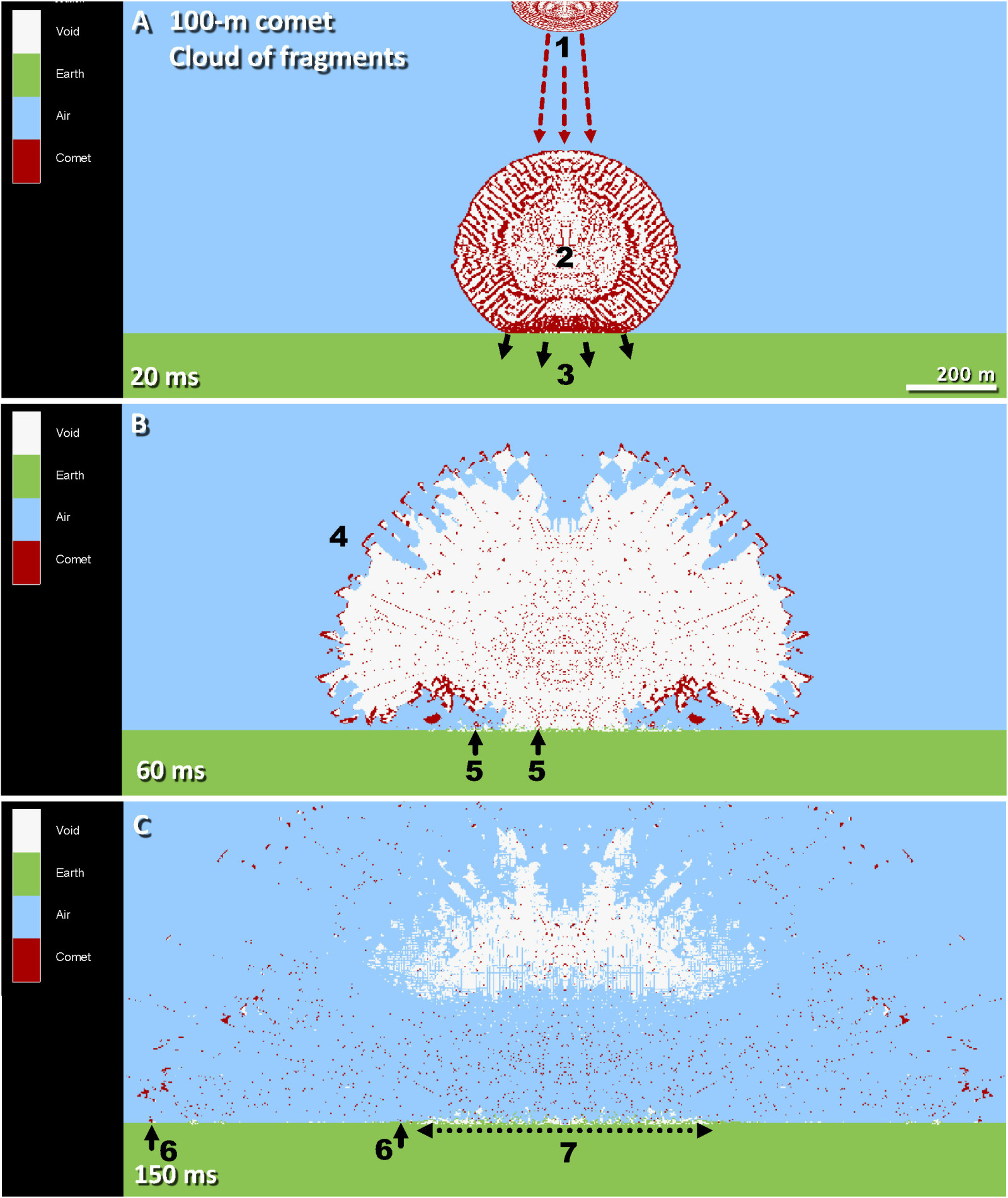
To validate this scenario, the researchers conducted computational models simulating various airburst conditions. The resulting shock pressures closely matched those found in the quartz specimens.
Mass Extinction and Cultural Collapse
Following the event, two major outcomes occurred simultaneously: the extinction of many large Ice Age animals across North America and the abrupt disappearance of the Clovis culture from archaeological records. The explosion likely sparked widespread wildfires, filling the atmosphere with smoke and particulate matter, which blocked sunlight, dropped temperatures, and decimated food resources.
Once prevalent throughout the continent, the Clovis people's distinctive stone tools abruptly vanish in the record just after this period, coinciding with the extinction timeline of mammoths, mastodons, and other megafauna long dominant in the region.
With these combined findings—shocked quartz, black mat layers, remnants of impact events, and the sudden disappearance of key species and cultures—the hypothesis of a cosmic explosion gains increasing credibility. As Kennett described it, the comet’s detonation marked a moment when “all hell broke loose.”
- Categories:
- Science








0 comments
Sign in to Comment