
Scientists at McMaster University in Canada have uncovered an important biological role of the protein MANF (Mesencephalic Astrocyte-derived Neurotrophic Factor). This breakthrough reveals how MANF supports cell health by correcting protein imbalances that drive both the aging process and neurodegenerative disorders such as Alzheimer’s and Parkinson’s disease. By promoting natural cellular repair mechanisms, MANF emerges as a promising candidate for therapies targeting age-associated illnesses.
Maintaining Protein Balance: The Cornerstone of Cellular Function
Proteins are vital for proper cell operations, yet their correct formation and regulation are critical. Protein homeostasis refers to the mechanisms cells use to control protein production, folding, and removal. When this system falters, misfolded proteins steadily accumulate, inducing cellular damage and stress.
Crucial aspects of protein homeostasis encompass:

- Proper folding: Guided by molecular chaperones to ensure protein efficacy.
- Breakdown processes: Degrading faulty proteins through the ubiquitin-proteasome pathway or lysosomal digestion.
- Clearing clumps: Autophagy eliminates protein aggregates that are harmful.
As these protective systems degrade over time, toxic aggregates build up, undermining cell performance and contributing to conditions like Alzheimer’s and Parkinson’s disease. MANF helps restore these cellular safeguards, supporting protein equilibrium.
How MANF Moderates Cellular Stress
The researchers demonstrated that MANF plays a vital role in diminishing endoplasmic reticulum (ER) stress, a key contributor to protein misfolding and aging. The ER manages protein production and folding but can become overwhelmed by misfolded proteins, triggering a halt in protein synthesis. Chronic ER stress can lead cells to undergo programmed death.
MANF contributes by:
- Augmenting protein removal: Boosting autophagy to clear defective proteins.
- Reestablishing cellular balance: Normalizing ER function to alleviate sustained stress.
- Safeguarding cells: Preventing damage from long-term cellular stress.
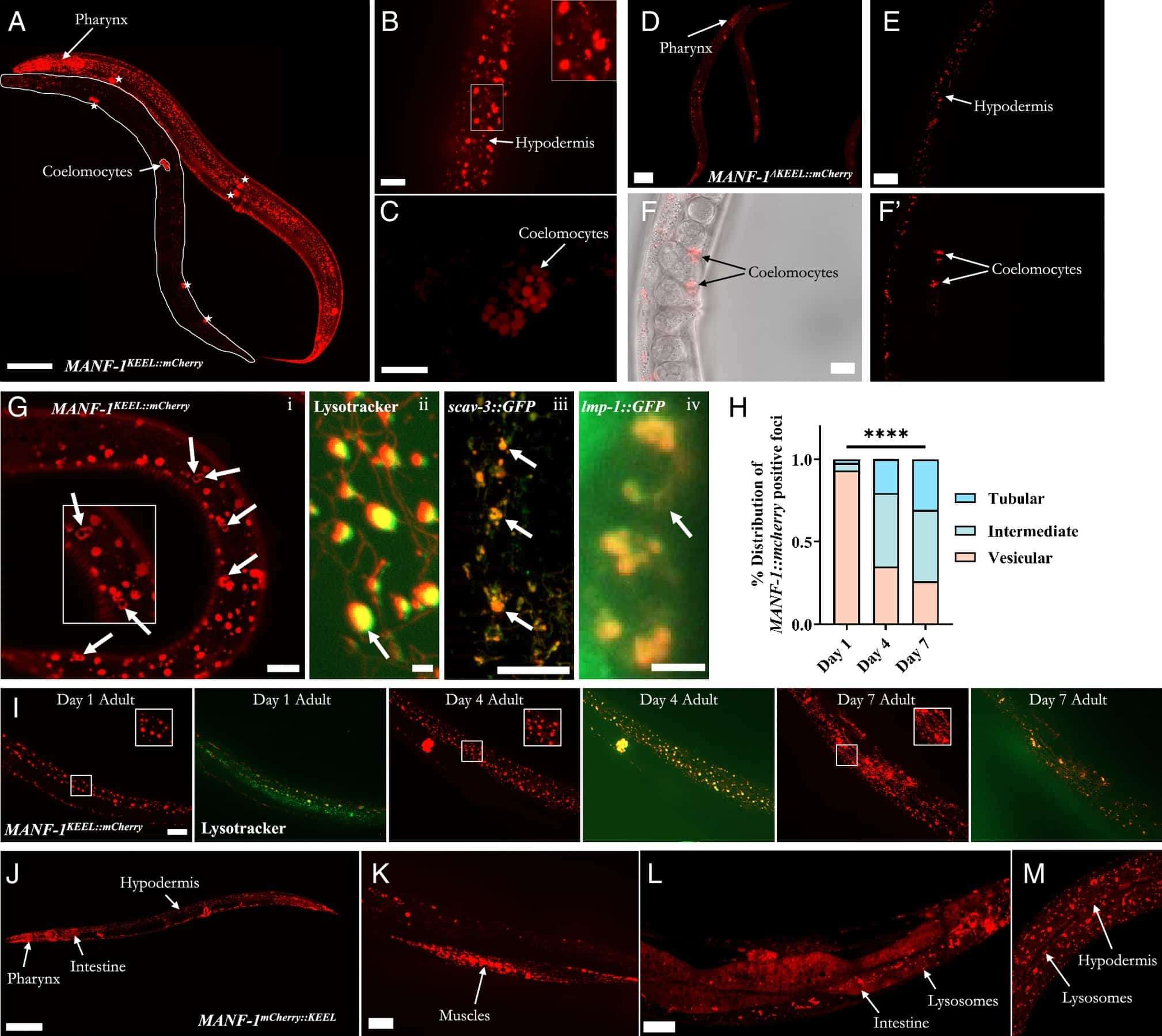
Experiments using Caenorhabditis elegans (C. elegans), a widely used aging model organism, revealed that elevated MANF levels reduced protein aggregates and extended lifespan by 20–25%, underscoring MANF’s role in enhancing cellular longevity.
Medical Implications and Future Benefits
By countering protein-related cellular stress, MANF opens promising pathways for therapies addressing neurodegenerative diseases. Potential medical applications include:
- Removal of toxic protein deposits: Tackling the accumulation linked to Alzheimer’s, Parkinson’s, and other disorders.
- Anti-aging strategies: Enhancing cell resilience to slow aging effects.
This positions MANF as a key focus for regenerative treatments that aim to restore, not just alleviate, cellular dysfunction.
Summary of Major Outcomes
Key outcomes from the study emphasize MANF’s effectiveness:
These findings pave the way for in-depth exploration of MANF’s therapeutic capabilities.
Steps Toward Clinical Application
Although promising results have been obtained in model organisms like C. elegans, advancing MANF into human medicine requires further research. Priority areas include:
- Testing in higher animals: Assessing safety and biological effects in mammalian systems.
- Clarifying molecular partners: Understanding MANF’s interactions with other proteins to enhance protection.
- Developing delivery technologies: Investigating gene therapy and nanocarriers for effective MANF administration.
These phases are crucial to translating MANF’s benefits safely and successfully into healthcare.











0 comments
Sign in to Comment