
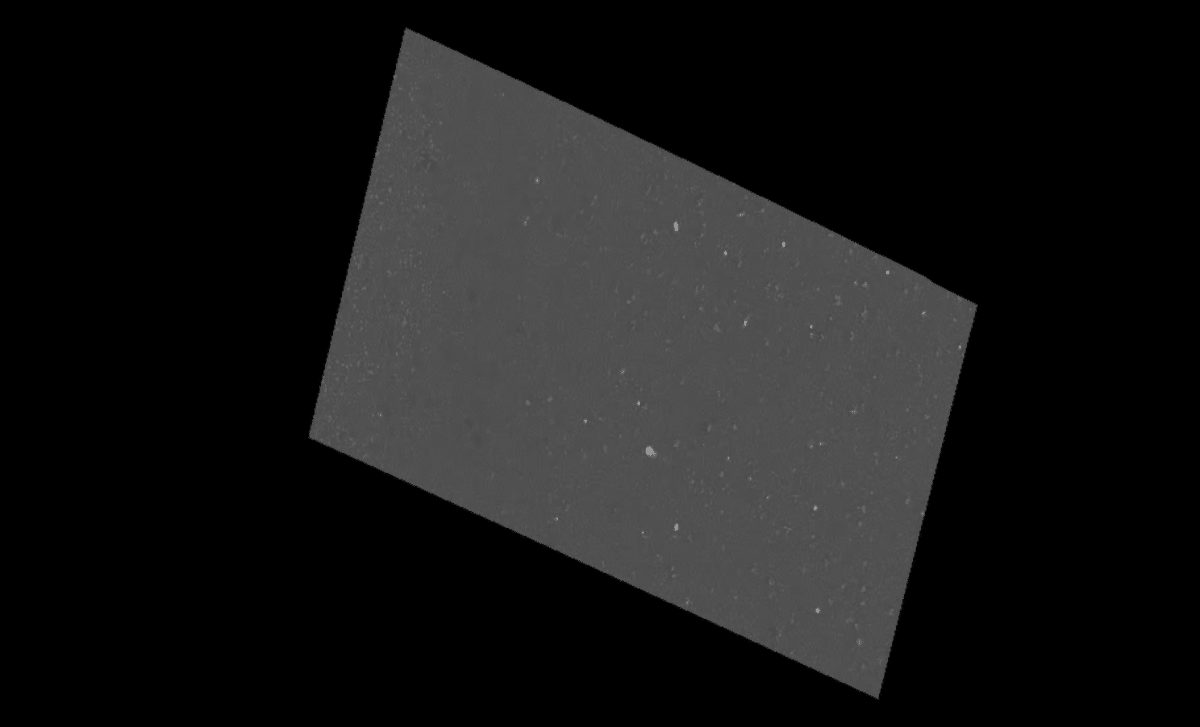
NASA’s Parker Solar Probe has achieved a remarkable milestone in astronomical research by observing the interstellar comet 3I/ATLAS, granting scientists a novel glimpse of an object journeying through our solar system from beyond. A recent NASA study, conducted between October 18 and November 5, 2025, utilized the spacecraft’s WISPR instrument to acquire these unparalleled observations, enhancing our comprehension of interstellar visitors.
Tracking Down Comet 3I/ATLAS:
In 2025, NASA’s Parker Solar Probe extended its usual solar-focused mission to image the extraordinary comet 3I/ATLAS, an interstellar wanderer originating outside the solar system. This effort to photograph the comet marked a pivotal moment, considering the object could not be spotted from Earth due to its closeness to the Sun. By capturing approximately ten images daily during the comet’s near-Sun passage, the probe furnished researchers with a critical observational window.
Located roughly 130 million miles from the Sun—just past Mars’ orbit—this comet was positioned within the inner solar system at the time of observation. These images offer crucial insights into the comet’s makeup, path, and dynamic behavior as it moved through our cosmic vicinity. NASA’s innovative application of the Parker Solar Probe signals a significant advancement in heliophysics and broadens the investigative scope of interstellar phenomena.

Capturing the Unseen: Parker Solar Probe’s Imaging Technique:
The key instrument responsible for this discovery was the WISPR (Wide-Field Imager for Solar Probe) aboard the Parker Solar Probe. Originally designed for imaging the Sun’s corona, WISPR was effectively repurposed to photograph the comet as it crossed the spacecraft’s field of observation. Positioned after its 25th solar pass, the probe’s vantage point enabled a clear line of sight to the comet traveling behind the Sun—something Earth-based telescopes could not achieve due to solar glare.
This unique perspective allowed the spacecraft to capture images from angles and at times inaccessible from Earth. Though these photos are still being refined to correct for factors like scattered sunlight and variable exposures, the preliminary data already reveals significant information about the comet’s activity during perihelion.
Why Comet 3I/ATLAS Matters:
Discovered by the ATLAS (Asteroid Terrestrial-impact Last Alert System) telescope in Chile in July 2025, comet 3I/ATLAS is the third confirmed interstellar object observed within our solar system, following ‘Oumuamua and Comet 2I/Borisov. Its extraterrestrial origin offers a rare research opportunity to study a body that has traversed light-years, possibly from another star system.
Comet 3I/ATLAS captivates researchers not only due to its distant origin but also because of its distinct behavior inside our solar system. Investigating these interstellar visitors sheds light on the chemical and physical conditions prevailing in other star systems, potentially revealing clues about the early formation of our own celestial neighborhood. This comet might provide crucial evidence of the interstellar medium’s diverse characteristics.
Obstacles in Observing a Sun-Proximate Comet:
Observing comet 3I/ATLAS proved difficult due to its close proximity to the Sun, which rendered it faint and concealed by solar brightness from Earth's viewpoint. However, the Parker Solar Probe’s unique trajectory allowed it to monitor the comet directly, overcoming viewing challenges faced by ground-based observatories.
The capability of the WISPR instrument to obtain detailed imagery under such conditions showcases NASA’s technological prowess. By combining the spacecraft’s rapid movement with strategic positioning, researchers captured the comet’s transitional brightness and activity near perihelion—vital data that will illuminate its composition and physical characteristics.
Synergistic Space Missions Expanding Our Understanding:
Parker Solar Probe was complemented in this endeavor by other NASA missions such as PUNCH (Polarimeter to Unify the Corona and Heliosphere), STEREO (Solar TErrestrial RElations Observatory), and SOHO (Solar and Heliospheric Observatory). These missions collectively tracked comet 3I/ATLAS, creating a comprehensive dataset to elucidate the comet’s path through our solar environment.
This collaborative approach emphasizes the interconnected nature of contemporary space research, where multiple spacecraft contribute diverse observational perspectives. As data continues to be analyzed, scientists will deepen their understanding of interstellar objects’ interactions with the Sun and solar wind, enhancing models of these elusive cosmic travelers.
- Categories:
- Nasa








0 comments
Sign in to Comment