
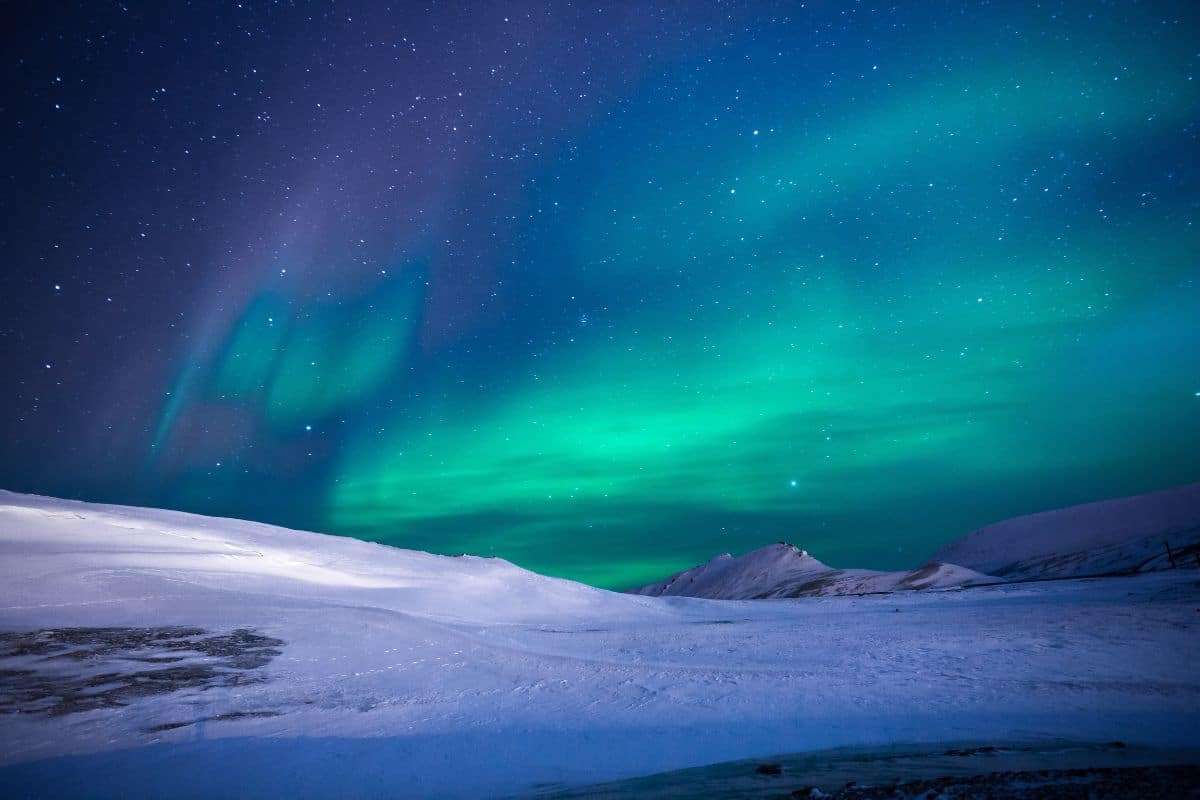
NASA is readying three sounding rockets for launch from the Poker Flat Research Range near Fairbanks, Alaska, aiming to challenge existing ideas about the behavior of Earth’s upper atmosphere.
Scheduled between March 24 and April 6, this experiment will delve into the mechanics behind auroral substorms and their influence on the thermosphere, with the goal of enhancing the accuracy of space weather predictions.
Testing New Concepts in Atmospheric Dynamics
Phys.org reports that the project, called AWESOME (Auroral Waves Excited by Substorm Onset Magnetic Events), will examine whether conventional theories centered on vertical convection are sufficient to explain atmospheric disruptions during auroral activity.
Mark Conde, a professor specializing in space physics at the University of Alaska Fairbanks (UAF), leads this investigation. He hypothesizes that acoustic-buoyancy waves, which propagate both upwards and sideways, might be the key agents behind these disturbances.
Such waves could mean that auroral effects reach much further across atmospheric layers than current models suggest.

Coordinated Launch of Three Rockets
The experimental setup includes launching two Terrier-Improved Malemute rockets followed by a single Black Brant XII rocket. The first two are about 42 feet long and will deploy roughly 15 minutes and one hour subsequent to the onset of an auroral substorm.
At altitudes ranging from 50 to 110 miles, these rockets will emit vibrant vapor tracers that reveal wind and wave activity visible to ground observers. The final launch involves a larger, 70-foot four-stage rocket releasing tracers at several intervals between 68 and 155 miles altitude.
Investigating Thermosphere Wave Behavior
This research focuses on how energy from auroral substorms affects the thermosphere, located approximately 50 to 350 miles above Earth’s surface. The thermosphere usually exhibits convective stability, limiting vertical air movements. However, substorms cause energy bursts from the magnetosphere that disturb this stability.
Previously, scientists attributed turbulence to vertical convection, but Conde proposes that acoustic-buoyancy waves might play a dominant role. If true, this would expand the known extent of auroral impact and could revolutionize our interpretation and modeling of space weather phenomena.
Visualizing Atmospheric Waves Through Vapor Trails
The visible outcomes of this mission may create stunning displays across northern Alaska. Rockets will release pink, blue, and white vapor tracers that linger in the upper atmosphere for 10 to 20 minutes, enabling ground-based cameras to record atmospheric motions.
Optimal launch windows coincide with dawn, when elevated layers remain sunlit while the ground lies in darkness. These tracers not only offer spectacular sights but are also critical for tracking wave propagation in the atmosphere.
Implications for Technology and Space Weather
Understanding the true processes driving auroral mixing in the thermosphere is crucial for maintaining satellite function, ensuring GPS reliability, and planning space missions effectively.
As reliance on space-based technologies grows, refining atmospheric models shifts from a theoretical challenge to an essential practical need.
Conde expects the results will enhance forecasting precision and streamline prediction models. “I believe our experiment will lead to a simpler and more accurate method of space weather prediction,” he explained.
- Categories:
- Nasa




0 comments
Sign in to Comment