
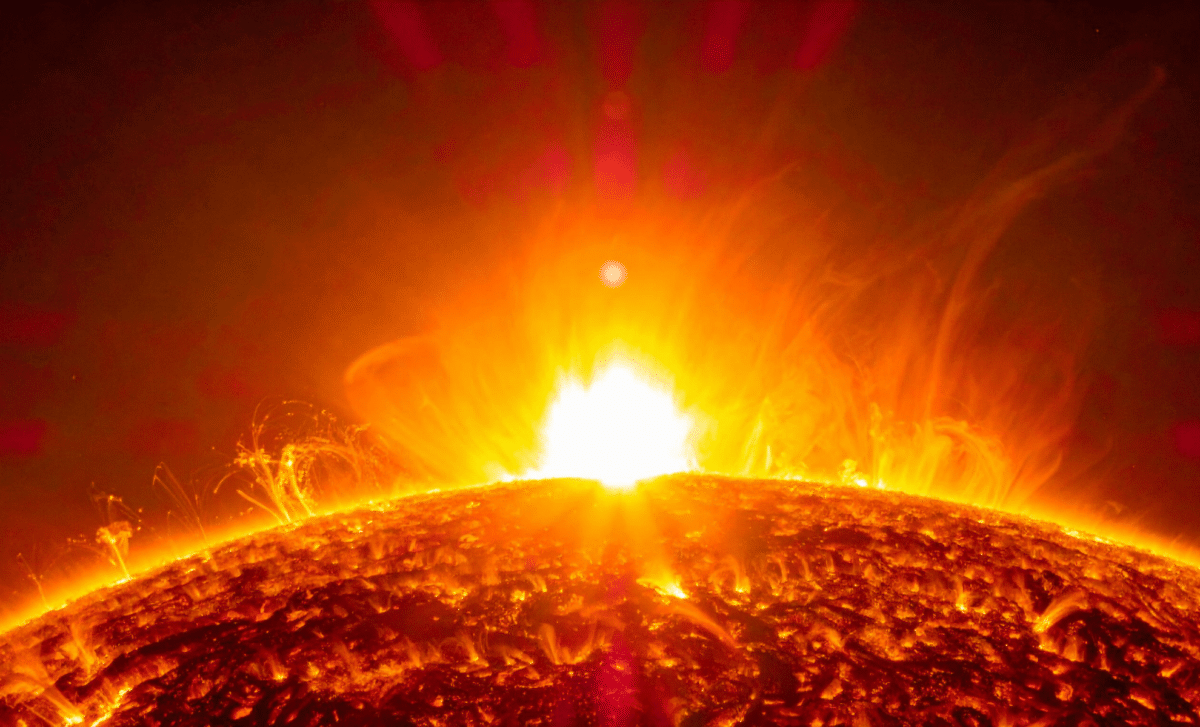
NASA’s Parker Solar Probe has achieved a major breakthrough by obtaining the closest-ever views and data of the Sun’s dynamic atmosphere. Recently published in the Astrophysical Journal Letters, these new results highlight a previously unidentified magnetic configuration in the solar corona, deepening our understanding of space weather and solar mechanisms. This discovery opens new avenues for comprehending the magnetic processes that drive the Sun’s complex behavior.
Revealing the Sun’s Magnetic Mysteries
The Parker Solar Probe has transformed solar science through its unprecedented imaging of the Sun’s outer layer. These remarkable images offer an intimate glimpse into the corona’s magnetic network and its influence on the solar wind. As noted by Joe Westlake, Director of NASA’s Heliophysics Division,
“These breathtaking images are some of the closest ever taken to the sun and they’re expanding what we know about our closest star.”
Add Cosmo Herald as a Preferred Source

Beyond the scientific intrigue, these insights are crucial for grasping how solar activity, including flares and coronal mass ejections (CMEs), affects space weather within our solar system. This knowledge is increasingly important for planning future missions such as the Artemis program, which aims to send humans to the Moon and beyond. Westlake emphasizes the significance of these observations
“are an important part of understanding and predicting how space weather moves through the solar system, especially for mission planning that ensures the safety of our Artemis astronauts traveling beyond the protective shield of our atmosphere.”
Switchbacks: Unexpected Magnetic Field Reversals
A standout discovery from
Parker Solar Probe involves “switchbacks,” magnetic field reversals zigzagging through the Sun’s corona that dramatically impact solar wind behavior. Previously theorized but never observed so clearly, these abrupt magnetic changes are now being studied in detail thanks to the probe’s close observations.
Nour Rawafi, project scientist for the Parker Solar Probe from Johns Hopkins Applied Physics Laboratory, shared his enthusiasm, stating,
“We’ve previously seen hints that material can fall back into the sun this way, but to see it with this clarity is amazing.”
Switchbacks appear to play a vital role in shaping the Sun’s magnetic field interactions, influencing how solar plasma flows and engages with the solar wind as it traverses the corona.
The Sun’s Cycle of Recycling Solar Material
A compelling aspect of the published research in Astrophysical Journal Letters reveals direct evidence of solar material falling back to the Sun’s atmosphere. This recycling is a fundamental part of how the Sun manages its energy and plasma balance. Rawafi explains,
“This is a really fascinating, eye-opening glimpse into how the sun continuously recycles its coronal magnetic fields and material.”
These insights indicate that expelled magnetic fields and plasma don’t invariably escape into space but often return to the solar surface, altering the magnetic environment and sustaining the cycle of solar activity. This understanding is crucial for anticipating space weather effects on Earth’s technological systems.
Coronal Mass Ejections and Their Space Weather Influence
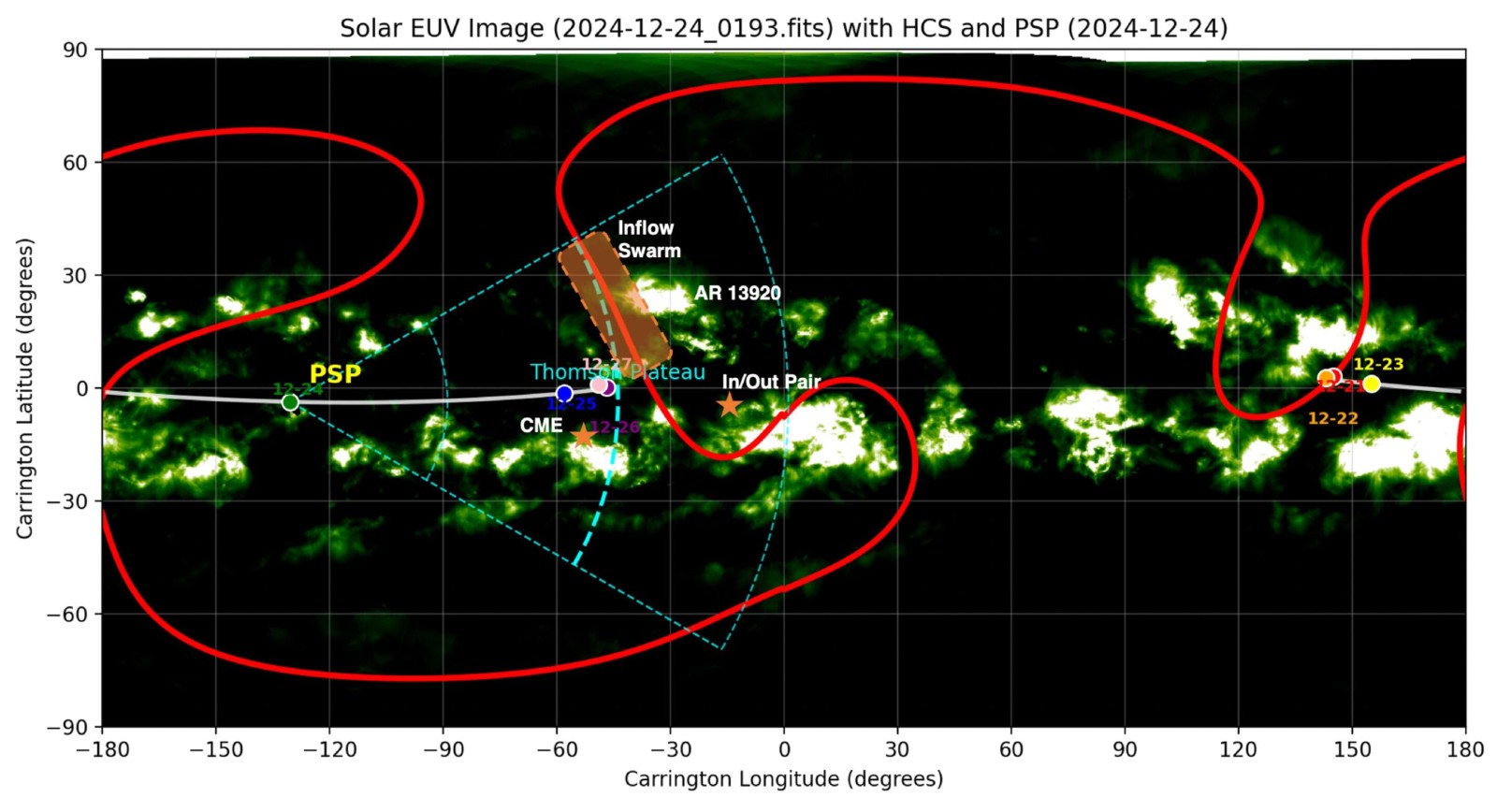
The Parker Solar Probe also sheds light on coronal mass ejections (CMEs), giant bursts of solar material that can disrupt satellite operations and power infrastructures on Earth. New findings demonstrate that the magnetic components of CMEs behave unexpectedly by lingering and eventually recycling back to the Sun. Angelos Vourlidas from Johns Hopkins Applied Physics Laboratory remarks,
“It turns out, some of the magnetic field released with the CME does not escape as we would expect. It actually lingers for a while and eventually returns to the sun to be recycled, reshaping the solar atmosphere in subtle ways.”
This discovery could revolutionize how scientists forecast the effects of solar storms, as magnetic reconfigurations may redirect CMEs, sparing Earth or other planets from their impact.
“The magnetic reconfiguration caused by inflows may be enough to point a secondary CME a few degrees in a different direction,” says Vourlidas. “That’s enough to be the difference between a CME crashing into Mars versus sweeping by the planet with no or little effects.”
Piecing Together the Sun’s Magnetic Puzzle
With each successive flyby, the Parker Solar Probe continues unveiling fresh details about the magnetic structures and processes that shape the Sun’s activity.
“Eventually, with more and more passes by the sun, Parker Solar Probe will help us be able to continue building the big picture of the sun’s magnetic fields and how they can affect us,” says Rawafi.
As the Sun progresses from its peak toward quieter phases in its solar cycle, the images and data from the probe are poised to become even more revealing. These advancements will not only deepen solar physics knowledge but also enhance space weather prediction models, safeguarding Earth’s technological infrastructure and aiding future space exploration missions.
- Categories:
- Nasa





0 comments
Sign in to Comment