
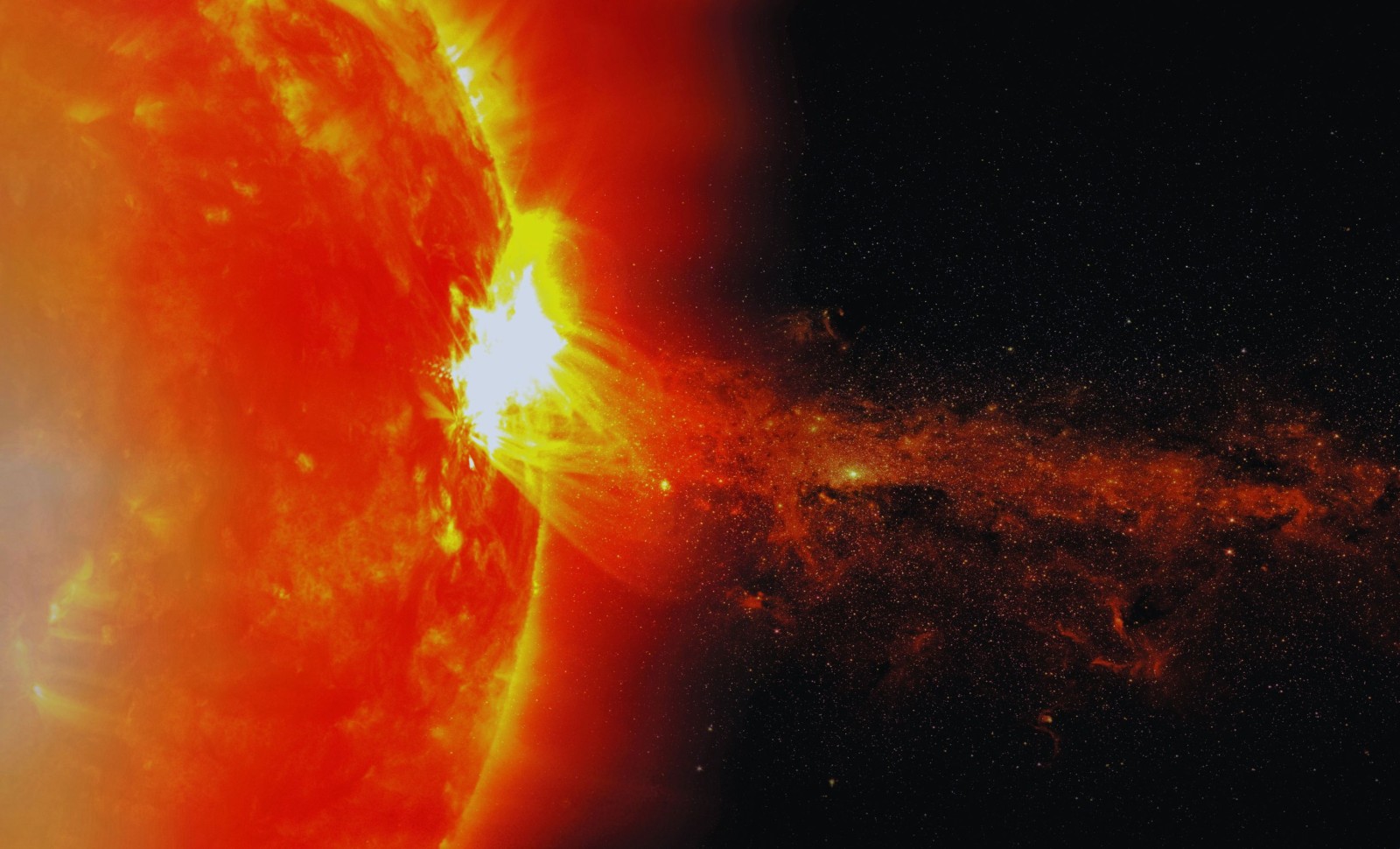
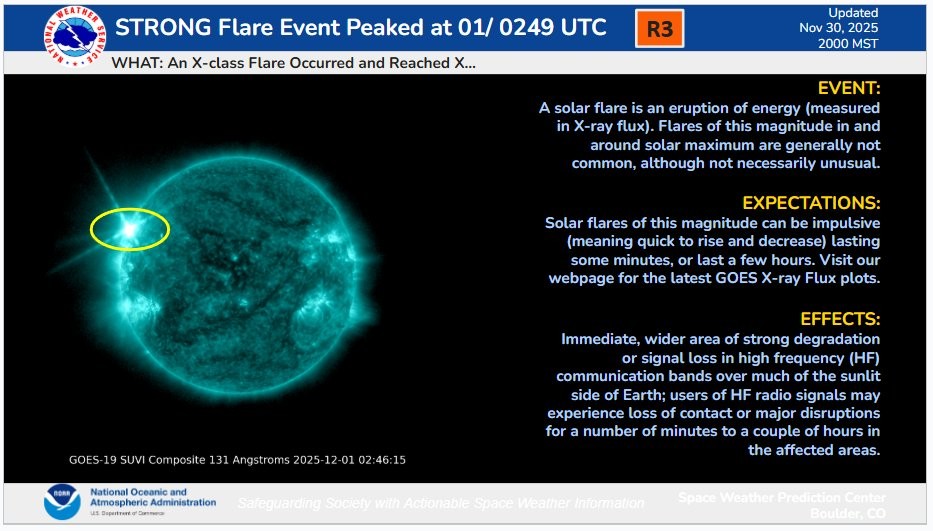
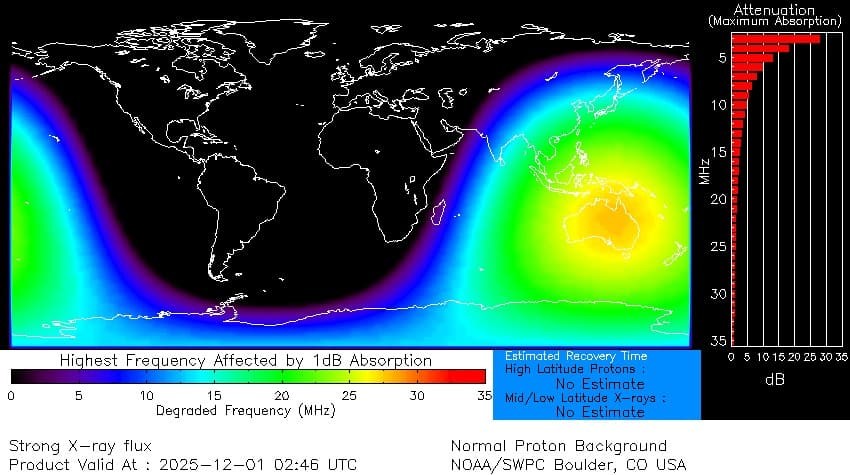
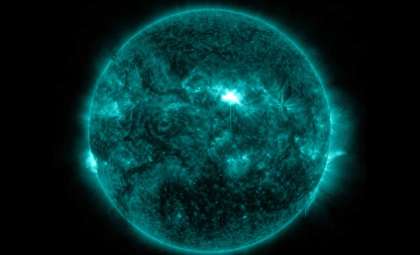
On December 1, 2025, the sun released a major X1.9-class solar flare, causing interruptions in radio services across Australia and parts of Southeast Asia. This intense burst originated from sunspot AR4299, and was reported by the NOAA Space Weather Prediction Center, highlighting the significant influence solar activity holds over Earth's technological infrastructure.
While the immediate effect of the flare was a brief radio blackout, greater concern focuses on the much larger sunspot AR4294, currently rotating into Earth's view, which may unleash more intense solar events soon.
The Impact of the X1.9 Solar Flare: Understanding the Event
The solar flare labeled X1.9, erupting from sunspot AR4299, stands out as one of the most intense solar phenomena recorded recently. Its strength caused widespread radio signal interruptions, particularly affecting numerous Australian regions and resulting in temporary communication blackouts.

As detailed by NOAA’s Space Weather Prediction Center, this flare also produced a partial-halo coronal mass ejection (CME), ejecting plasma and magnetic fields from the sun’s surface. Luckily, this CME did not head directly toward Earth, preventing a direct impact.
Monitoring Sunspot AR4294’s Approach
While the X1.9 flare from AR4299 has faded from immediate concern, solar experts are focusing their attention on the enormous sunspot AR4294. This massive cluster is rotating toward Earth and displays a much more tangled magnetic structure than its predecessor.
Due to its extensive size and magnetic complexity, NOAA scientists have designated AR4294 into three separate numbered regions (AR 4296, 4294, and 4298). This sunspot group previously produced several X-class flares last month and is anticipated to remain active during the upcoming days.
Expecting Continued Solar Activity
Despite the diminishing flare from AR4299, forecasts suggest solar activity will persist. The latest space weather updates from NOAA indicate the likelihood of M-class flares—moderately potent solar eruptions—continuing, with a modest possibility of further X-class flares between December 1 and 3, 2025. Such solar outbursts have the potential to disrupt radio frequencies and satellite operation.
No coronal mass ejections aiming toward Earth have been detected at present; however, the extensive magnetically complex AR4294 may provoke additional flare events shortly, escalating solar storm probabilities.
Beyond the flares, geomagnetic storm chances also loom. Geomagnetic storms arise when solar wind clashes with Earth's magnetic environment, often creating spectacular auroras and slight interference with GPS navigation and satellite communication.
Current predictions expect geomagnetic conditions to stay mostly calm until December 3, when a flow from a negative-polarity coronal hole is forecasted to trigger a minor (G1) geomagnetic storm. This storm is predicted to cause minimal impact but may induce small disturbances in communications at high latitudes.
- Categories:
- News







0 comments
Sign in to Comment