
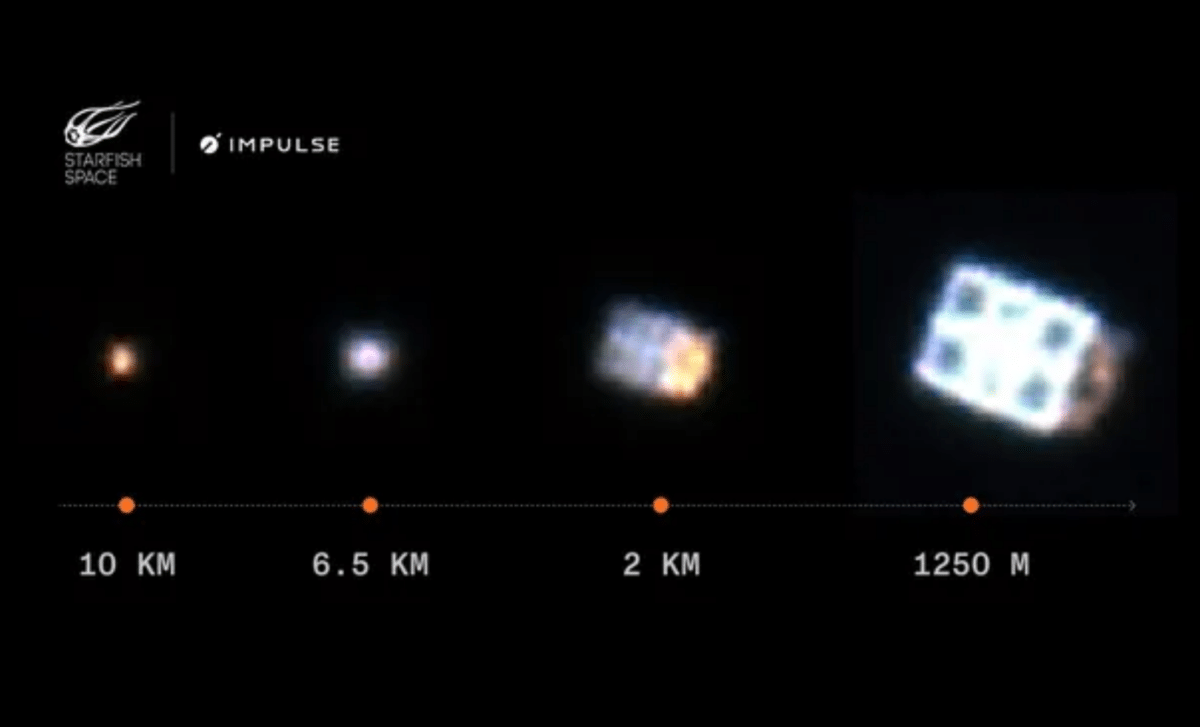
A groundbreaking partnership between Starfish Space and Impulse Space has made headlines in the space exploration world with the triumphant Remora mission. Unveiled recently, this mission featured two private spacecraft performing a surprise rendezvous in Earth’s orbit, highlighting critical advancements in autonomous navigation. These developments mark a transformative moment for satellite servicing and space infrastructure maintenance by commercial entities.
Remora Mission: Pioneering Autonomous Spacecraft Coordination
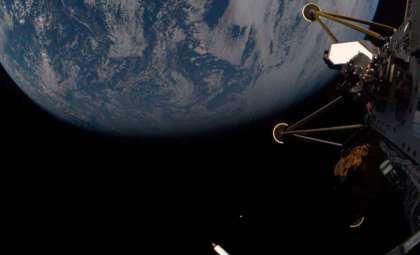
The Remora mission represented a significant breakthrough in autonomous orbital operations. Central to the mission was Impulse Space’s Mira spacecraft, which employed Starfish Space’s innovative guidance and control software, Cetacean and Cephalopod, to independently navigate towards another Mira satellite in low Earth orbit (LEO). The two craft successfully closed the distance to within 4,100 feet (1,250 meters), a remarkable feat of precision maneuvering.
Impulse Space’s President and COO Eric Romo praised the rapid development pace of the collaboration: “Working alongside Starfish, we transformed the concept into reality in under a year. Our team is equipped to carry out sophisticated space operations swiftly and reliably. We anticipate expanding our rendezvous and proximity operations across various orbits soon.”

The Strategy Behind Remora: Efficient Autonomous Rendezvous
According to Space.com, the Remora mission formed part of Impulse Space’s broader goal to evaluate and enhance its orbital transfer vehicle, Mira. Launched aboard SpaceX’s Transporter 12 mission in January 2025 during the LEO Express 2 mission, Mira had already demonstrated core capabilities by deploying cubesats and performing propulsion trials. The autonomous rendezvous was the mission’s highlight.
Leveraging the Starfish GNC software suite, specialized for high-precision guidance and navigation, Mira autonomously approached the target spacecraft—another Mira deployed on SpaceX’s Transporter 9 mission in November 2023. This success showcased both teams’ proficiency in complex orbital maneuvers with minimal human control.
Starfish Space Co-Founder Trevor Bennett highlighted the mission’s significance: “The Remora mission validated our exclusive approach to autonomous rendezvous and proximity operations in orbit. This achievement is a major confidence booster for Starfish as we prepare for our initial Otter launches next year.”
Advancing Satellite Servicing: The Otter Program
What amplifies the excitement around Remora is its relation to Starfish’s Otter program. Otter is a nimble, multifunctional spacecraft intended for satellite servicing tasks such as inspection, refueling, repairs, and safely de-orbiting obsolete satellites. While the Remora achievement is critical on its own, it also serves as a stepping stone toward launching Starfish's Otter vehicle in 2025.
The Otter initiative is viewed as a crucial element in the quest for sustainable space operations. If successful, it could mitigate the rising threat of space debris by enabling satellite maintenance, extending satellite lifespans, and facilitating safe de-orbit procedures. Early prospects for this vision are being demonstrated by the Otter Pup missions currently underway.
Commercial Space Innovation: Speed and Breakthroughs
The rapid development timeline of the Remora mission stands out as a testament to the agility of private space enterprises. Within a year, Impulse Space and Starfish Space advanced from initial idea to successful mission execution, illustrating the growing capability of commercial players to conduct complex space operations once exclusive to government entities.
This mission highlights the pivotal role autonomous technology will play in the future of space exploration. The ability to perform intricate rendezvous operations with minimal manual intervention has the potential to reduce costs and mitigate risks in satellite servicing. Such technological strides promise to support a more sustainable and resilient space infrastructure in low Earth orbit and beyond.
- Categories:
- Space



0 comments
Sign in to Comment