
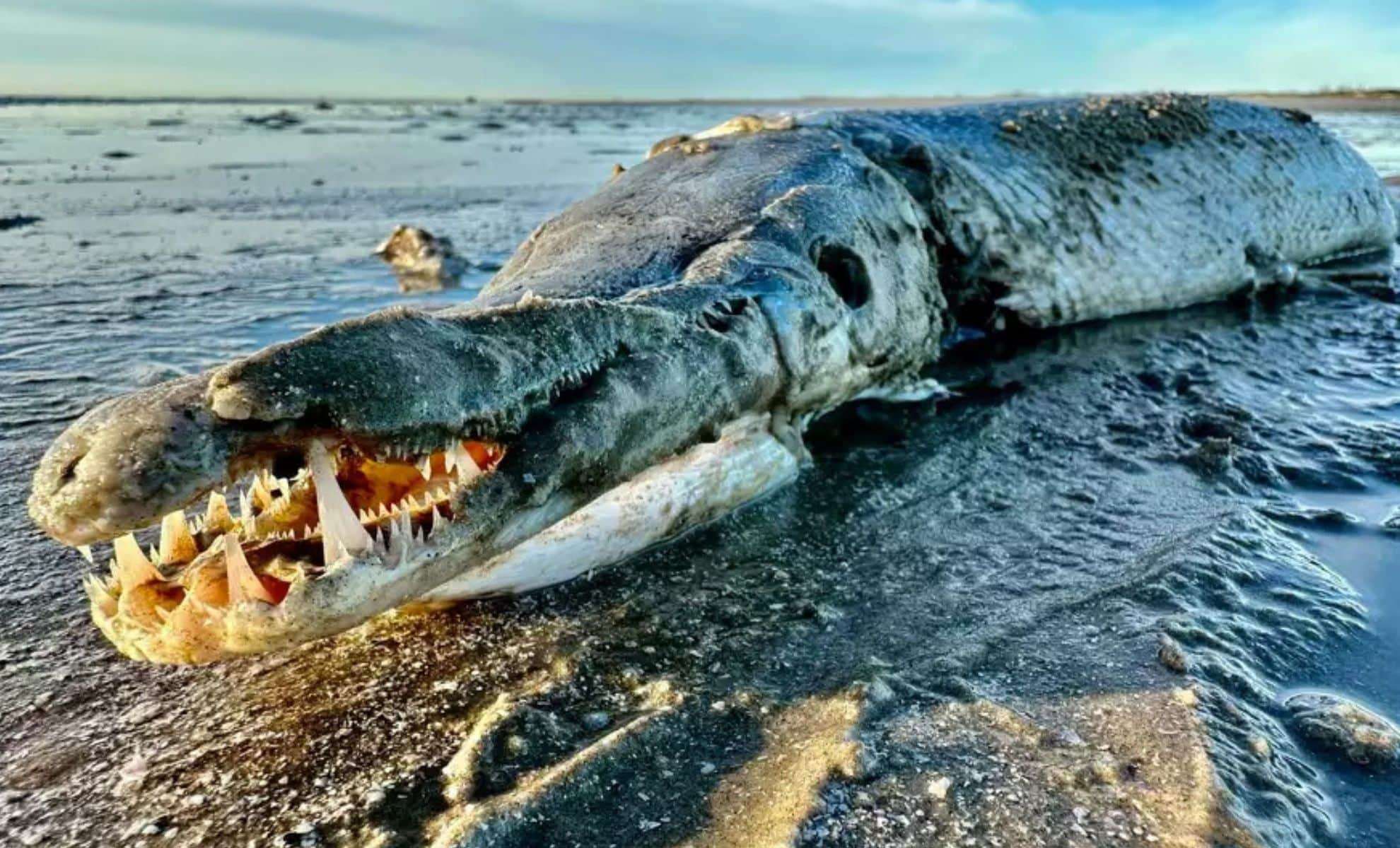
A giant alligator gar, one of the largest freshwater fish species native to North America, was recently found stranded along a Texas coastline, astonishing both locals and veteran marine scientists. This prehistoric-looking river dweller, frequently confused with an alligator because of its armored exterior and formidable teeth, was spotted by Jace Tunnell, a marine researcher affiliated with the Harte Research Institute for Gulf of Mexico Studies in Corpus Christi.
Tunnell noted that the individual measured roughly 3.5 to 4 feet long—relatively modest compared to some specimens that reach over 8 feet and exceed 300 pounds. Typically categorized as river and lake inhabitants, alligator gars demonstrate unexpected tolerance to saltwater environments, occasionally venturing into coastal bays and estuarine waters.
Finding this ancient predator on the shore instead of its usual freshwater ecosystem prompts intriguing questions about how these fish move between salt and freshwater zones and what environmental conditions might be causing these rare beach appearances.

A Living Relic From Millions of Years Ago
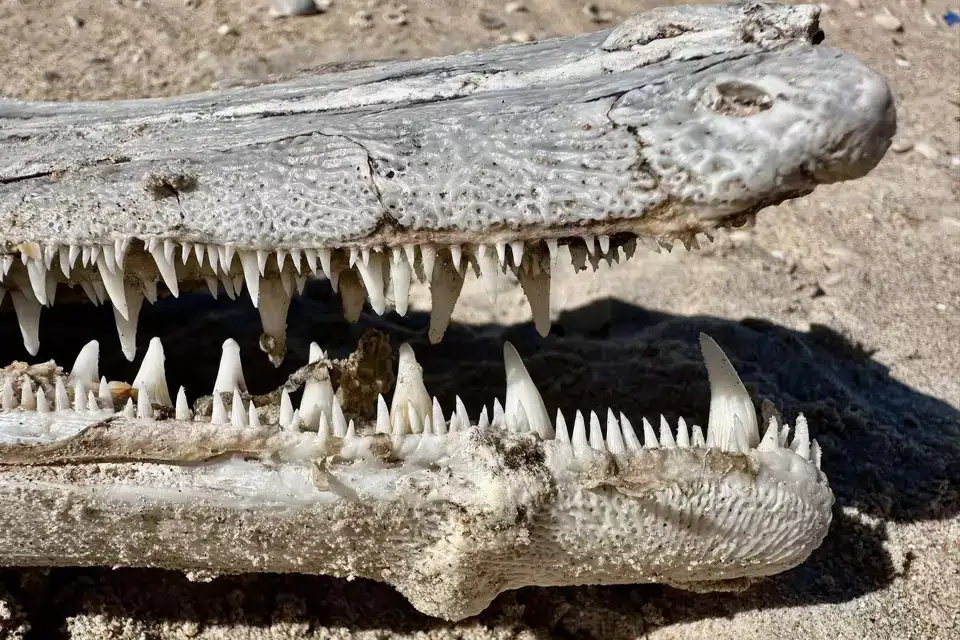
Known colloquially as “river monsters”, alligator gars dominate freshwater ecosystems with their elongated bodies, protective scales, and rows of sharp teeth. Their species dates back more than 100 million years, coexisting with dinosaurs and remaining largely unchanged throughout evolutionary history.
Despite their fierce image, alligator gars are non-aggressive toward humans and primarily consume fish, crustaceans, and small mammals. Adaptations like their ability to respire through both gills and lungs contribute to their survival in varied water conditions across North America.
Though commonly thought to inhabit only freshwater habitats, alligator gars display a remarkable adaptability to brackish and marine environments, occasionally appearing in coastal bays and estuaries. The Texas Parks and Wildlife Department (TPWD) confirms their presence in nearly all major rivers draining into the Gulf of Mexico, such as:
- Brazos River
- Nueces River
- Frio River
- San Antonio River
- Guadalupe River
These ancient fish have also been recorded in coastal regions like Galveston Bay, Corpus Christi Bay, Matagorda Bay, San Antonio Bay, and Laguna Madre, making them one of the rare large-scale freshwater species to flourish in both freshwater and saltwater zones.
Understanding Why Alligator Gars End Up on Beaches
Though encountering an alligator gar washed up on the shore is unusual, experts have a plausible explanation. Intense rainfall and flooding can displace these fish from rivers into Gulf waters. Ocean currents and tides then carry them farther, occasionally resulting in unexpected strandings along beaches.
“We typically see alligator gars coming ashore following heavy rain events when they are flushed from rivers into the Gulf and then pushed onto beaches by currents,” Tunnell remarked.
While these fish tolerate salty and brackish waters, their main habitats remain freshwater rivers where they breed, hunt, and avoid excessive threats. However, ongoing climate shifts and severe storms may increase the frequency of freshwater species becoming dislocated into unfamiliar marine territories.
Built for Survival: The Gar’s Protective Scalation
Beyond their fearsome teeth and strong jaw structure, alligator gars possess another crucial defense — their armor-like scales. Unlike typical fish scales, which are soft and flexible, alligator gars are shielded by hard, diamond-shaped ganoid scales that Indigenous cultures historically used to craft tools and weaponry.
Tunnell emphasized this remarkable natural armor, presenting one of the gar’s sturdy scales and describing it as almost impervious to damage. This defensive adaptation has allowed the species to endure millions of years facing environmental shifts and predators, cementing its status as a living fossil.
Protecting a Misjudged River Giant
Historically, alligator gars have been unfairly labeled as a “nuisance” species and often targeted by fishermen because of their daunting appearance. However, conservation initiatives have recently highlighted their key ecological role. As top-level predators, they contribute to controlling invasive fish populations, which helps maintain balanced and healthy aquatic ecosystems.
In Texas, alligator gar numbers remain stable, though in other U.S. areas their populations have declined considerably due to habitat loss and overfishing. Public education is gradually shifting perspectives, recognizing these fish as important ecosystem managers rather than menaces.
Despite their intimidating look, these ancient creatures are gentle freshwater giants playing a vital part in sustaining the equilibrium of aquatic environments.
- Categories:
- News













0 comments
Sign in to Comment