
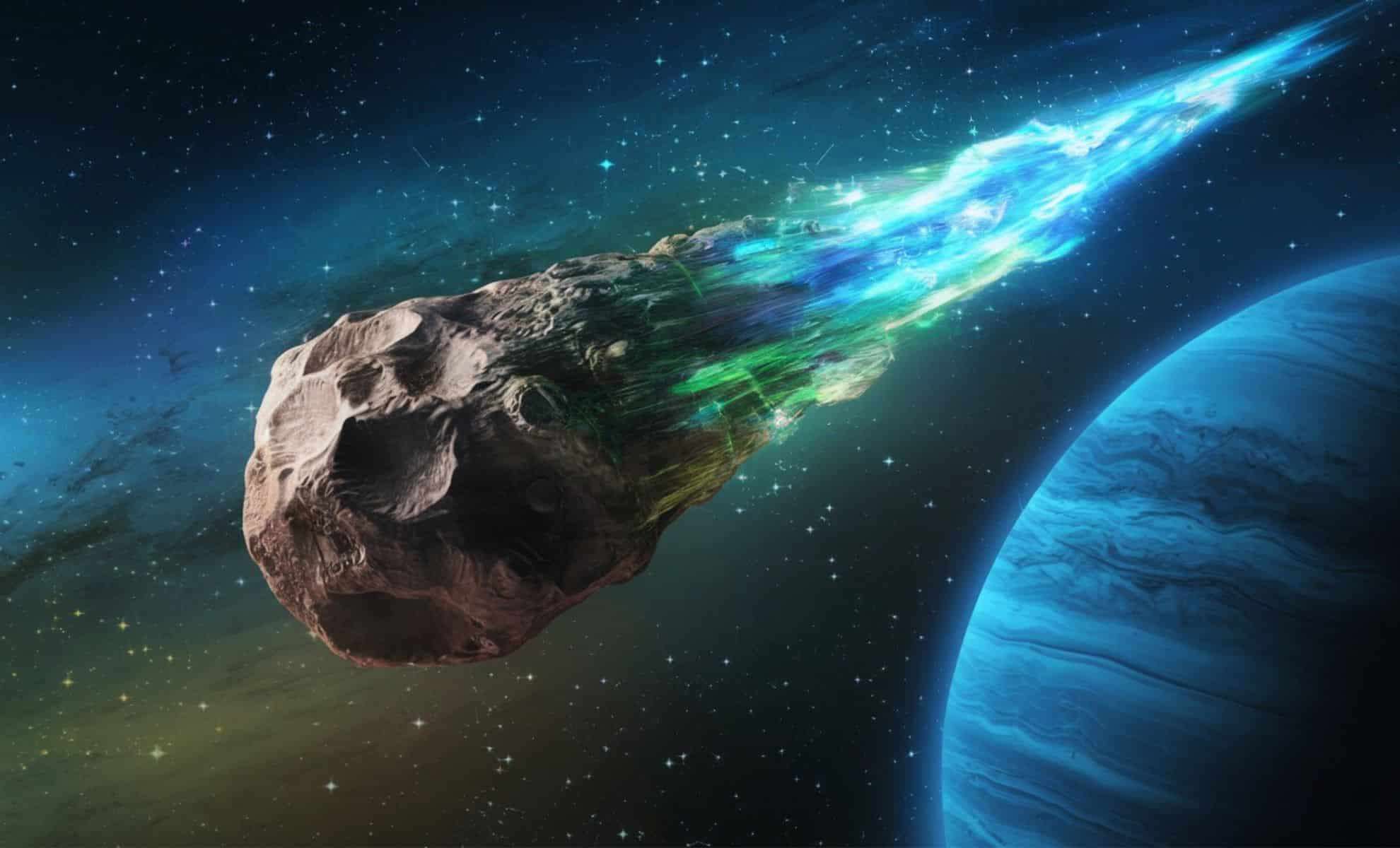
Beyond the orbits of Jupiter and Neptune, a fascinating object known as Chiron has intrigued astronomers for years. Identified as 2060 Chiron, this 125-mile-wide body challenges traditional classifications, exhibiting traits of both asteroids and comets. Recent high-resolution data from the James Webb Space Telescope (JWST) have provided new insights into this unusual centaur, prompting scientists to rethink what they know about these rare objects that journey between the gas giants.
An Uncommon Centaur in Our Solar System
Discovered in 1977 by astronomer Charles Kowal, Chiron follows a path around the Sun ranging from 9.5 AU to 19 AU, placing it between the orbits of Saturn and Uranus. Its eccentric orbit and unique activity patterns set it apart from typical solar system bodies. Named after the mythical centaur known for wisdom and healing, Chiron’s characteristics mirror this dual nature, bridging the gap between asteroids and comets.
Some defining features of Chiron include:

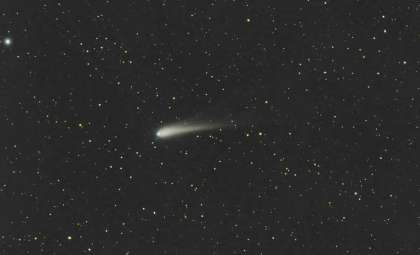
- Outgassing events: Chiron intermittently releases gas and dust, generating a transient coma and tail reminiscent of cometary behavior seen closer to the Sun.
- Distinctive rings: Unlike other centaurs, Chiron has been found to possess rings made of dust and rocky fragments, similar in appearance to the ring systems of Saturn.
JWST Sheds Light on Chiron’s Composition
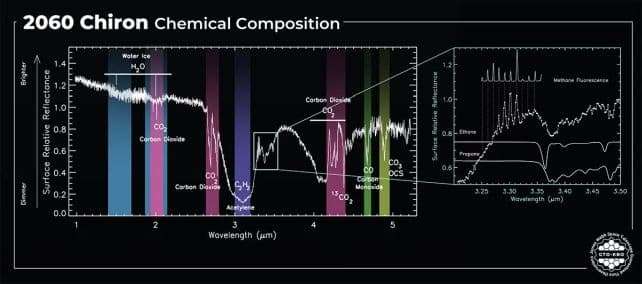
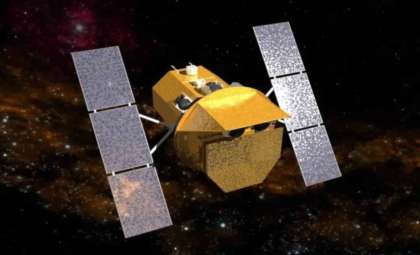
Utilizing the near-infrared capabilities of JWST, researchers led by Dr. Charles Schambeau and Dr. Noemí Pinilla-Alonso at the University of Central Florida (UCF) have explored Chiron’s surface and immediate surroundings in unprecedented detail. They detected the presence of methane, carbon dioxide, water ice, along with other compounds within the coma, revealing materials that likely date back to the early days of the solar system.
Dr. Pinilla-Alonso explained, “Chiron is exceptional because it allows us to study both its icy surface and the gas envelope that emerges from its interior or subsurface layers.”
It’s believed that Chiron originated from the distant trans-Neptunian region, home to icy objects called TNOs. These bodies are regarded as largely unchanged relics from the solar system’s formation, preserving primordial gases and dust. As Chiron ventured inward, solar heating caused its surface ices to sublimate, driving the activity now observed.
Chemical Makeup Explains Chiron’s Behavior
Detailed examinations of Chiron’s coma unveiled a rich chemical mix including:
- Methane (CH₄): Present abundantly, indicating ancient organic layers preserved over eons.
- Carbon dioxide (CO₂): Evidence of sublimation and active surface processes.
- Ethane (C₂H₆), Propane (C₃H₈), and Acetylene (C₂H₂): Likely formed by chemical reactions triggered by solar irradiation.
The presence of water ice also sheds light on the distribution of primordial water in the solar system. Together, these findings clarify how Chiron’s physical and chemical properties contribute to its unique status as a centaur with hybrid qualities.
Dynamic Changes Driven by Solar Cycles
When closer to the Sun during its orbit, Chiron’s frozen volatiles undergo seasonal sublimation, releasing gases like methane and water vapor that create the observed coma. This activity fluctuates with the centaur’s changing solar exposure.
“Every centaur we study with JWST reveals its own distinct characteristics,” commented Dr. Pinilla-Alonso. “While their behaviors may vary, there could be underlying factors that explain both their differences and similarities, which we have yet to uncover.”
Understanding these seasonal effects is key to grasping the diverse nature of centaurs, but ongoing observations are essential to fully decode their mechanisms.
Looking Forward: The Future of Chiron Research
As Chiron draws nearer to Earth in the coming years, scientists are preparing to track its evolving properties closely. Planned investigations aim to determine the thickness, porosity, and overall makeup of its icy layers. These studies promise to enhance our comprehension of not only Chiron but the broader population of centaurs transitioning between asteroid and comet stages.
The distinctiveness of Chiron raises a critical question: Is it an anomaly or a representative of a larger, yet misunderstood group of solar system bodies? As Dr. Schambeau noted, “Our findings advance our knowledge of Chiron’s internal composition and how it generates the extraordinary phenomena we observe.”
For now, Chiron remains a captivating mystery—a frozen messenger from the dawn of our solar neighborhood, holding clues that astronomers are eager to unlock as it continues its cosmic voyage.
- Categories:
- Space







0 comments
Sign in to Comment