
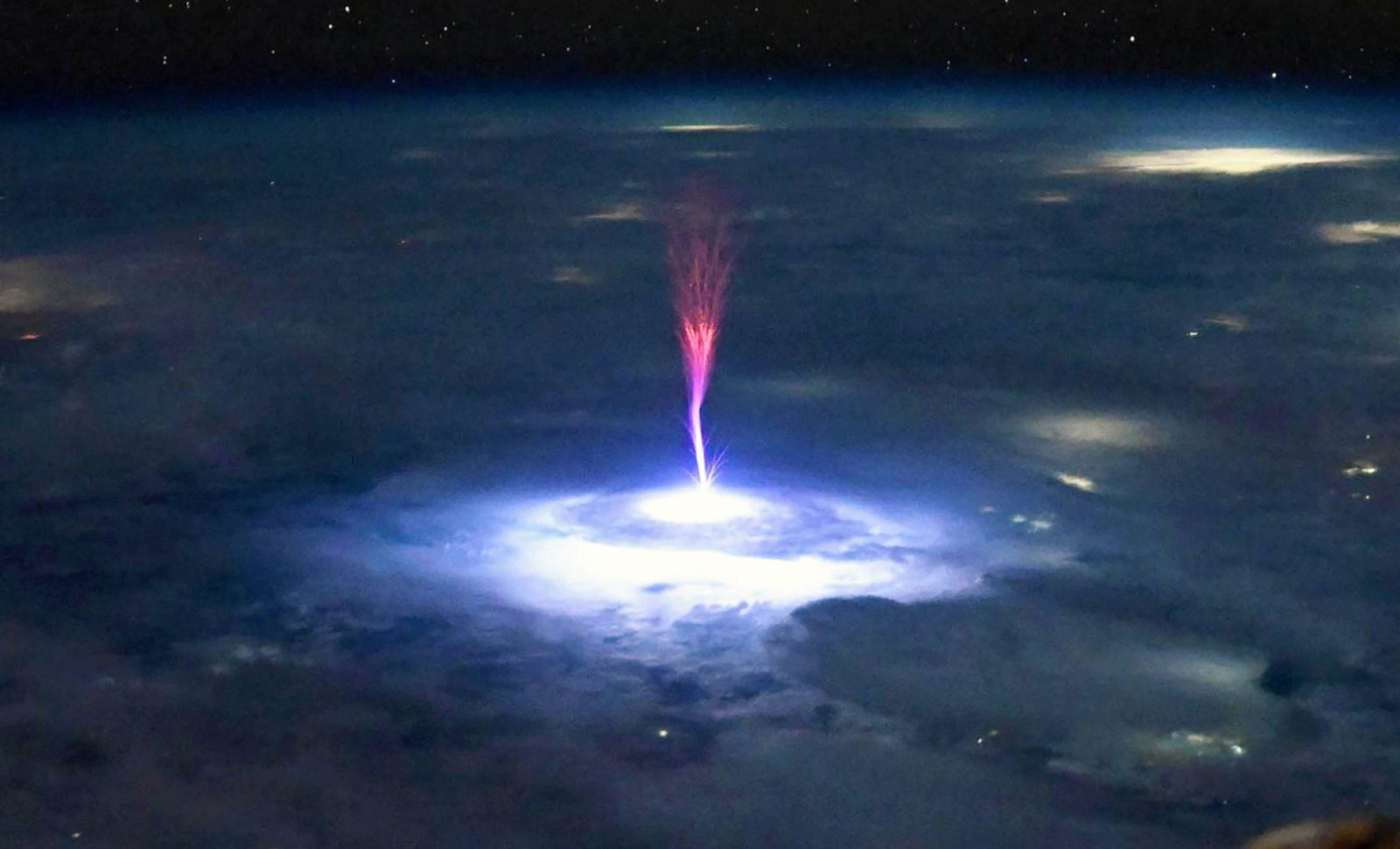
Astronauts onboard the International Space Station have snapped extraordinary views of fleeting luminous glows that materialize high above Earth's storm clouds.
These dazzling lights, called red sprites and other transient luminous events, take place well above thunderclouds and persist for only fractions of a second, rendering them nearly impossible to detect from the surface.
Typically, people witness a storm's electrical activity only when lightning strikes between clouds or reaches the ground. However, some of the most spectacular electrical phenomena actually occur much higher in the atmosphere’s thin layers above the weather systems.

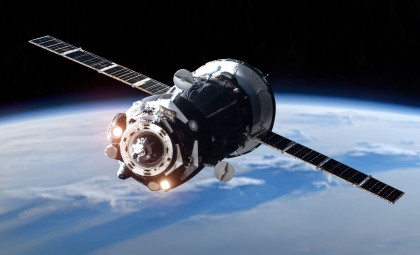
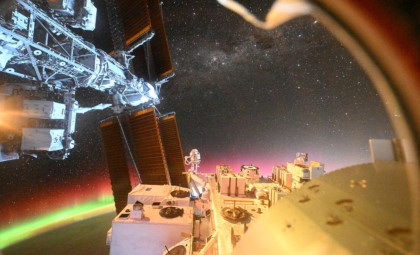
Orbiting at an altitude of about 400 kilometers, the ISS grants researchers a rare perspective on these elusive events. The station’s onboard scientific devices and cameras operated by astronauts enable the capture of flashes happening tens of kilometers above storms, phenomena once mostly noticed through pilot sightings and scarce photographs.
Unusual Electrical Displays Above Storms
At great heights above intense thunderstorms, electrical signals manifest in vivid shapes and colors. These are collectively identified as Transient Luminous Events (TLEs), encompassing red sprites, blue jets, violet halos, and ultraviolet rings termed ELVES.
According to NASA, these phenomena can occur as high as 55 miles (90 kilometers) above Earth. Red sprites, appearing in the mesosphere, often resemble inverted jellyfish and flash for about ten milliseconds.
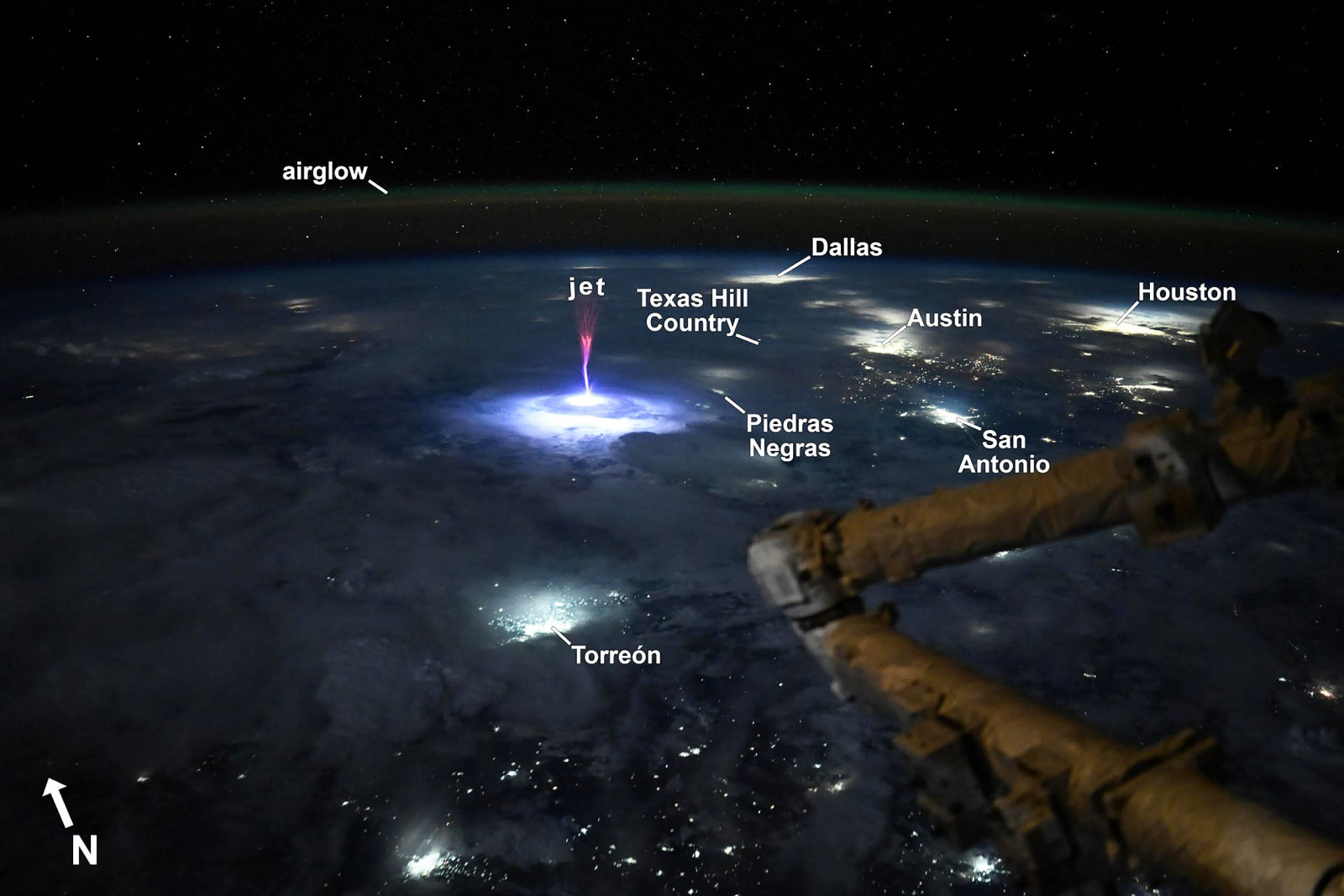
An image captured from the ISS reveals a large red sprite flashing above a storm near the Texas-Mexico border, with the lights of Dallas, Austin, San Antonio, and Houston glowing in the distance.
Monitoring Upper Atmospheric Lightning with ISS Instruments
Much of the ongoing research hinges on the Atmosphere-Space Interactions Monitor (ASIM), a European Space Agency instrument installed on the ISS in 2018.
This device continuously scans Earth using ultra-fast cameras and photometers that can detect exceedingly brief flashes. Earth.com explains ASIM is tailored to capture electrical events lasting mere fractions of a second, often appearing minuscule from orbit.
Findings from ASIM have shed light on how lightning atop storm clouds can emit electromagnetic energy into the ionosphere, creating vast ultraviolet rings called ELVES. These rings can span hundreds of miles and influence the upper atmosphere’s electrical environment, a complex process still under investigation.
Just. Wow. As we went over Mexico and the U.S. this morning, I caught this sprite.
— Nichole “Vapor” Ayers (@Astro_Ayers) July 3, 2025
Sprites are TLEs or Transient Luminous Events, that happen above the clouds and are triggered by intense electrical activity in the thunderstorms below. We have a great view above the clouds, so… pic.twitter.com/dCqIrn3vrA
Detailed Lightning Studies from Space
Crew members aboard the ISS also actively observe storms. Using the station’s Cupola viewing module, astronauts film distant thunderclouds with advanced cameras as part of the Thor-Davis experiment.
These high-speed cameras can record lightning at up to 100,000 frames per second, allowing scientists to examine the intricate formation of electrical discharges in slow motion. According to reports, the footage reveals lightning structures and branching behavior that challenge previous scientific models.
In addition, researchers are exploring terrestrial gamma-ray flashes, intense bursts of radiation connected to lightning strikes. To detect these phenomena, the Japan Aerospace Exploration Agency (JAXA) deployed a compact satellite named Light-1 from the ISS. Despite its small size, the CubeSat houses instruments that can identify high-energy photons produced during these flashes.
By integrating data from the ISS, orbiting satellites, and ground-based lightning networks, scientists aim to build a comprehensive map detailing the occurrence of these rare atmospheric flashes and their impact on the upper atmosphere’s electric properties.
- Categories:
- Space




0 comments
Sign in to Comment