
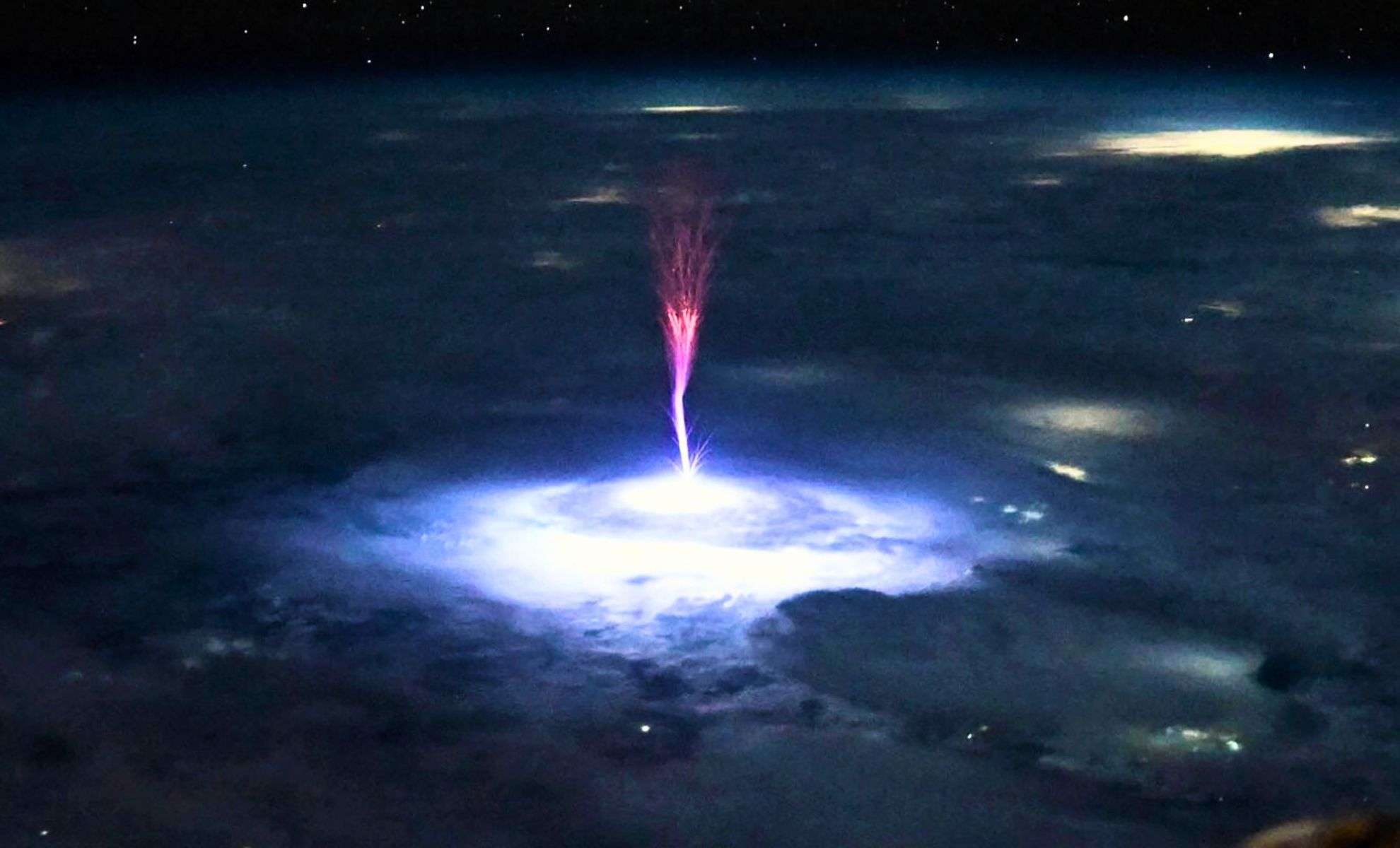
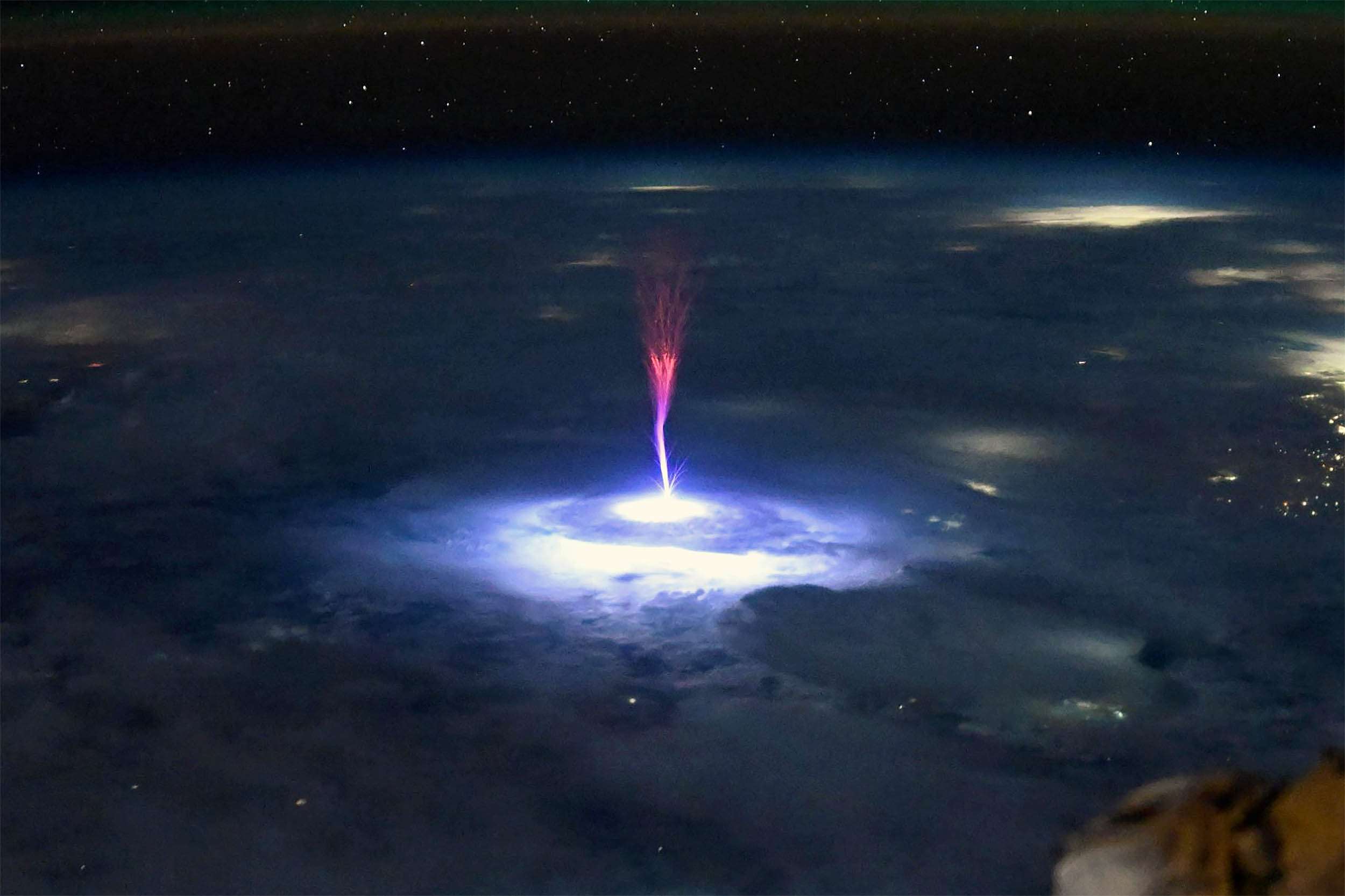
From its vantage point in orbit, the International Space Station (ISS) recently documented a rare atmospheric spectacle, providing fresh perspectives on lightning activity occurring high above Earth's typical storm zones. Crew members onboard captured images of striking “red sprites”—fleeting bursts of light that surge upward from thunderclouds into the mesosphere—while traversing the border region between Texas and Mexico.
This brief display, reminiscent of an inverted jellyfish, lasted only milliseconds. However, thanks to advanced high-speed imaging technology and precise observation timing, scientists at NASA alongside the European Space Agency (ESA) were able to analyze these ephemeral flashes meticulously.
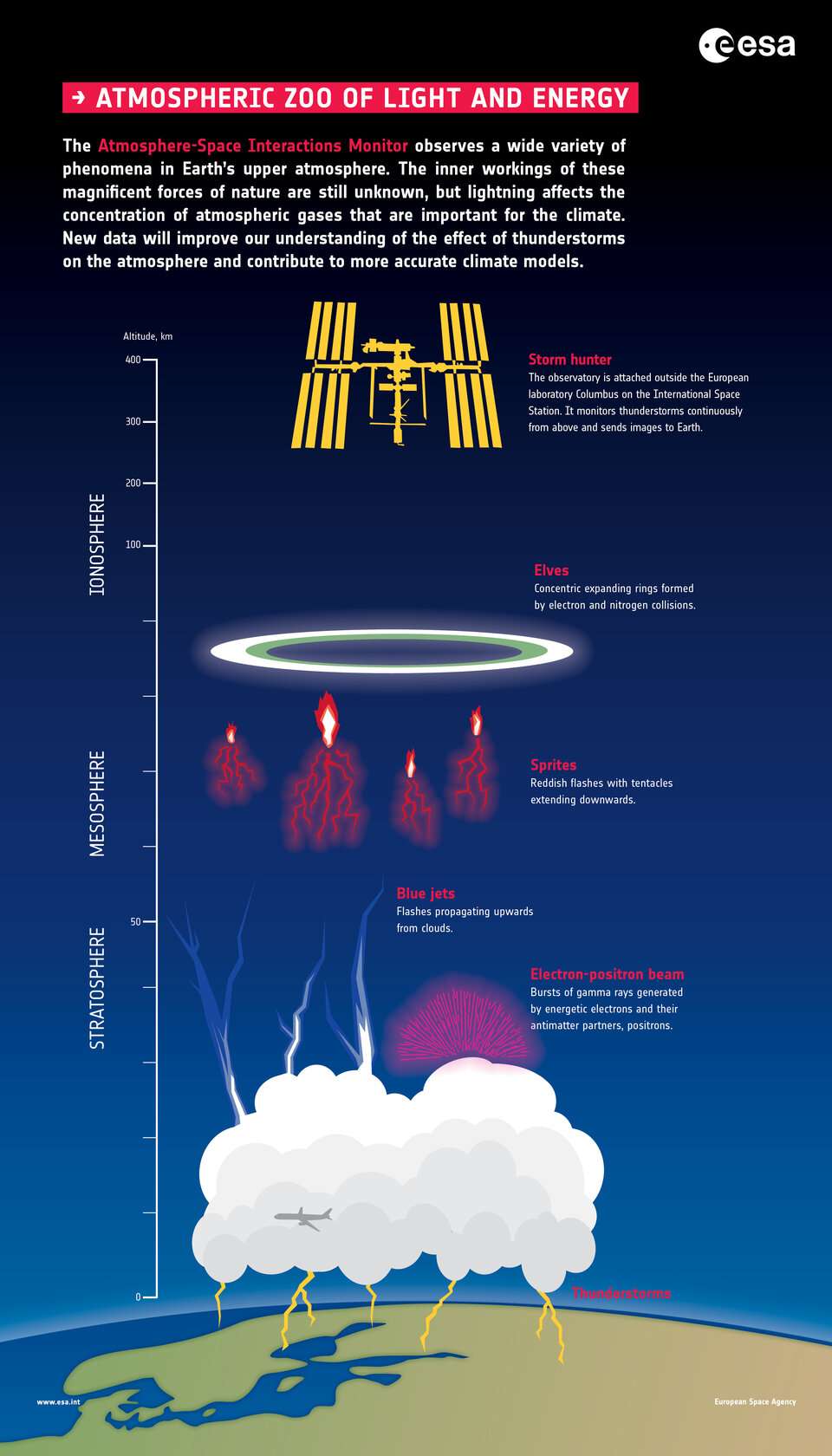
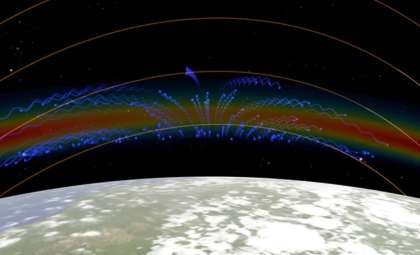
Classified scientifically under the umbrella term transient luminous events (TLEs), these vivid electrical discharges encompass phenomena such as red sprites, blue jets, ultraviolet glows, and massive electromagnetic rings known as ELVES. These phenomena manifest above thunderstorm clouds and are nearly invisible from ground level but become readily observable from the ISS’s orbit roughly 400 kilometers above Earth.

Understanding TLEs: Lightning’s Unseen Side
Unlike conventional lightning that travels downward to the ground, TLEs project upwards, sometimes spanning tens of kilometers into the mesosphere. Red sprites typically occur between 50 and 90 kilometers altitude, igniting above intense thunderclouds and vanishing faster than a human eye can detect. A 2022 report by the American Geophysical Union suggests that TLEs can be initiated when positive lightning discharges alter the upper atmospheric electric field.
“For a long time, these phenomena were dismissed as myth,” explained ESA physicist Torsten Neubert, the principal investigator of the ASIM (Atmosphere–Space Interactions Monitor), an instrument mounted on the ISS since 2018. “Previously, only high-altitude pilots reported sightings; now, we’re capturing hundreds of them.”
ASIM’s specialized equipment combines ultra-fast cameras and photometers to record these fleeting lightning phenomena, offering critical data that aids researchers in tracking how electrical energy travels vertically through Earth's atmosphere and impacts terrestrial technologies.
Impacts on Aviation and Communication Networks
While these luminous occurrences are stunning visually, they hold significant implications for telecommunications and aviation. TLEs interact with the ionosphere, the charged layer of the upper atmosphere responsible for long-range radio transmission, satellite navigation, and communications across vast distances.
Some emissions, such as intense blue jets and ELVES rings, generate strong electromagnetic pulses affecting this region. Such disturbances can cause interference with radio signals and pose hazards to aviation routes, particularly near polar and equatorial zones where these lightning events are more frequent.
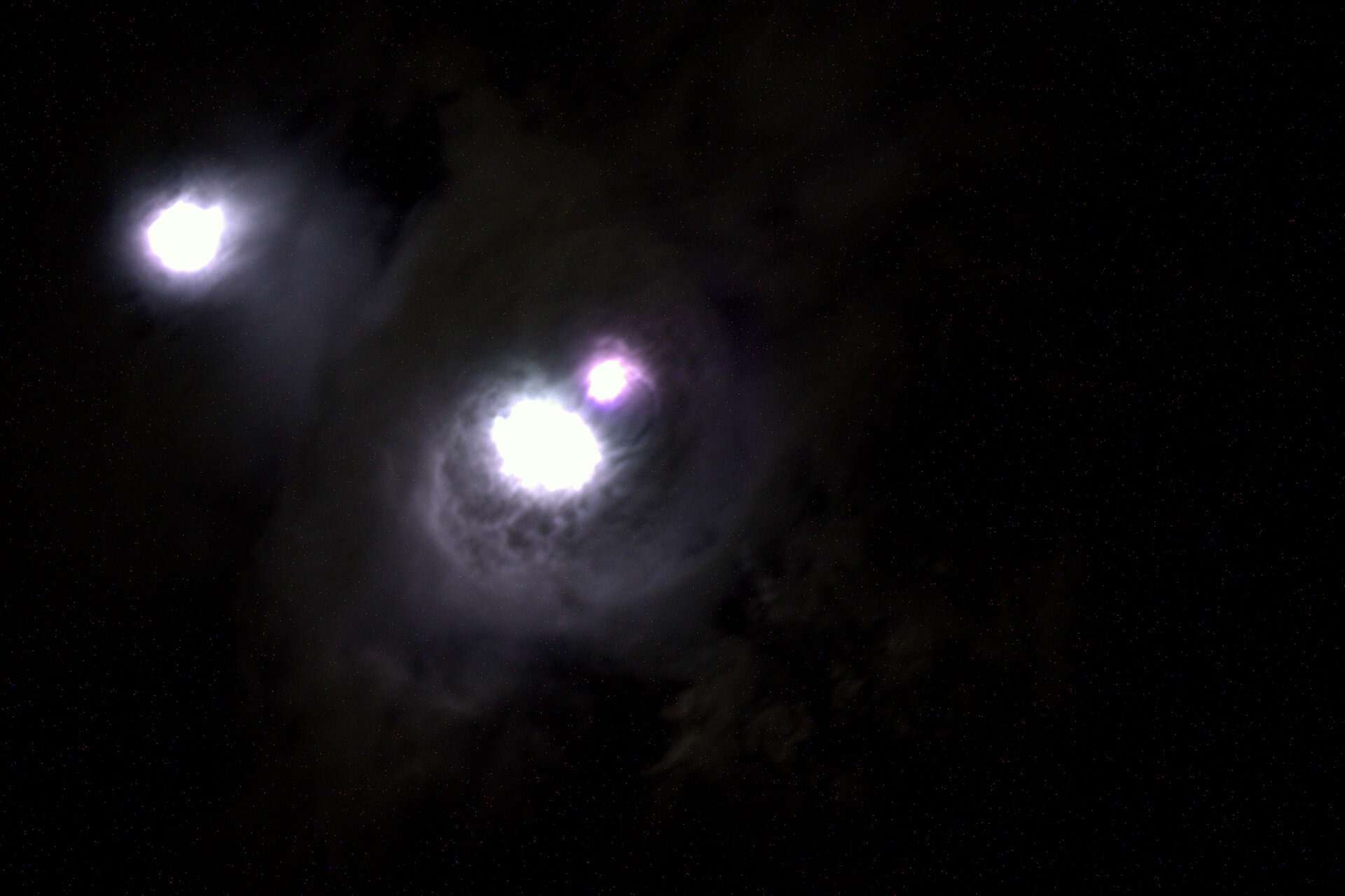
Additionally, another ISS-based project named Thor-Davis equips astronauts with cameras able to film lightning at 100,000 frames per second. This detailed footage helps refine power grid protective measures and could potentially support weather alerts that enhance air travel safety.
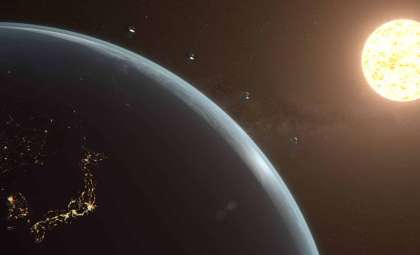
One vivid observation occurred near northern Mexico, where astronaut Nichole Ayers captured red sprites alongside ultraviolet rings and subtle blue jets. The illuminated cityscapes of Dallas, Houston, and Torreón were visible below, emphasizing how these energetic events occur close to populated regions.
Gamma Ray Emissions from Lightning
Even more extraordinary are terrestrial gamma-ray flashes (TGFs), ultra-brief bursts of high-energy radiation linked to thunderstorms. Though invisible to the naked eye, TGFs can deliver radiation doses comparable to a chest X-ray within milliseconds. The Japan Aerospace Exploration Agency (JAXA) monitors these events using the compact CubeSat Light-1, deployed from the ISS in cooperation with academic institutions.
Despite its small size, this satellite is fitted with sensors designed to detect gamma-ray bursts synchronized with lightning strikes. The aim is to correlate satellite observations with terrestrial lightning networks, producing a detailed 3D map of gamma flash hotspots, potentially improving aviation hazard warnings.
A 2021 investigation published in Nature Scientific Reports revealed that TGFs occur far more frequently in tropical zones than once thought. Data from Light-1 is expected to shed more light on this phenomenon in the coming years.
From Orbit to Climate Science
Accumulating a growing dataset from orbital sensors, scientists are discovering that lightning extends its influence beyond local weather patterns, potentially affecting Earth's upper atmosphere and climate dynamics.
Certain TLEs redistribute nitrogen oxides and other trace gases vertically, which may impact ozone chemistry and Earth’s radiative energy balance, both crucial factors in global temperature regulation. Researchers are working to incorporate these vertical chemical exchanges into advanced climate prediction models.
Looking forward, engineers envision deploying swarms of autonomous CubeSats to continuously monitor gamma flashes, ELVES, and massive mega-sprites in real time, providing rapid notifications to satellite operators, power grid management, and meteorological agencies.
- Categories:
- Space







0 comments
Sign in to Comment