
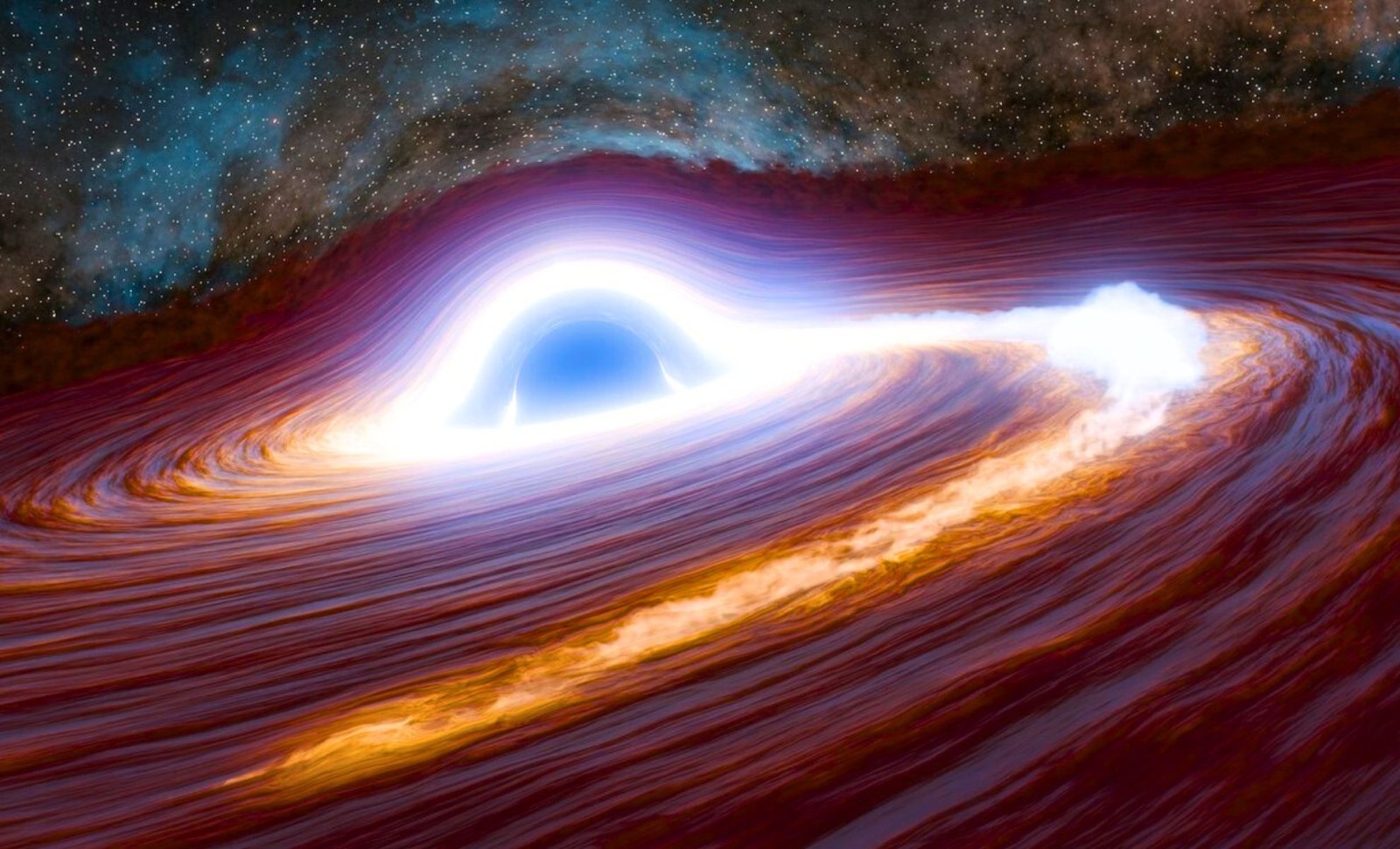
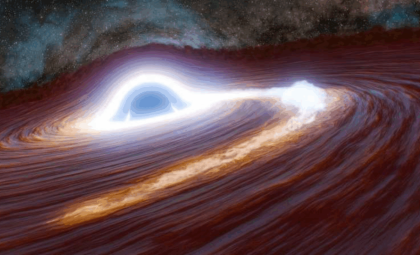
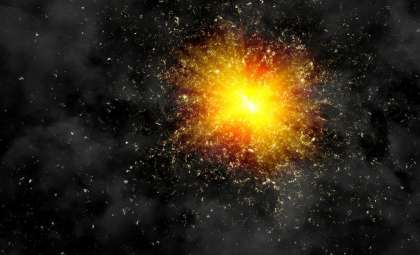
Scientists have captured the most brilliant flare ever seen from a black hole—an extraordinary eruption that briefly radiated more light than 10 trillion suns combined. This dazzling outburst was detected from a galaxy located over 10 billion light-years away, surpassing all previously documented black hole flares in both luminosity and magnitude.
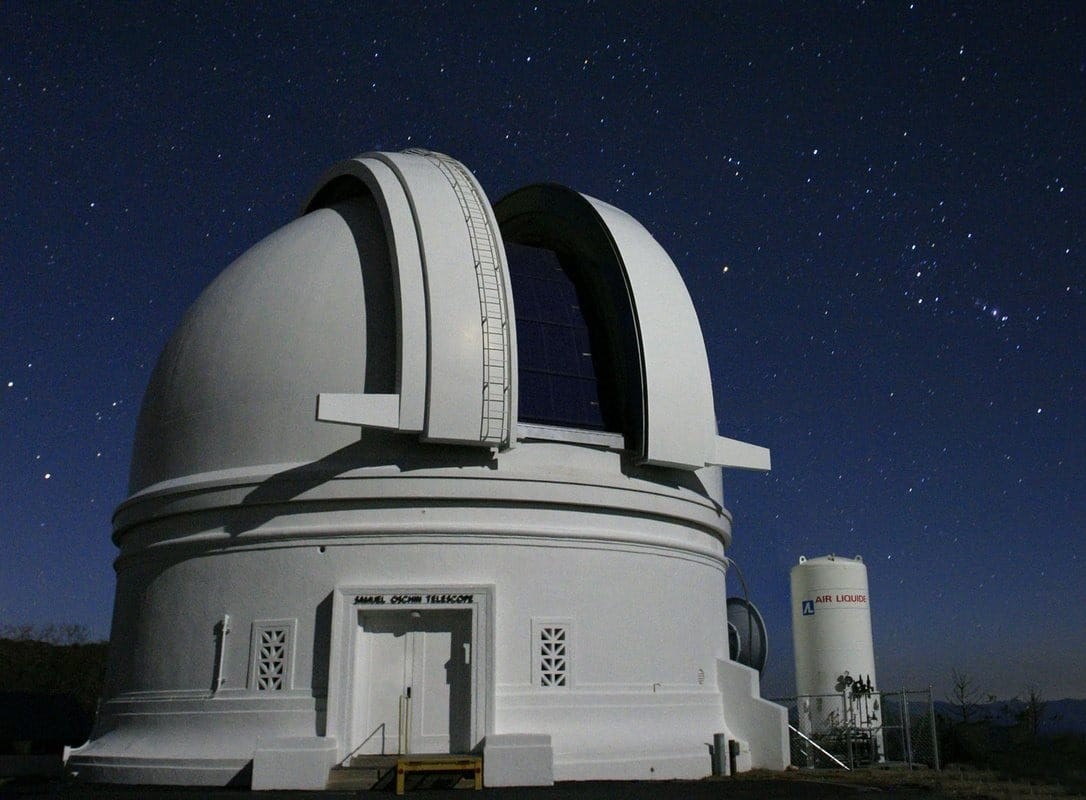
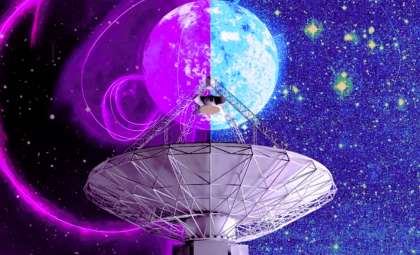
The source of this event, an active galactic nucleus known as J2245+3743, was observed by Caltech’s Zwicky Transient Facility (ZTF) along with the Catalina Real-Time Transient Survey. Over the course of just a few months, the flare’s brightness increased by a factor of 40, an unusual spike for such galactic centers. The black hole responsible for this event is estimated to have a mass around 500 million times that of our Sun.
Researchers interpret this intense flare as caused by a tidal disruption event (TDE), where a massive star ventured too close to the black hole and was torn apart by gravity. Beyond its sheer power, this phenomenon offers new insights into black hole dynamics during the universe’s early epochs.

Star Destruction Sparks Unprecedented Energy Release
First identified in 2018 by ZTF, the event initially attracted limited focus. However, subsequent analysis of long-term observations revealed something unusual: the flare’s dimming occurred far slower than predicted. Follow-up measurements from the W. M. Keck Observatory in Hawai‘i confirmed the presence of a supermassive black hole producing a flare of unparalleled intensity.
“The energetics show this object is very far away and very bright,” said Matthew Graham, lead author of the Nature Astronomy study and project scientist for ZTF. “This is unlike any AGN we’ve ever seen.”
It was determined that the black hole consumed a star with a mass at least 30 times that of the Sun. This breakthrough not only establishes J2245+3743 as the brightest recorded TDE but also marks the most massive star disruption observed to date.
An observed redshift of z = 2.6 situates the event in a cosmic era when the universe was only a few billion years old. Due to the universe’s expansion, time itself is dilated; as Matthew Graham explains, “seven years here is two years there. We are watching the event play back at quarter speed.”
Flare Pierces the Black Hole’s Own Glow
TDEs generally occur in more tranquil regions, but active galactic nuclei (AGNs) are bustling with dense gas and dust surrounding their black holes, often obscuring such phenomena. In this case, the flare from J2245+3743 was so intense that it cut through the AGN’s persistent radiative emissions.
At its peak, this flare emitted light equivalent to that of 10 trillion suns. Caltech noted that this energy release corresponds to converting the complete mass of the Sun into energy, according to Einstein’s formula E = mc².
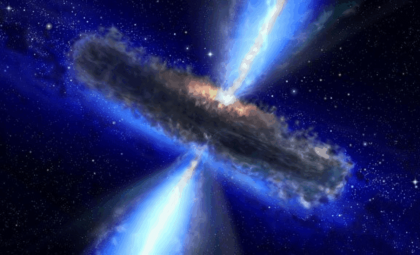
Alternative causes, such as relativistic jets aimed at Earth, were investigated and discounted. NASA’s Wide-field Infrared Survey Explorer (WISE) revealed the flare’s light was not narrowly directed, confirming its genuinely uniform luminosity.
“If you convert our entire Sun to energy, using Albert Einstein’s famous formula E = mc², that’s how much energy has been pouring out from this flare since we began observing it,” said K. E. Saavik Ford, a professor at the City University of New York and co-author of the study.
By comparison, the previous record-holder for brightest TDE, nicknamed Scary Barbie, was about 30 times less intense and involved a star between 3 and 10 solar masses.
Emerging Mysteries From the Far Reaches of Time
Stars of such tremendous mass are rare, but scientists hypothesize this star formed inside the AGN’s disk, an environment rich in materials that can nourish star growth to extraordinary sizes.
“Stars this massive are rare,” Ford added, “but we think stars within the disk of an AGN can grow larger.”
The flare’s stretched timeline offers a unique window into the slow-motion death of a massive star. Thanks to cosmological time dilation, astronomers can observe the event with exceptional detail over multiple Earth years.
This discovery also highlights the power of extensive sky surveys. As Graham notes:
“We’ve been observing the sky with ZTF for seven years now, so when we see anything flare or change, we can see what it has done in the past and how it will evolve.”
A Glimpse into the Universe’s Formative Years
While J2245+3743 might represent an extraordinary case, astronomers suspect that similar high-energy black hole flares exist scattered throughout the universe, pending discovery. The upcoming launch of observatories like the Vera C. Rubin Observatory promises to expand the hunt for such luminous events.
The findings carry broad implications for understanding galaxy evolution. If AGN disks commonly birth and destroy massive stars, they may actively influence the growth and behavior of their central black holes through cycles of stellar creation and destruction.
Key questions remain: How frequent are these powerful flares? What governs their brightness and visibility? Do some black holes consume even more massive stars obscured by dust or certain viewing angles?
- Categories:
- Space




0 comments
Sign in to Comment