
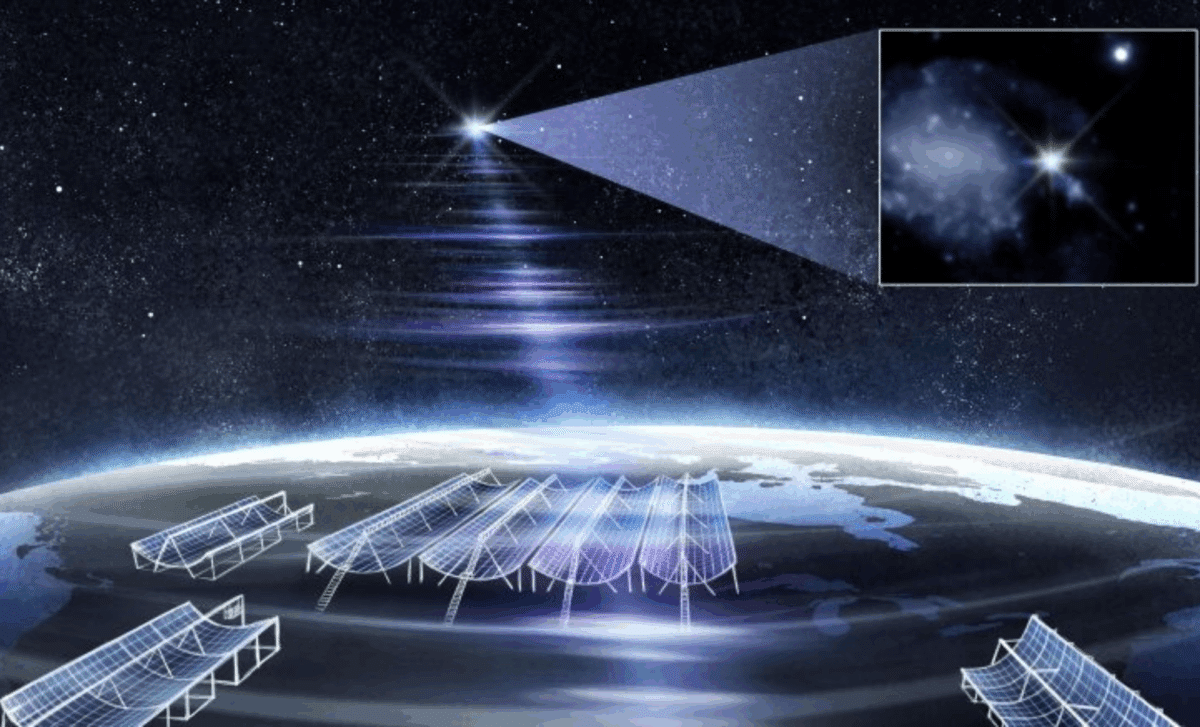
A remarkable burst of radio waves—intense, fleeting, and mysteriously quiet ever since—has left scientists puzzled as they investigate this cosmic enigma. Named RBFLOAT, this fast radio burst stands out as the most powerful ever recorded, originating from a galaxy relatively near to Earth.
Its extraordinary brightness made it an ideal subject for close examination, yet despite numerous observations, it has not emitted any additional bursts. Now, with the latest data gathered from both the CHIME observatory and the James Webb Space Telescope, researchers are reconsidering previous beliefs about the causes behind these mysterious rapid signals.
A Sudden Signal From Our Intergalactic Neighborhood
When the Canadian Hydrogen Intensity Mapping Experiment (CHIME) identified a newly detected fast radio burst on March 16, 2025, nothing immediately implied its historic importance. However, combining data from observatories in British Columbia, California, and West Virginia via Very Long Baseline Interferometry (VLBI) revealed its full significance. Labeled FRB 20250316A and informally called RBFLOAT (Radio Brightest Flash Of All Time), this burst claims the title of the most luminous FRB ever detected.
But RBFLOAT’s uniqueness extends beyond its brightness—its status as a singular event sets it apart. Even after analyzing over six years of extensive observational records in the same region, astronomers have found no indications of repeated bursts from this source.

“This burst doesn’t seem to repeat, which makes it different from most well-studied FRBs,” explained Amanda Cook, a Banting Postdoctoral Researcher at McGill University. “That challenges a major idea in the field, that all FRBs repeat, and opens the door to reconsidering more ‘explosive’ origins for at least some of them.”
Precision, Providence, and a Critical Outage
Determining where RBFLOAT originated was a blend of high-precision measurement and fortunate timing. The CHIME/FRB Outrigger array, a network of smaller radio telescopes working together, enabled scientists to localize the burst to a spiral arm within the NGC 4141 galaxy, situated approximately 130 million light-years from Earth in Ursa Major.
“We were ultimately extremely lucky that we were able to pinpoint the precise sky position of this rare event,” said Mattias Lazda, a doctoral student at the University of Toronto and co-author on the study. “A few hours after we detected it, we experienced a power outage at one of our telescope sites that played a critical role in telling us where the burst came from. Had the event happened any later that day, we would’ve completely missed our chance.”
The researchers successfully narrowed down the burst’s location to an area approximately 45 light-years wide—comparable to identifying a guitar pick from a distance of over 1,000 kilometers. This accuracy firmly confirmed the galactic source and unlocked fresh opportunities for detailed study.
An Urgent Response in the Astronomical Community
Once the pinpointing was achieved, the team quickly mobilized for further observation. “The moment was thrilling, especially with our brightest event ever discovered occurring just as all three CHIME outriggers were fully operational,” said Cook, who led the radio detection study. “Despite it being a Sunday, many of us jumped onto a Zoom call to dive into the analysis and coordinate rapid follow-up observations.”
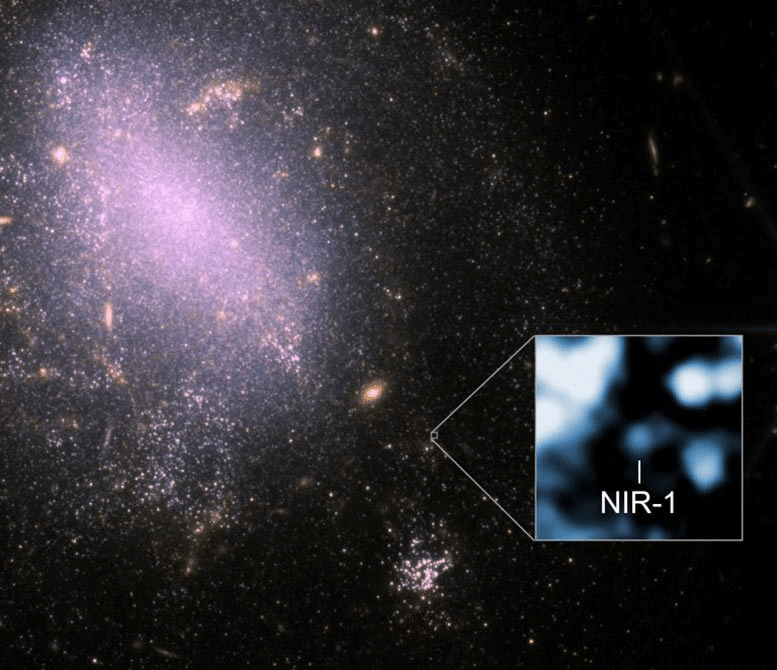
The effort yielded immediate results: coordinated observations with the James Webb Space Telescope (JWST) revealed a dim infrared signal exactly at the burst’s location. This breakthrough, documented in a related publication in The Astrophysical Journal Letters, represents the first time astronomers have resolved individual stars in the neighborhood of a fast radio burst with this degree of detail.
“JWST’s exceptional clarity allows us to isolate stars surrounding an FRB for the very first time,” remarked Peter Blanchard, Harvard postdoctoral fellow and lead author of the infrared study. “This helps us explore the stellar environments behind such intense bursts, especially when rare, strong FRBs come into focus with unprecedented precision.”
Nearby but Puzzling
Although RBFLOAT is relatively close in cosmic terms, identifying its nature remains challenging. “This fast radio burst is essentially in our cosmic backyard,” noted Kiyoshi Masui, MIT physics associate professor and University of Toronto alum. “This proximity provides us an unparalleled opportunity to investigate a fairly typical FRB up-close.” However, its failure to repeat goes against common expectations.
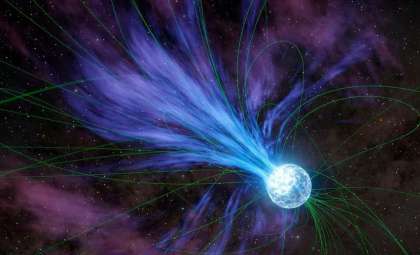
The prevailing view in FRB studies posits that every burst eventually repeats, but RBFLOAT suggests the existence of a different category—potentially arising from one-time cataclysmic events like magnetar eruptions, stellar collisions, or other astrophysical phenomena that do not recur.
These results appear across two articles in The Astrophysical Journal Letters: one details the radio source localization, the other presents the infrared data from JWST. Together, they enhance our understanding of fast radio bursts and raise new questions about their diversity and origins.
- Categories:
- News


0 comments
Sign in to Comment