
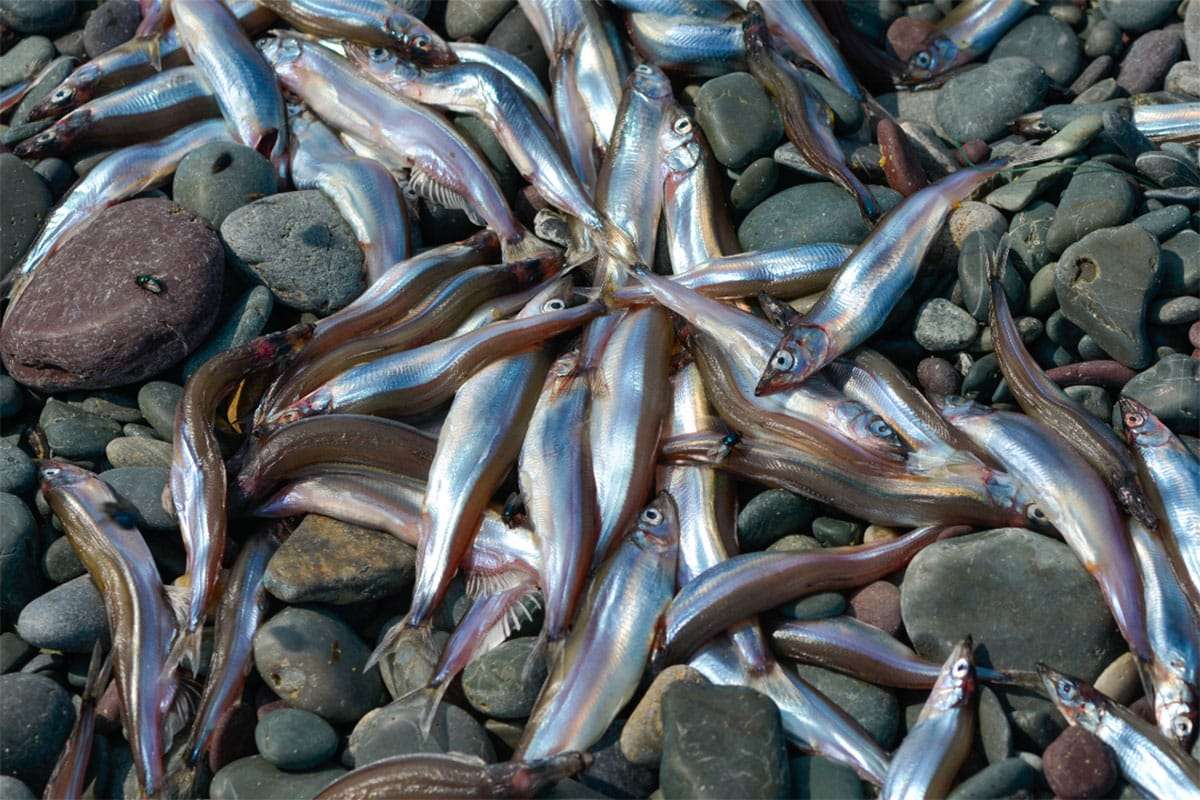
Researchers from MIT and Norwegian institutions have captured an extraordinary underwater predation event along Norway’s coast, revealing new insights into marine food chain interactions and raising questions about climate change impacts on these ecosystems.
A staggering assembly of capelin: Nature’s fascinating spectacle
Each year, enormous schools of capelin, small fish similar to anchovies, migrate from the Arctic ice edge to the Norwegian shoreline to spawn. Utilizing cutting-edge acoustic imaging, the team mapped these groupings, which can extend for tens of kilometers.
The data showed that one capelin school comprised roughly 23 million fish, weighing close to 414 tons. Such a massive gathering forms a rare natural event comparable to other notable animal phenomena like emperor penguins taking giant leaps off cliffs.

According to Canadian authorities, capelin favor spawning waters with temperatures between 6°C and 10°C, a critical range for their reproductive success and essential for the Arctic marine food chain.
A colossal feast: Cod respond with massive predation
Following the influx of capelin, cod responded by assembling large groups themselves. Acoustic analysis estimated that around 2.5 million cod were involved in this predatory event.
Within just four hours, this cod assemblage swam through the capelin schools, consuming an estimated 10.6 million capelin. This is believed to be the largest predation event recorded to date, representing about 0.1% to 0.2% of the total Barents Sea capelin population consumed in hours.
To illustrate the scale of this event, the following table summarizes key figures:
Climate change and ecosystem balance
Though this single predation won’t drastically reduce capelin numbers, it underscores how fragile marine ecosystems can be. The study prompts reflection on how climate change may alter these predator-prey relationships.
With Arctic ice diminishing, capelin routes to spawning grounds could lengthen, potentially increasing exposure to predators.
Capelin are a crucial link in marine food webs, and reductions in their populations could ripple through dependent species. This interconnected web recalls other unusual predation episodes, such as the rare case of python predation captured in Bangladesh.
MIT’s Nicholas Makris remarked on the implications: “Our work demonstrates that natural predation catastrophes can alter the local predator-prey balance within hours.” This highlights the dynamic and sometimes rapidly changing nature of ocean ecosystems.
Looking ahead: Research and conservation priorities
This pioneering study by MIT and Norwegian teams opens new frontiers in studying large-scale marine predation through innovative imaging technologies.
Ongoing tracking of capelin migrations and predation events will be vital to grasp climate change’s long-term ecological effects. Conservation strategies may require adaptation as ocean dynamics shift.
Findings such as these remind us of the delicate equilibrium within marine environments and the profound influence human-driven climate shifts may have on these natural systems.
https://phys.org/news/2024-10-oceanographers-largest-predation-event-ocean.html
https://waves-vagues.dfo-mpo.gc.ca/library-bibliotheque/52389.pdf
- Categories:
- Evolution














0 comments
Sign in to Comment