
Ancient skin impressions found in central Germany are now recognized as the oldest record of reptilian skin ever identified. These fossilized remains, estimated to be approximately 298 to 299 million years old, exhibit detailed scale textures and possibly preserve a cloacal opening.
An international group of scientists, headed by Dr. Lorenzo Marchetti from the Museum für Naturkunde Berlin, studied specimens collected from the Thuringian Forest and shared their conclusions in Current Biology. They emphasize that these impressions mark the earliest comprehensive evidence of scale patterns linked to the ancestral lineage of present-day reptiles.
Remarkably Well-Preserved Soft Tissue Evidence
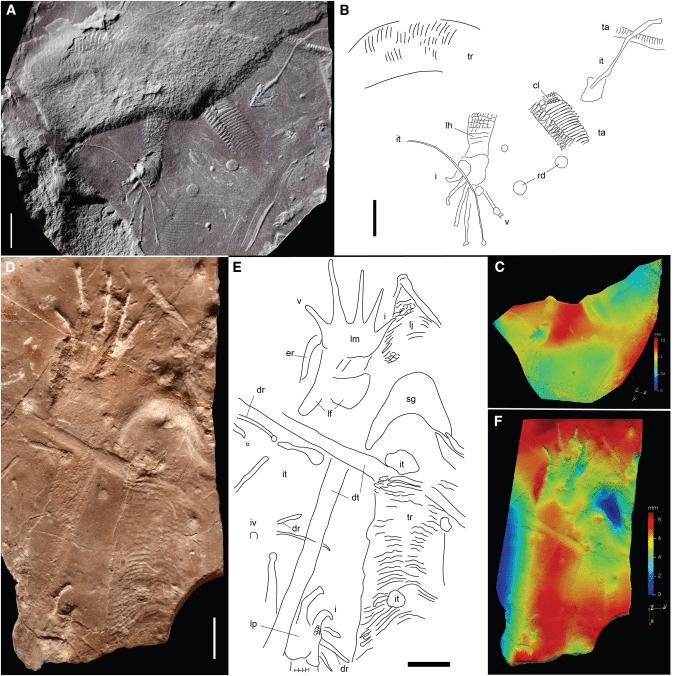
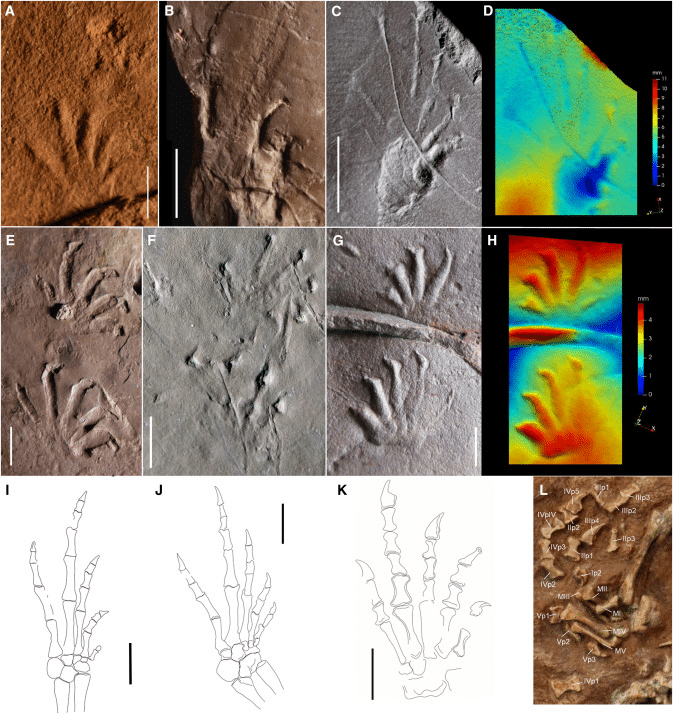
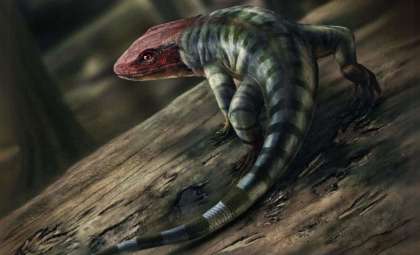
The skin impressions were uncovered alongside fossilized resting traces and early reptile footprints. The newly identified resting traces have been classified as Cabarzichnus pulchrus. The associated footprints bear size and shape similarities to bolosaurians, an early reptilian group on the evolutionary path to modern lizards.

Structures like scales, feathers, and horny beaks are documented in various dinosaur fossils, occasionally preserved as organic matter or surface imprints. However, such evidence becomes rarer further back in Earth's timeline. As Dr. Lorenzo Marchetti notes:
“Such soft tissue structures are extremely rare in the fossil record—and the further back we look in Earth’s history, the more exceptional they become,” He added that, “the traces from the Thuringian Forest open new perspectives on the early development of reptiles and their skin structures.”
The scales found display a variety of shapes ranging from diamond-like to hexagonal and pointed lateral forms. The study in Current Biology points out that these shapes closely resemble skin patterns found in later land vertebrates.
Ancient Cloacal Feature Possibly Detected
Scientists showed particular interest in a narrow, slit-shaped feature near the tail base that might be an ancient cloaca. Cloacas are present in most terrestrial vertebrates, serving reproductive and excretory functions, except for placental mammals.
Soft tissues are hardly ever preserved through fossilization, and identifiable cloacal structures are exceptionally uncommon. In this instance, the scientists observed a fine, slit-like impression close to the tail origin. The research suggests that the cloaca of the Cabarzichnus trackmaker differed from those of dinosaurs or crocodiles, resembling more closely those of turtles, lizards, and snakes.
Although only preserved as an impression, this anatomical feature is extraordinarily rare and provides valuable insights unattainable from bone fossils alone.
Trace Fossils Illuminate Evolutionary History
By analyzing these resting trace fossils within the framework of the BROMACKER project, Marchetti and colleagues highlight the significant scientific importance of trace fossils. Their research shows that fossilized tracks and impressions can conserve anatomical details rarely seen in traditional skeletal remains.
“Trace fossils are far more than simple footprints.” He noted, “they preserve anatomical details that would otherwise be completely lost and play a key role in improving our understanding of the evolution of early terrestrial vertebrates.”
The Thuringian Forest fossils offer a remarkable glimpse into the skin anatomy of early Permian reptiles.
- Categories:
- Science



0 comments
Sign in to Comment