
Scientists have unveiled 10 previously unknown spider species preserved from the Mesozoic era, with one of these fossils uniquely exhibiting eyes that still reflect light after 110 million years. Detailed in the Journal of Systematic Palaeontology, this groundbreaking discovery by teams from the Korea Polar Research Institute and the University of Kansas sheds new light on the diversity and evolution of ancient spiders. While many species resemble modern spiders, the exceptional eye preservation offers new perspectives on their sensory adaptations.
Unveiling History: Fossils from the Jinju Formation
The Jinju Formation in South Korea, dating to the Mesozoic era, has been recognized for its fossil richness, though finding well-preserved soft-bodied animals like spiders remains uncommon. Unlike sturdier structures such as bones or hardened shells, spider bodies are fragile and seldom fossilized intact.
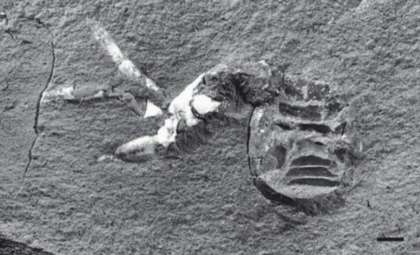
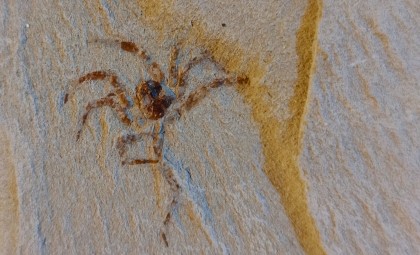
Nevertheless, researchers from the Korea Polar Research Institute and the University of Kansas uncovered 10 novel spider species encased in shale, a preservation medium rare for soft-bodied specimens. According to Paul Selden, a geologist at the University of Kansas, this remarkable find opens an unprecedented window into Cretaceous spider diversity.

“Because these spiders were preserved in strange slivery flecks on dark rock, what was immediately obvious was their rather large eyes brightly marked with crescentic features,” he explained in a statement.
Spider Fossils with Light-Reflecting Eye Structures
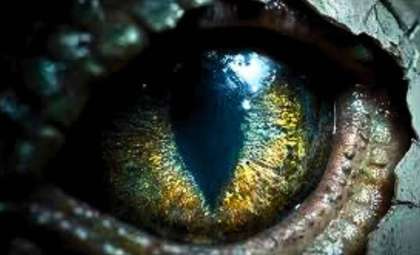
A standout aspect of this research is the identification of a tapetum in the eyes of two of the fossilized spiders. The tapetum is a reflective layer common among nocturnal creatures, such as cats, which enhances low-light vision. This finding marks the first record of a tapetum in fossilized spiders.
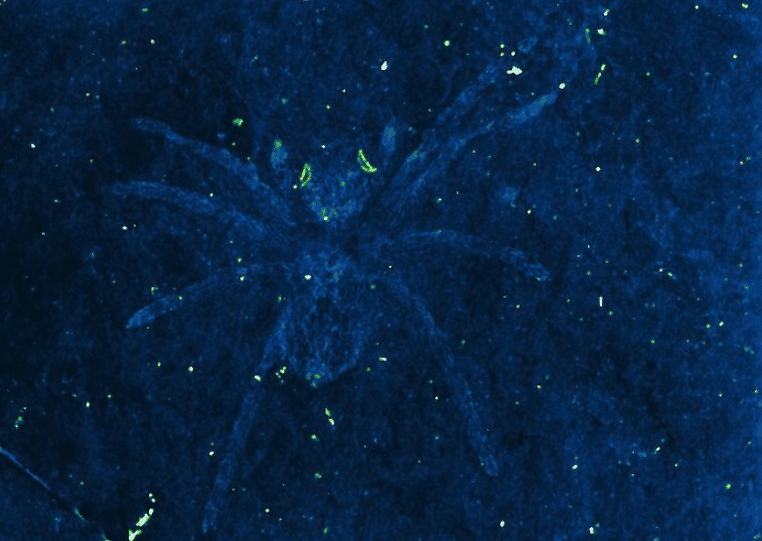
Such eye anatomy suggests these ancient spiders may have been adapted for nocturnal hunting, similar to some current species. As Selden elaborates:
“I realized this must have been the tapetum — that’s a reflective structure in an inverted eye where light comes in and is reverted back into retina cells,” he added, “It’s nice to have exceptionally well-preserved features of internal anatomy like eye structure. It’s really not often you get something like that preserved in a fossil.”
Broadening the Map of Cretaceous Arachnids
As reported in the Journal of Systematic Palaeontology, spiders from this period are rarely found in the fossil record, so this collection is exceptionally valuable to paleontologists. The identification of 10 new species has significantly enriched knowledge of Cretaceous funnel-web spiders. Selden points out that, particularly those with tapetum eyes, these spiders may have filled ecological roles comparable to modern-day jumping spiders.
“This is an extinct family of spiders that were clearly very common in the Cretaceous and were occupying niches now occupied by jumping spiders that didn’t evolve until later,” he explained.“But these spiders were doing things differently. Their eye structure is different from jumping spiders.”
Future research aims to examine amber-trapped spiders, which are more frequently found than rock fossils, to determine whether they also possessed a tapetum lucidum within their eyes.
“Amber fossils are beautiful, they look wonderful, but they preserve things in a different way,” Selden stated. “Now, we want to go back and look at the amber fossils and see if we can find the tapetum, which stares out at you from rock fossils but isn’t so obvious in amber ones because the mode of preservation is so different.”
- Categories:
- Science




0 comments
Sign in to Comment