
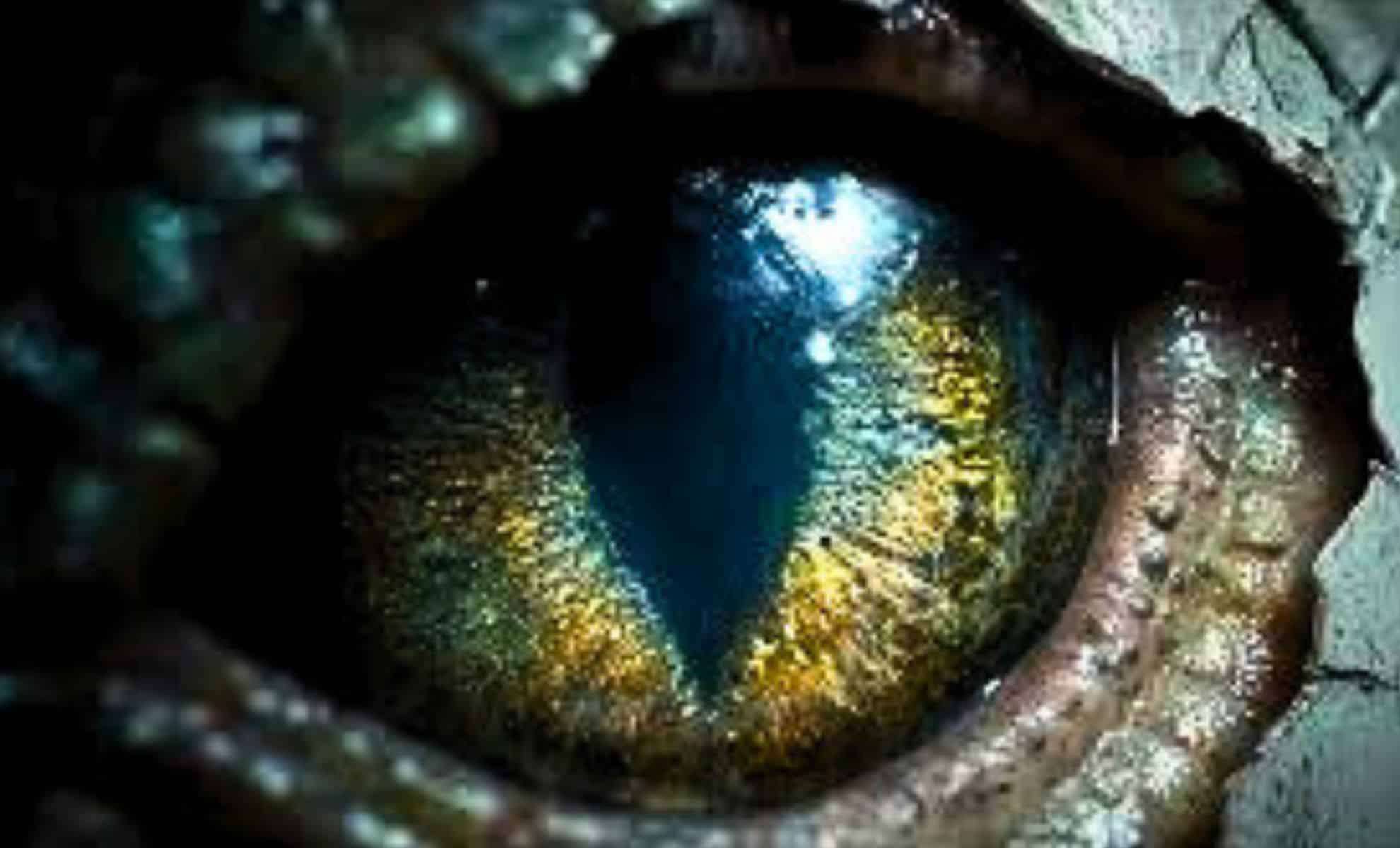
Since the discovery of ancient fossils, humanity has dreamed of encountering the creatures that once roamed our planet. The fantasy of witnessing mighty dinosaurs in action, captivating imaginations for decades, has remained out of reach due to natural limitations, especially the gradual decay of DNA over millions of years.
The primary obstacle has always been the ravages of time. DNA, the blueprint of life, deteriorates rapidly after death. While fragments may persist for a few thousand years, after millions of years, the genetic material effectively vanishes. Since dinosaurs have been extinct for about 65 million years, their original genetic codes were long considered irretrievably lost.
However, a new era of discovery is emerging with the rise of artificial intelligence. This technology excels at identifying patterns in incomplete data, bridging gaps where human analysis falls short and challenging our preconceptions about what is scientifically possible. It raises profound ethical questions: should we resurrect extinct species just because we have the ability to do so?

Decoding Life’s Fragments
The breakthrough wasn’t dramatic but transformative, centering around proteins—essential molecules for life. Traditionally, understanding protein structures took years of meticulous laboratory work. But that changed with AlphaFold, an AI developed by Google DeepMind.
AlphaFold predicts a protein's 3D shape based solely on its amino acid sequence, achieving accuracy on par with experimental methods. According to DeepMind, “AlphaFold is a system that predicts the 3D structure of a protein from its amino acid sequence. It regularly achieves accuracy comparable to laboratory experiments.” This marks a significant milestone in understanding life at a molecular level.
Encouraged by this success, researchers turned to the genetic data itself. Advanced models like ESM (Evolutionary Scale Modeling) analyze large-scale genetic databases—see examples of ancient DNA research—to reconstruct missing portions of degraded genomes through machine learning. These algorithms function like powerful autocorrect systems for DNA, filling in gaps based on evolutionary logic.
Yet, as Dr. Lena Sharma, a bioethicist at Stanford University, cautions, “It’s not a perfect copy, and it never will be. It’s a sophisticated prediction, a computational hypothesis of what the genome might have looked like. The danger is that we start to confuse a very good prediction with a recovered truth.”
Synthetic Biology: Turning Code Into Life
While digital reconstructions are impressive, they are not living organisms. The second phase involves synthetic biology, where companies like Twist Bioscience produce actual DNA sequences based on digital designs, assembling genetic material nucleotide by nucleotide.
This synthetic DNA can be inserted into living cells—the Asian elephant is a close relative often used as a host for woolly mammoth DNA. Modified cells replicate and differentiate, resulting in hybrid creatures that blend ancient genetic information with modern biological systems, creating living beings that are undeniably tangible.
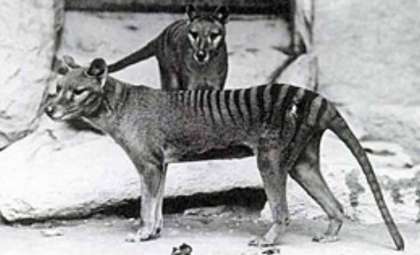
This effort is rapidly advancing beyond theory. Startups such as Colossal Biosciences have secured over $225 million in investments to pursue these ambitions. Their focus includes bringing back the woolly mammoth, aiming for a first live birth as soon as 2028. Efforts to edit elephant cells to express mammoth characteristics are already underway, alongside projects targeting the resurrection of the Tasmanian tiger (thylacine) and the dodo (now believed extinct).
“We are currently in the process of recreating extinct animals,” a representative from Colossal states in a promotional video, underscoring a groundbreaking scientific achievement along with inherent ethical complexities.
The Jur(ai)ssic Vision: Luxury and De-Extinction Collide
This scientific frontier raises complex issues when intersecting with wealth and privilege. The conceptual “Jur(ai)ssic Experience” imagines a secluded island where the ultra-rich can engage with genetically revived creatures through exclusive activities like hunting and riding. Though speculative, this idea highlights a real trend: the privatization of transformative scientific advancements.
Similar patterns have emerged in other cutting-edge fields. For instance, Altos Labs, backed by billionaires including Jeff Bezos and Yuri Milner, invests heavily in cellular reprogramming to combat aging. Wealthy individuals have also sought longevity through controversial methods such as young blood transfusions. Cryonics companies like Alcor charge substantial fees to preserve bodies, hoping future technologies will enable revival.
The concern lies in the commercialization of living organisms. If de-extinction technologies are controlled primarily by private enterprises, there is a risk that ecological and scientific motivations become secondary to profit. As Dr. Sharma warns, “the living world ceases to be sacred and becomes a business.” What was once a venture driven by discovery and conservation could shift toward exclusivity driven by wealth alone.









0 comments
Sign in to Comment