

Near the picturesque landscapes of Dinant, Belgium, scientists have made a revolutionary find that reshapes our understanding of Europe’s ancient inhabitants. The facial features of a Mesolithic woman, dating back roughly 10,500 years, have been painstakingly restored, offering unprecedented insight into the diversity and lifestyle of some of Europe’s earliest people.
Discovering the Margaux Woman
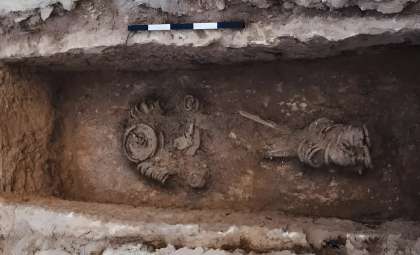
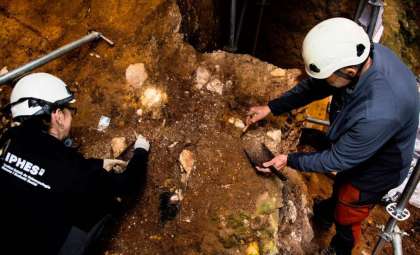
The ancient remains were first excavated in 1988 from the Margaux cave in the archaeologically rich Meuse Valley. This site contained the skeletal remains of eight Mesolithic women, but it has taken decades of research to reconstruct the visage of one individual in particular.
By integrating detailed anatomical examination, genetic sequencing, and archaeological context, researchers linked her to the same Western European hunter-gatherer lineage as the famous Cheddar Man from England.

Referred to now as the Woman of Margaux, this prehistoric individual is receiving growing attention from scientists involved with the ROAM project, a collaborative effort uniting archaeologists, geneticists, and bioanthropologists.
A Startling Appearance: Blue Eyes and Paler Skin
The woman’s reconstructed appearance defies previous assumptions about early Europeans. Genetic tests confirmed she possessed blue eyes, a trait shared with Cheddar Man. However, she also exhibited somewhat lighter skin pigmentation compared to her Mesolithic contemporaries in Western Europe, indicating a wider range of phenotypic variation than was earlier recognized.
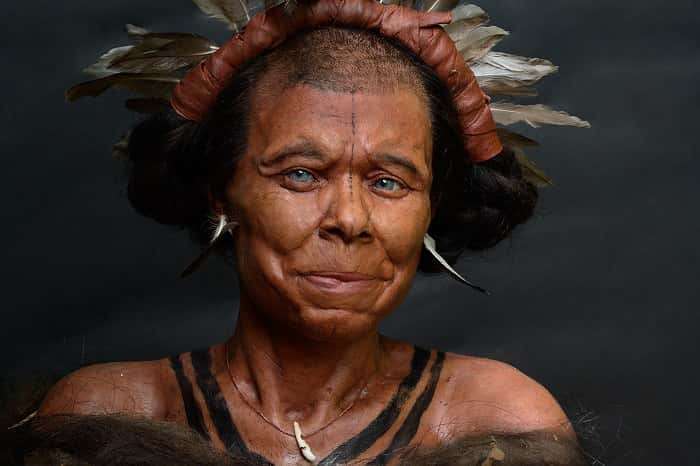
Dr. Maïté Rivollat, leading the genetic research released by Ghent University, highlighted the importance of these results. “Previously, our knowledge of European hunter-gatherer diversity was limited and considered rather uniform,” she said. This new evidence reveals a much more complex genetic and phenotypic landscape among ancient communities.
Bringing the Past to Life
The reconstruction project not only captures the Woman of Margaux’s physical traits but also reconstructs the setting of her life. Guided by archaeological artifacts—such as tools, pigments, and shells—artist Ulco Glimmerveen collaborated with scientists to vividly illustrate her environment and daily existence.
This artistic rendition conveys her close relationship with the natural surroundings, depicting how she may have interacted with wildlife and utilized technology available during the Mesolithic era.
Giving a Name Back to the Ancestor
Engaging the public, a naming campaign has been launched inviting people to propose names for the Woman of Margaux. Running from June 16 to June 30, 2025, this initiative encourages broader participation and aims to deepen the connection between present-day audiences and their ancient predecessors.
The Woman of Margaux’s detailed facial reconstruction, alongside related archaeological finds, will be featured in a traveling exhibition throughout Belgium. Visitors will have the chance to explore this extraordinary discovery and reflect on the intricate story of human evolutionary history continuing to unfold through scientific exploration.
- Categories:
- Science




0 comments
Sign in to Comment