
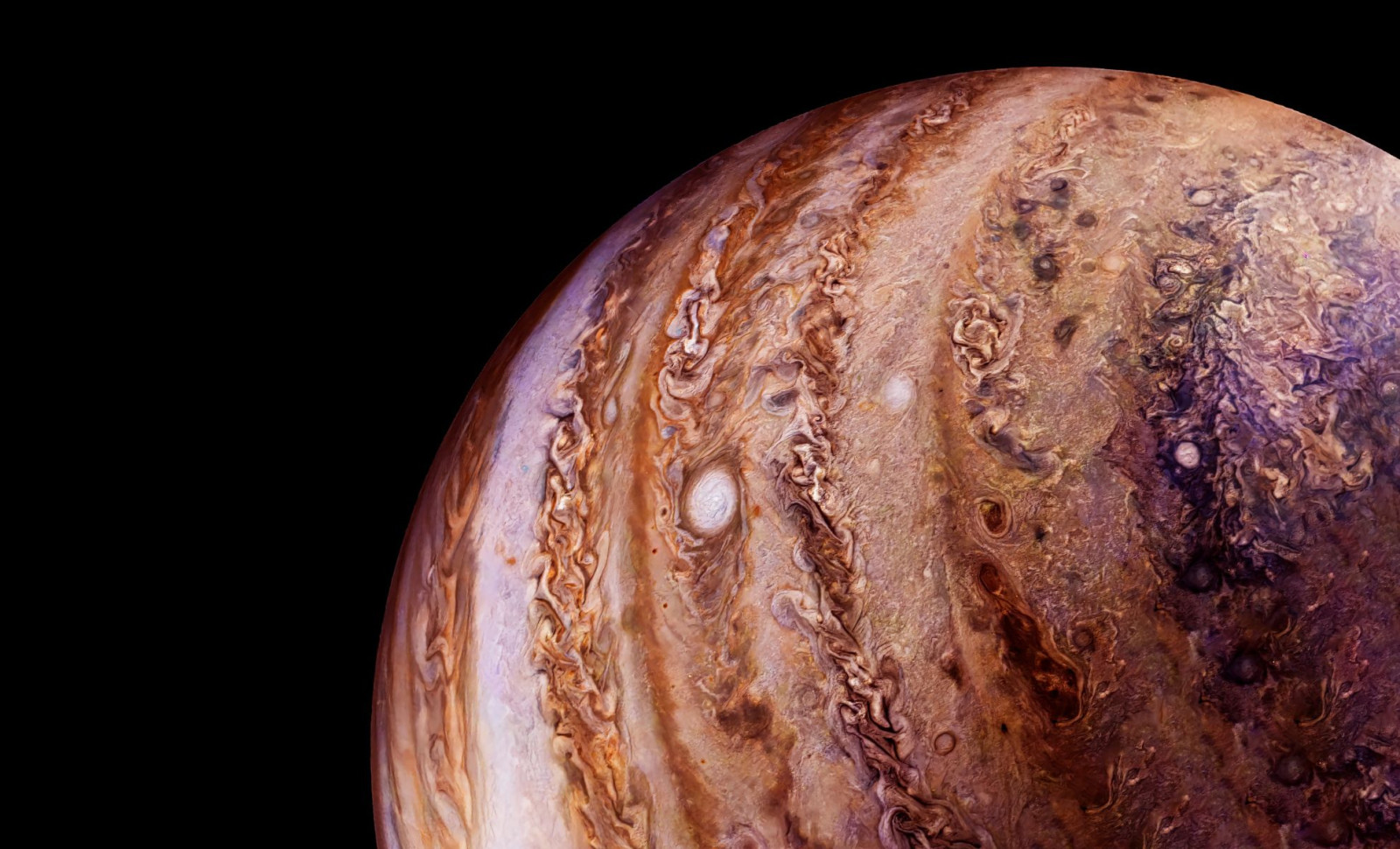
Beneath the turbulent clouds of Jupiter lies an unseen domain that scientists are beginning to unravel through cutting-edge simulations. A team of researchers from the University of Chicago and NASA’s Jet Propulsion Laboratory has discovered that the massive gas giant harbors a greater abundance of oxygen and carbon than previously estimated, prompting a rethink of how the planet formed. Their work utilizes sophisticated computational approaches to probe regions beyond the reach of physical probes.
By integrating chemical reactions with physical dynamics, this team has crafted detailed models that mimic the gas and cloud behavior inside Jupiter with unmatched precision. These new insights offer improved predictions about the planet’s internal makeup and the active mechanisms it experiences.
Integrating Chemistry and Fluid Dynamics
This innovative model uniquely combines atmospheric chemical networks with the planetary gas movements described by fluid dynamics. Traditional approaches treated these components separately, but uniting them reveals a more nuanced picture of how gases react and move in Jupiter’s extreme interior environment.

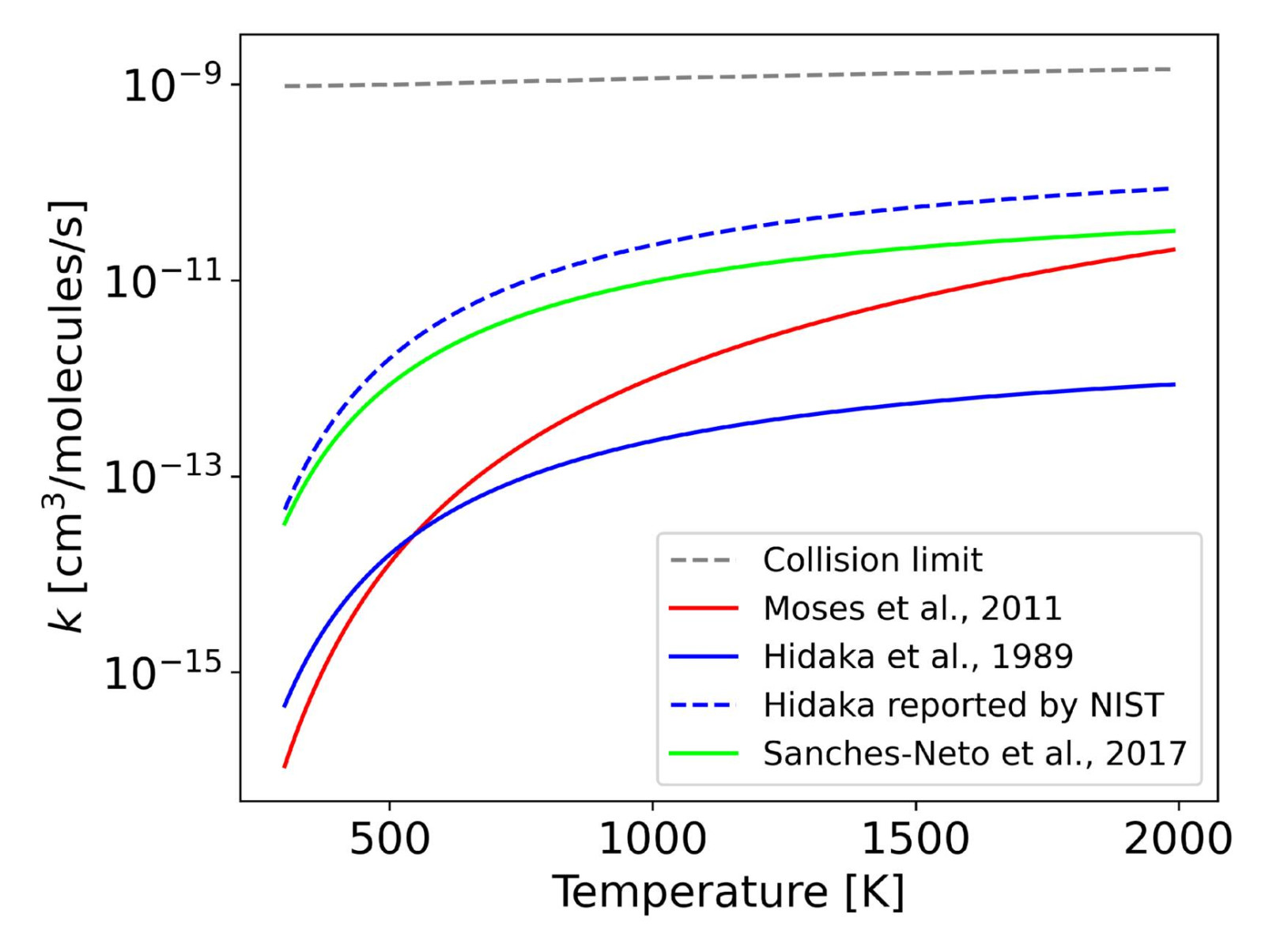
Published in The Planetary Science Journal, the simulation incorporates nearly 2,000 chemical reactions, generated via the Reaction Mechanism Generator. A standout process is the Hidaka reaction, which transforms methanol into methane and water under intense pressure—something prior models neglected or incorrectly modeled, resulting in flawed compositions.
“You need both,” said lead author Jeehyun Yang from the University of Chicago, in the report. “Chemistry is important but doesn’t include water droplets or cloud behavior. Hydrodynamics alone simplifies the chemistry too much. So, it’s important to bring them together.”
Uncovering Jupiter’s Concealed Oxygen
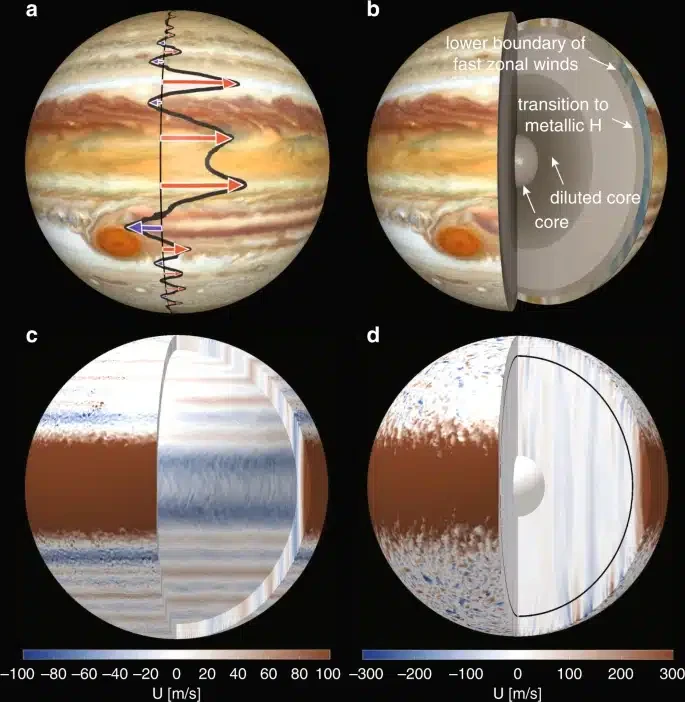
The study highlights surprising findings about oxygen quantities deep inside Jupiter. Because oxygen mainly exists in water, which settles in the lower atmospheric layers, direct observation is difficult. Scientists instead rely on measuring carbon monoxide, a heat-stable molecule, to infer oxygen levels.
The refined model indicates that Jupiter’s oxygen amounts range from about one to one and a half times that of the Sun’s levels, echoing recent data and reinforcing models that suggest a more oxygen-rich environment within Jupiter.
Additionally, the research reveals that gas circulation within the planet occurs much slower than previous estimates. Instead of hours, vertical mixing now appears to unfold over a timespan of weeks.
“Our model suggests the diffusion would have to be 35 to 40 times slower compared to what the standard assumption has been,” explained Yang.
This lag in vertical gas movement provides insight into why detecting water vapor from orbit remains elusive despite its expected presence in deeper atmospheric layers.
Carbon’s Clues on Jupiter’s Formation
The simulations also reveal that Jupiter’s carbon-to-oxygen ratio is nearly three times that of the Sun, suggesting it originated in a part of the early solar system abundant in carbon-rich solids instead of primarily water ice.
This discovery offers fresh perspectives on Jupiter’s early development and could refine planetary formation theories. Enhanced understanding of elemental compositions in gas giants will also improve interpretations of the chemical signatures found on distant exoplanets.
- Categories:
- Astronomy







0 comments
Sign in to Comment