
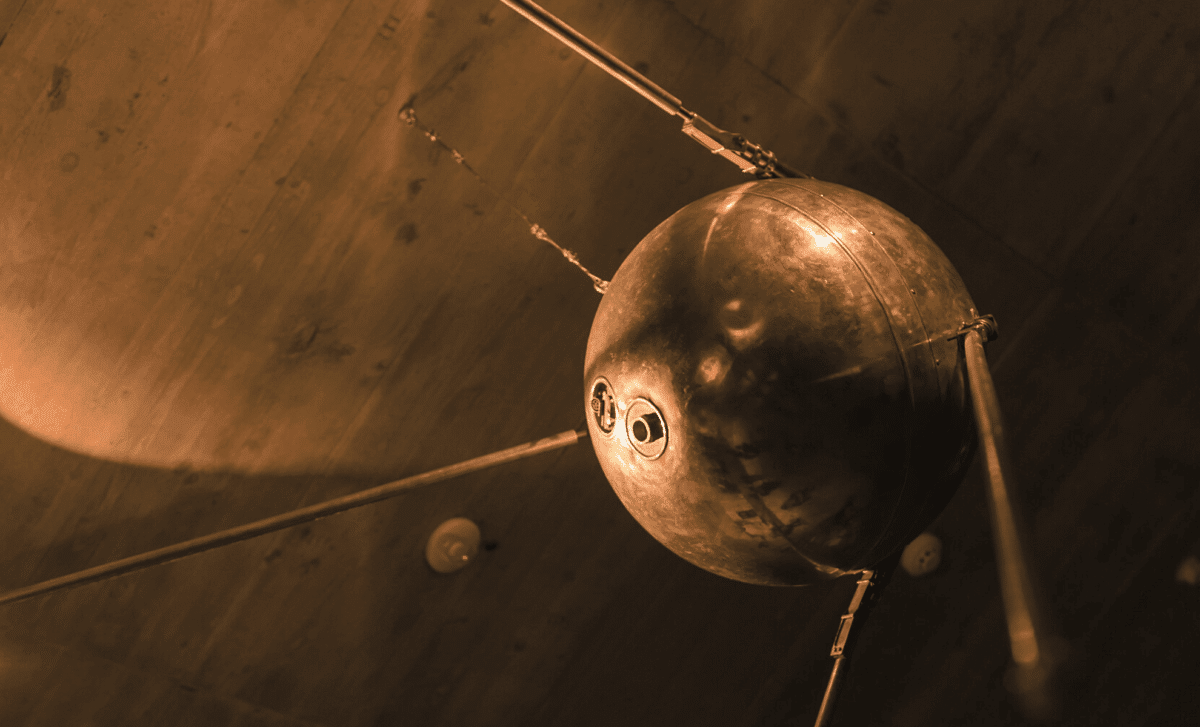
In an era where technology quickly becomes obsolete, the tale of LES-1, a satellite launched by the U.S. Air Force in collaboration with MIT’s Lincoln Laboratory back in 1965, presents a remarkable story of unexpected longevity. After decades without contact, LES-1 astonishingly resumed transmissions in 2013. This so-called “zombie” satellite, once dismissed as space debris, continues to send signals to Earth, challenging assumptions about spacecraft durability. To appreciate the impact of this event, it's essential to explore the satellite’s origins, its surprising reactivation, and the mysteries that its renewed signals evoke.
Origins and Early Challenges of LES-1
In 1963, Lincoln Laboratory at MIT initiated a pioneering project to create military communication satellites as part of the West Ford initiative. This venture produced the Lincoln Experimental Satellites (LES), a series of spacecraft aimed at testing high-frequency space communication technology. LES-1, launched on February 11, 1965, was the first to take flight but faced significant operational difficulties.
As NASA’s History Office explains, “The objective was to design, launch, and operate a combined system of LES and LET (Lincoln Experimental Terminals) to demonstrate practical military satellite communication.” Despite ambitious goals, the project saw mixed results. LES-1 encountered a wiring error in its ordnance system, preventing it from reaching the intended orbit and rendering its communication equipment inactive by 1967.

While LES-1 struggled, its counterpart, LES-2, successfully entered its final orbit a few months later in May 1965. LES-1, meanwhile, remained adrift and was eventually classified as inactive space debris—a failed experiment from an earlier era of satellite communications.
The Remarkable Revival
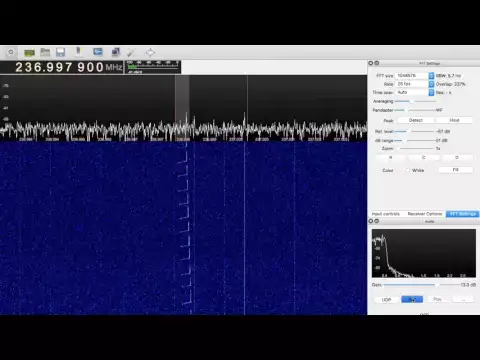
Jumping ahead to 2013, nearly fifty years since its last transmission, an unusual discovery was made by a radio astronomer in Cornwall, UK. A signal detected from orbit came from none other than the long-silent LES-1. Phil Williams, the amateur radio enthusiast who identified the signal, remarked on its peculiar, haunting quality. He said,
“This gives the signal a particularly ghostly sound as the voltage from the solar panels fluctuates.”
The signal exhibited a roughly four-second cycle, attributed to the satellite’s spinning motion, which caused periodic shading and exposure of its solar panels. This tumbling led to varying power levels, creating fluctuations in signal strength and its eerie audio signature.
The reappearance of LES-1 sparked great interest within the scientific community. This “zombie satellite” defied expectations by seemingly returning to life after decades of silence. Experts from Lincoln Laboratory, where the satellite was originally engineered, established tracking protocols to monitor LES-1 whenever it passed overhead, eager to study its newfound activity.
Unlocking the Mystery Behind LES-1’s Revival
The reasons behind LES-1’s unexpected resurgence remain speculative but compelling. A leading hypothesis involves an electrical fault. According to the Lincoln Laboratory,
“Though we don’t know for certain why this ‘zombie’ satellite came back to life, one possibility is that LES-1 experienced an electrical short (caused by its batteries or circuitry degrading over time), allowing power from its solar cells to directly reach the transmitter.”
This electrical short might have enabled the satellite’s solar panels—dormant for decades—to provide sufficient energy for its transmitter to function once more. While this remains a theory, it underlines how older technology can sometimes spontaneously regain partial functionality under unique circumstances.
Despite unanswered questions, LES-1’s revival stands as a remarkable example of space technology's durability. As Navid Yazdani, head of Lincoln Laboratory’s Advanced SATCOM Systems and Operations Group, reflected,
“LES-1 is one of the oldest satellites in space and part of Lincoln Laboratory’s legacy in SATCOM [satellite communications], so to see it still transmitting after all these years is remarkable.”
The unexpected comeback of LES-1 offers a unique window into the evolution of satellite communications. Its design and testing laid foundational work for future advancements, influencing both defense and civilian spacecraft communication systems.
- Categories:
- News












0 comments
Sign in to Comment