

Orbital debris poses a mounting hazard to satellites and space operations, with more than 14,000 pieces currently congesting low-Earth orbit. Addressing this challenge, Kazunori Takahashi, a scientist at Tohoku University, Japan, has engineered a novel bidirectional ion thruster that harnesses its own ion exhaust to nudge space debris out of orbit. This innovative method, featured by Space.com, complements findings from a recent Nature publication exploring propulsion-based debris mitigation techniques.
Space Debris: An Escalating Hazard in Low-Earth Orbit
Low-Earth orbit is increasingly cluttered with defunct satellites, used rocket stages, and fragments resulting from past collisions. Traveling at velocities surpassing bullets, this debris threatens operational satellites and the International Space Station (ISS). The ISS frequently performs risky and costly maneuvers to dodge debris, underscoring the urgency of this issue.
To combat this problem, engineers have proposed various removal approaches, including robotic arms, nets, and tethers. However, these solutions face significant hurdles, particularly due to debris spinning unpredictably, complicating safe capture and increasing risk for both debris and capturing spacecraft. Takahashi’s bidirectional ion engine circumvents these difficulties by offering a contactless method to gradually lower debris orbits, focusing on clearing the vital low-Earth orbit zone.

Mechanics of Takahashi’s Bidirectional Ion Engine
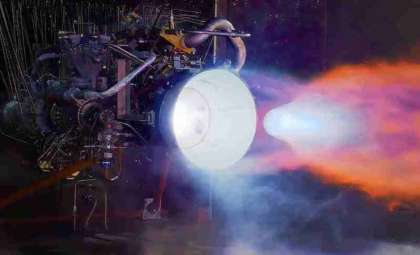
The core of Takahashi’s debris clearance concept lies in a bidirectional ion thruster setup. Unlike conventional ion engines with a single exhaust plume for propulsion, this design employs two exhaust nozzles pointing in opposite directions. This balance neutralizes thrust forces, allowing the spacecraft to hover stationary while exerting force on orbital debris. Ionized gas—commonly argon, selected for its cost-effectiveness versus xenon—is accelerated through these opposing nozzles, producing accurate, continuous thrust to push debris into lower orbits.
Highlighting the engine’s advantage, Takahashi shared with Space.com, “It can be operated using argon to a similar efficiency as with xenon, but providing a reduced cost for the propulsion device.” Ion engines ionize gas which is then expelled by electromagnetic fields. Although producing low thrust, this force accumulates over time, effectively nudging substantial debris pieces out of orbit.
Enhancing Efficiency Through Magnetic Cusp Innovation
While ion engines are valued for fuel efficiency, they typically generate limited thrust compared to chemical rockets. To improve performance, Takahashi integrated a “magnetic cusp” structure into the engine. This configuration minimizes plasma losses by steering ionized particles away from the engine’s internal walls, increasing exhaust efficiency. Takahashi explained, “The specific shape of the cusp provides a geometrical separation of the plasma from the wall, reducing the plasma loss.”
Thanks to this increased plasma confinement, the ion engine achieves higher thrust levels without additional power consumption. Laboratory results revealed a thrust output of 25 milli-Newtons (mN), triple previous benchmarks. This boost enables the thruster to handle larger debris objects, such as obsolete satellites, which pose the greatest dangers for ongoing space activities.
Argon Propellant and Prospects for Durability
Argon’s selection as the primary propellant offers notable benefits. Though less common than xenon in ion propulsion, argon is more affordable and maintains comparable ionization efficiency. Takahashi emphasized, “It can be operated using argon to a similar efficiency as with xenon, but providing a reduced cost for the propulsion device.” Lower propellant costs may facilitate broader deployment of this technology in debris removal missions, facilitating extensive clearing of low-Earth orbit over time.
However, challenges remain for long-term operation. The thruster demands considerable power, potentially several kilowatts, which may restrict applications to spacecraft with robust energy supplies. Advances in space-based power generation, such as superior solar panels and energy storage, could help overcome this hurdle in future implementations.
Mitigating Kessler Syndrome and Ensuring Space Sustainability
The escalating risk of Kessler Syndrome—a chain reaction of collisions creating increasingly dense debris fields—remains a critical concern. Large collision fragments can spawn more debris, potentially rendering large orbital zones unusable for satellites. Takahashi’s ion engine targets the removal of the most hazardous debris, reducing collision risks and helping maintain safe space access for future missions.
As space activity intensifies, the need for efficient debris mitigation grows urgent. Still in experimental stages, Takahashi’s thruster technology holds promise as an affordable, scalable, and non-contact means to safely cleanse Earth’s orbit.
- Categories:
- News








0 comments
Sign in to Comment