
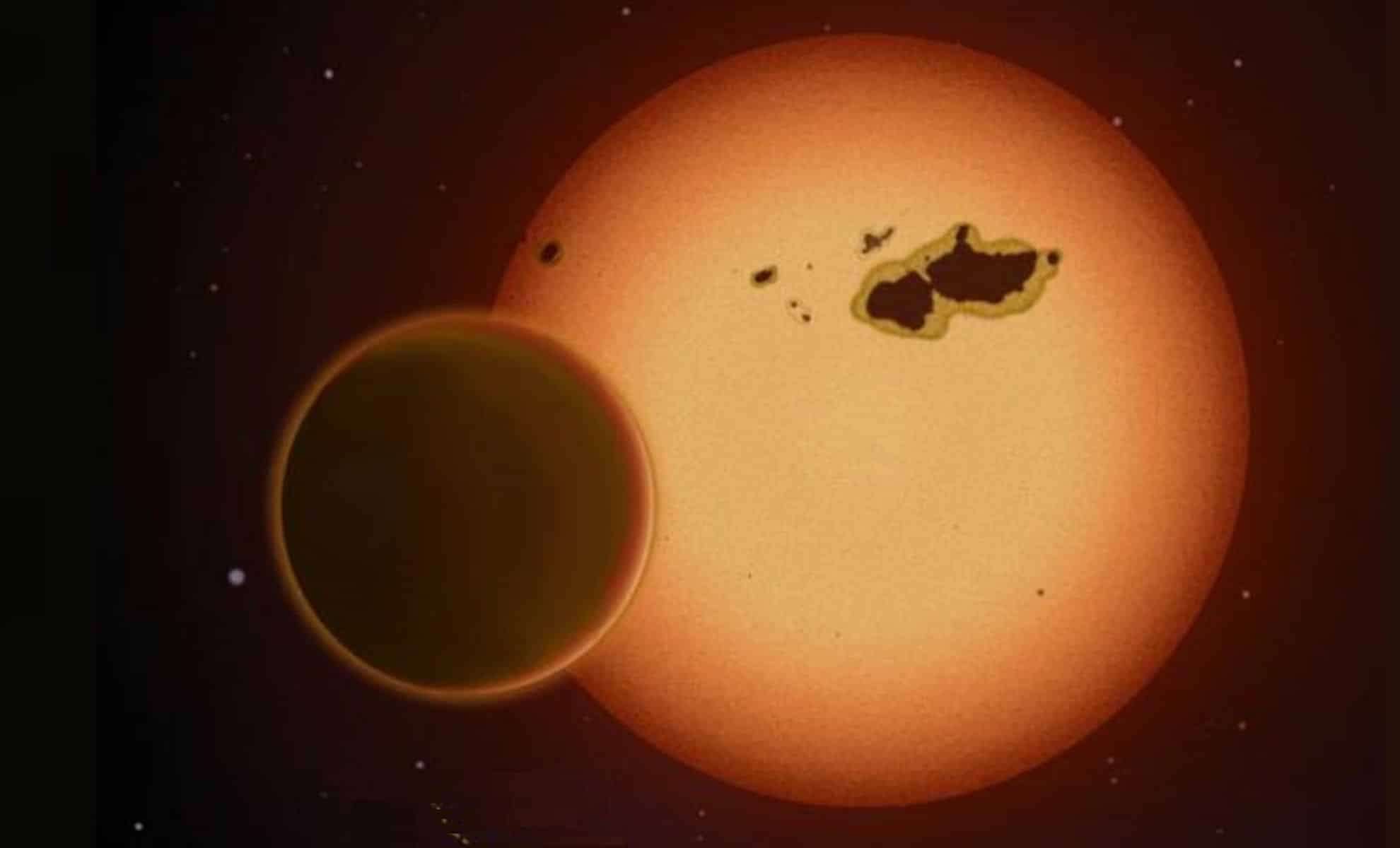
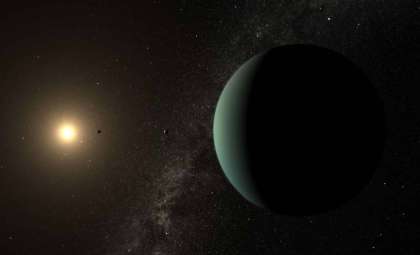
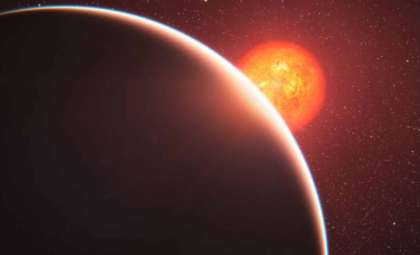
Researchers have identified a substantial super-Earth named Kepler-725c, situated within the habitable zone of its parent star. Located about 2,472 light years from Earth, this planet presents fresh opportunities for discovering conditions similar to our own planet beyond the Solar System. The finding comes from an international collaboration analyzing data from an established planetary system, illustrating how modern detection techniques continue to advance exoplanet research.
Discovery Enabled by Transit Timing Variation
Exoplanets are commonly found using the transit method, which detects a star's brightness dimming as a planet passes in front of it. This approach most effectively detects large planets with short orbits, as their frequent transits produce clear signals. In contrast, smaller, Earth-like planets with longer orbital durations often avoid detection via this standard technique.
The confirmation of Kepler-725c took advantage of a technique called transit timing variation (TTV). This method tracks how the gravitational influence of one planet affects the transit schedule of another. In this case, irregularities in the transit times of Kepler-725b, a warmer Jupiter-sized planet in the system, indicated the presence of an additional super-Earth.

Leilei Sun, lead researcher at the Yunnan Observatories under the Chinese Academy of Sciences, stated that TTV “makes it possible to detect and accurately determine the mass of a super-Earth or mini-Neptune within the habitable zone of a star similar to our Sun.” By leveraging this technique, the team successfully discovered a concealed planetary companion beyond the reach of traditional methods.
Encouraging Signs for Life in the Habitable Zone
Kepler-725c’s orbit around a G9V-type star—a cooler star similar to the Sun—positions it within the star's habitable zone during its 207.5-day revolution. Sitting roughly 0.674 astronomical units (AU) from this star, the planet encounters about 1.4 times the solar energy Earth receives at 1 AU, potentially allowing suitable temperatures for habitability under favorable conditions.
Experts speculate that such an orbiting distance could permit the presence of liquid water, a fundamental ingredient for life as we understand it. Still, confirming liquid water, atmospheric features, and surface conditions demands further investigations beyond orbital and radiant measurements.
With a size indicating a mass up to ten times that of Earth, Kepler-725c falls into a class of planets potentially possessing Earth-like characteristics, including rocky terrain and atmospheres that might support biological activity.
Expanding the Exoplanet Search with the TTV Approach
The deployment of TTV here marks a significant advancement in exoplanet detection. This method excels in star systems where only one planet transits the star directly, but gravitational effects suggest additional planets. In such cases, the gravitational influence of these hidden planets alters the visible planet’s transit schedule, providing crucial evidence for their existence.
Accurate determination of Kepler-725c's mass and orbital elements demonstrates how TTV can surpass limitations inherent in widely used transit or radial velocity techniques. This breakthrough paves the way for detecting more non-transiting exoplanets, especially those residing in habitable zones that might otherwise remain out of reach.
Next Steps in Identifying Earth Analogues
This discovery aligns with future endeavors such as the European Space Agency’s PLATO mission, which aims to discover smaller around Sun-like stars. By integrating TTV data with upcoming observations, scientists hope to deepen their understanding of these planets, extending beyond location and mass to include atmospheric makeup and surface conditions.
While TTV alone cannot yet reveal direct proof of water, oxygen, or the planet’s geological stability, it fortifies the search framework for finding genuine Earth analogues. Each new discovery brings us a step closer to identifying a true “Earth 2.0.”
- Categories:
- News







0 comments
Sign in to Comment