

Across the endless reaches of space, spacecraft and crew face a serious danger: fragments of debris moving at astonishing speeds, sometimes exceeding 16,000 mph. These tiny yet powerful particles can inflict severe damage on satellites and threaten astronauts’ safety. A pioneering solution has arrived in the form of “Space Armor,” an advanced composite material developed by Atomic-6 to counter these high-velocity hazards. This article delves into how this breakthrough technology is set to transform space defense from satellite shielding to human protection.
Escalating Challenge of Orbital Debris
Orbital debris, often called micrometeoroid and orbital debris (MMOD), poses an increasing hazard in Earth’s vicinity. With countless fragments racing through orbit at tremendous velocities, the tension of collision remains high. As Trevor Smith from Atomic-6 notes,
“Satellites and astronauts are constantly threatened by millions of untrackable, hypervelocity particles in orbit.”
Add Cosmo Herald as a Preferred Source

Imagine a small stone striking a vehicle’s windshield at extreme speed—in space, this situation could severely compromise sensitive satellite instruments and vital technology.
While traditional defense systems like the Whipple Shield have protected spacecraft for years, they tend to generate secondary debris when struck, which can escalate risks further. Space Armor offers a transformative advance, enhancing protection against these penetrating hazards.
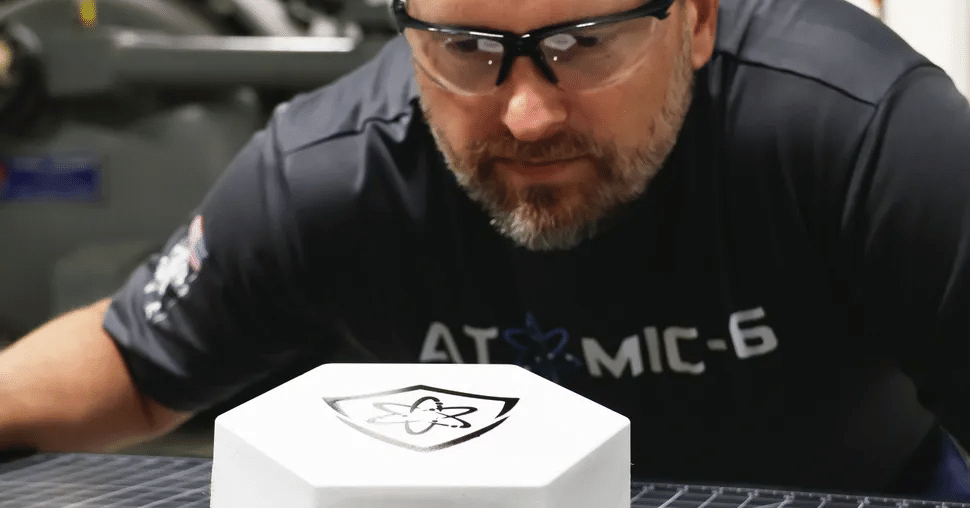
Innovative Mechanics Behind Space Armor
At the core of Space Armor is its distinctive composite build, crafted via a proprietary fiber-to-resin process. This method yields a shield that is exceptionally durable yet lightweight, outperforming traditional metal-based protection. Instead of fracturing and producing additional debris like older shields, Space Armor dissipates impact energy and lowers secondary fragmentation. Smith remarks,
“Everyone has known that composite materials can make potentially lighter, stronger MMOD shields. Atomic-6 has made that vision a reality with its Space Armor tile.”
Besides strength, Space Armor provides impressive adaptability. Though its default form is hexagonal tiles, the technology can be reshaped to fit a variety of spacecraft designs or even space suits for astronauts. This flexibility positions Space Armor as a critical asset across numerous space mission requirements.
Validating Space Armor’s Effectiveness
Extensive testing confirmed the robust performance of Space Armor before its deployment. Atomic-6 conducted hypervelocity impact trials on Earth, replicating the extreme collisions caused by orbital debris.
“It has taken around 18 months to take Space Armor™ tiles from an idea to a final product,” says Smith. The results from these tests were nothing short of astonishing. “We were blown away by the test results,” he adds, emphasizing the success of the project.
Beyond laboratory conditions, space itself provides a natural proving ground. Smith explains,
“The orbital environment has surprisingly high amounts of debris already, so we would effectively be testing the tiles using ‘natural analogues’ of hypervelocity guns. The orbital debris is already up there.”
This means that once deployed, Space Armor will face genuine debris impacts in orbit, delivering crucial insights into its durability and protective capabilities.
- Categories:
- News









0 comments
Sign in to Comment