
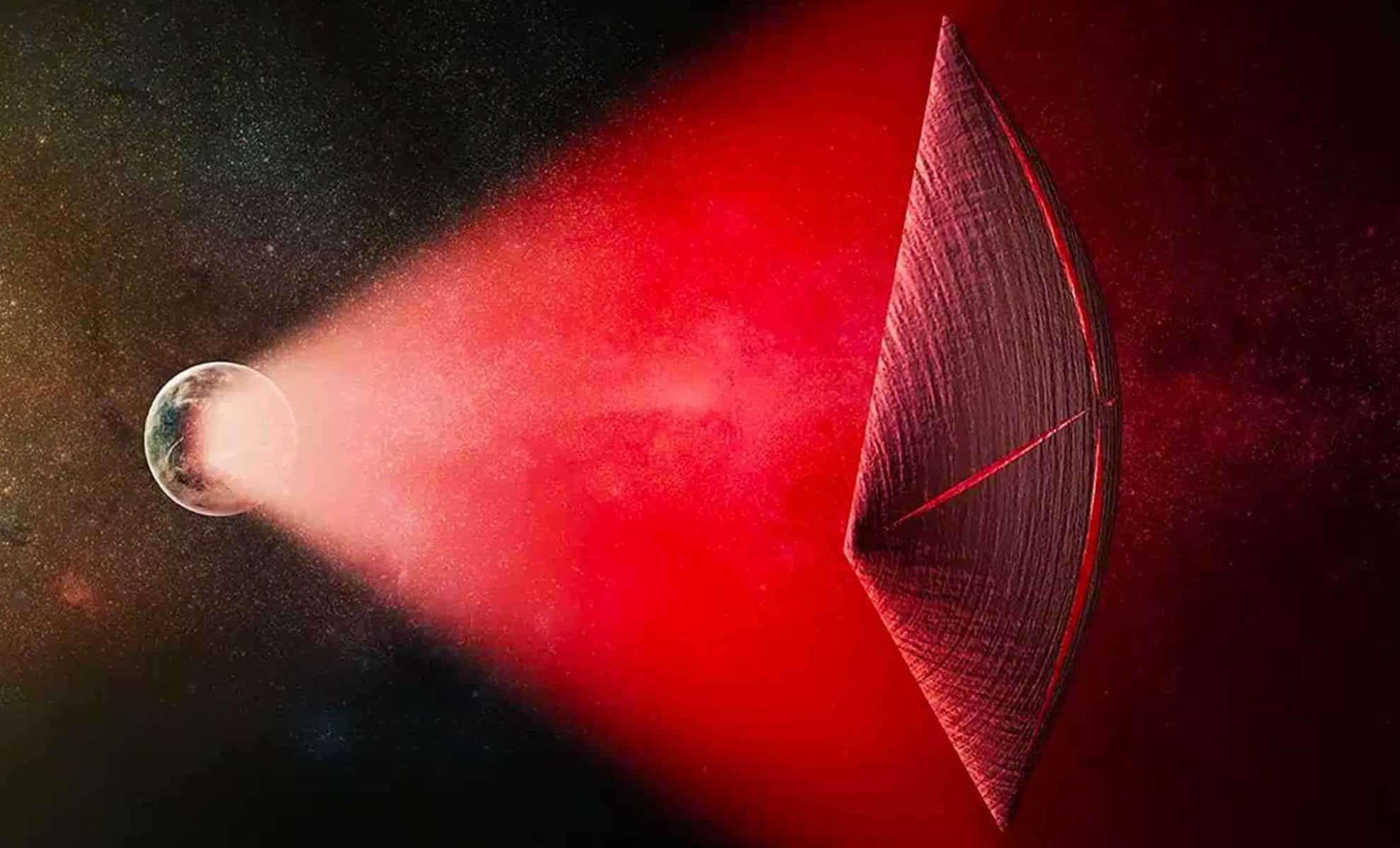
Recent advances in nanotechnology promise to dramatically speed up the development of space exploration missions. Researchers at Delft University of Technology and Brown University have introduced a groundbreaking ultra-light, laser-driven photon sail that offers the potential to propel spacecraft swiftly across the solar system and, possibly, to faraway stars.
Launching Laser-Driven Spacecraft into a New Age
The idea of using laser light to drive spacecraft has been around for some time, with projects such as Breakthrough Starshot aiming to send tiny, high-speed probes to nearby star systems in a matter of decades.
However, the practical hurdles—especially fabricating sails delicate enough to be propelled by light pressure yet strong enough to survive—have slowed progress. This is where the innovation by Lucas Norder and his team stands out.

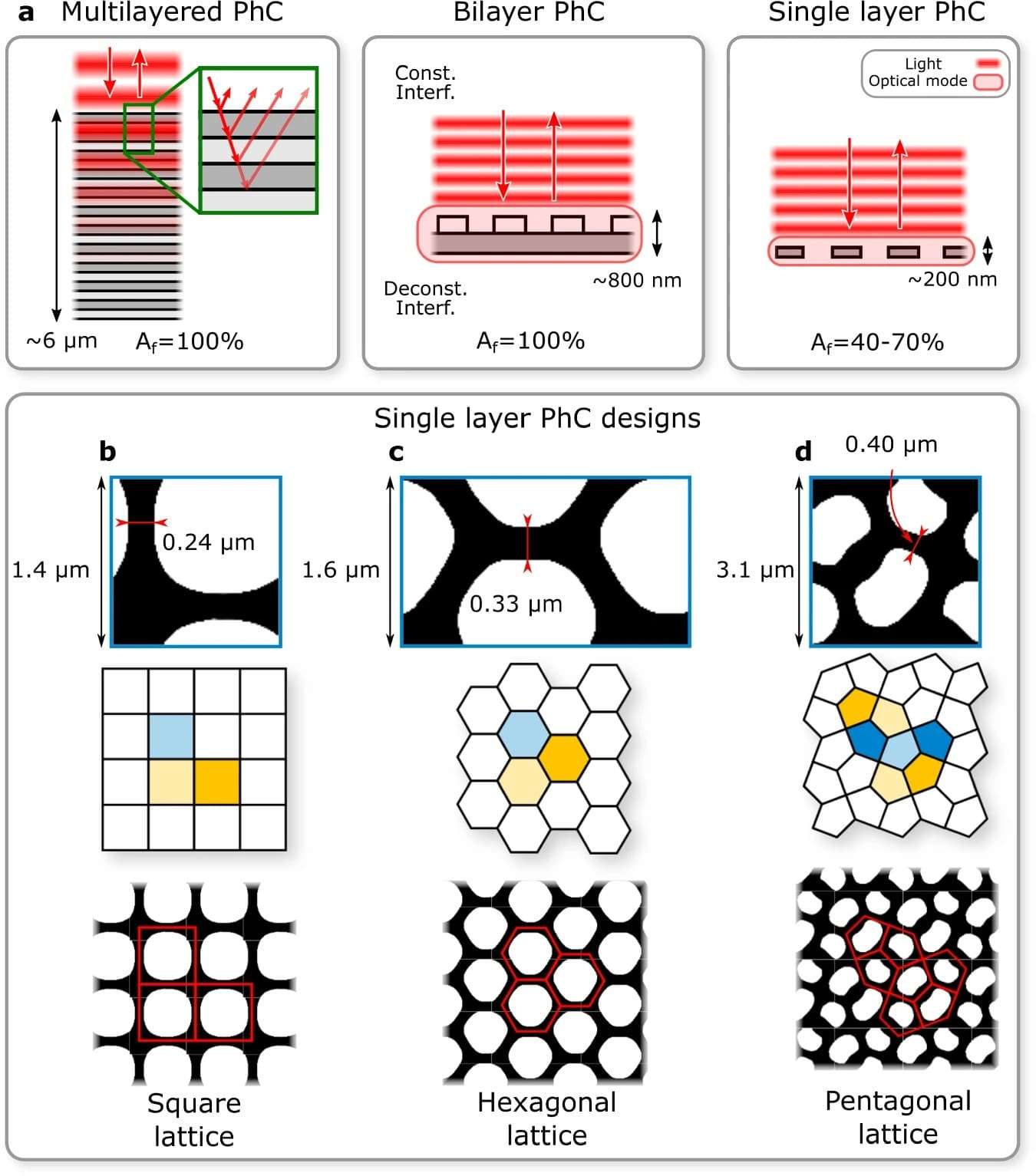
The researchers engineered sails measuring 60 millimeters square and astonishingly just 200 nanometers thick, roughly 400 times thinner than paper. Crafted from pentagonal photonic crystals, these sails function like intricate light-processing networks, enhancing photon interactions with their surfaces.
Featuring billions of nanoscale perforations, the sails dramatically reduce weight while maintaining crucial reflectivity and control. The photonic crystal arrangement enables effective conversion of laser energy into thrust with exceptional efficiency, according to the team.
From Years Down to One Day: A Manufacturing Breakthrough
A key highlight of this work is the dramatically shortened production time for these sails. Past designs, such as those for Breakthrough Starshot, required over a decade to manufacture the intricate nanoscale patterns.
In contrast, the joint effort by Delft and Brown researchers has slashed fabrication time to an impressive 24 hours. This remarkable acceleration not only brings laser-driven sails closer to practical use but also allows for swift experimentation with design variants.
Dr. Richard Norte, an associate professor at Delft, characterizes this innovation as “a completely new way of thinking about nanotechnology.” The thinness of these sails goes hand in hand with impressive scalability.
Theoretically, a full-size sail could extend to the length of seven football fields, all while maintaining a thickness as slim as one millimeter. Norte points to the sails’ unique blend of vast surface area combined with nanoscale architecture as the source of their unusual optical and structural qualities.
Paving the Way for Accelerated Mars Missions
Currently, test runs of these sails have only demonstrated propulsion across distances measured in picometers, far too tiny for actual space travel. The Delft researchers aim next to achieve motion spanning centimeters on Earth—a leap amounting to a 10-billion-fold increase from previous laser propulsion scales.
If scaled successfully, this technology could revolutionize the duration of trips like Mars missions. Typical journeys lasting between six and nine months might shrink to just a few days for lightweight exploratory probes.
These sails, driven by ground- or orbit-based laser arrays, could enable swifter exploration of the solar system and open new avenues in experimental physics on how light interacts with matter, as well as relativistic phenomena under macroscopic conditions.
An Innovative Platform for Frontier Physics and Exploration
The sails extend beyond their propulsion capabilities to become an experimental framework for deeper investigation of light-matter interplay. Backed by European Union funding, this research places Delft at the cutting edge of materials science and space propulsion technology.
Dr. Norte describes the sails as transcending mere miniaturization—merging the engineering of immense structures with nanoscale design.
By enabling meticulous manipulation of photons and forces at the nanoscale, these sails present a rare chance to explore relativistic effects and photon behavior in ways once thought achievable only through large observatories or particle colliders.
- Categories:
- Science









0 comments
Sign in to Comment