
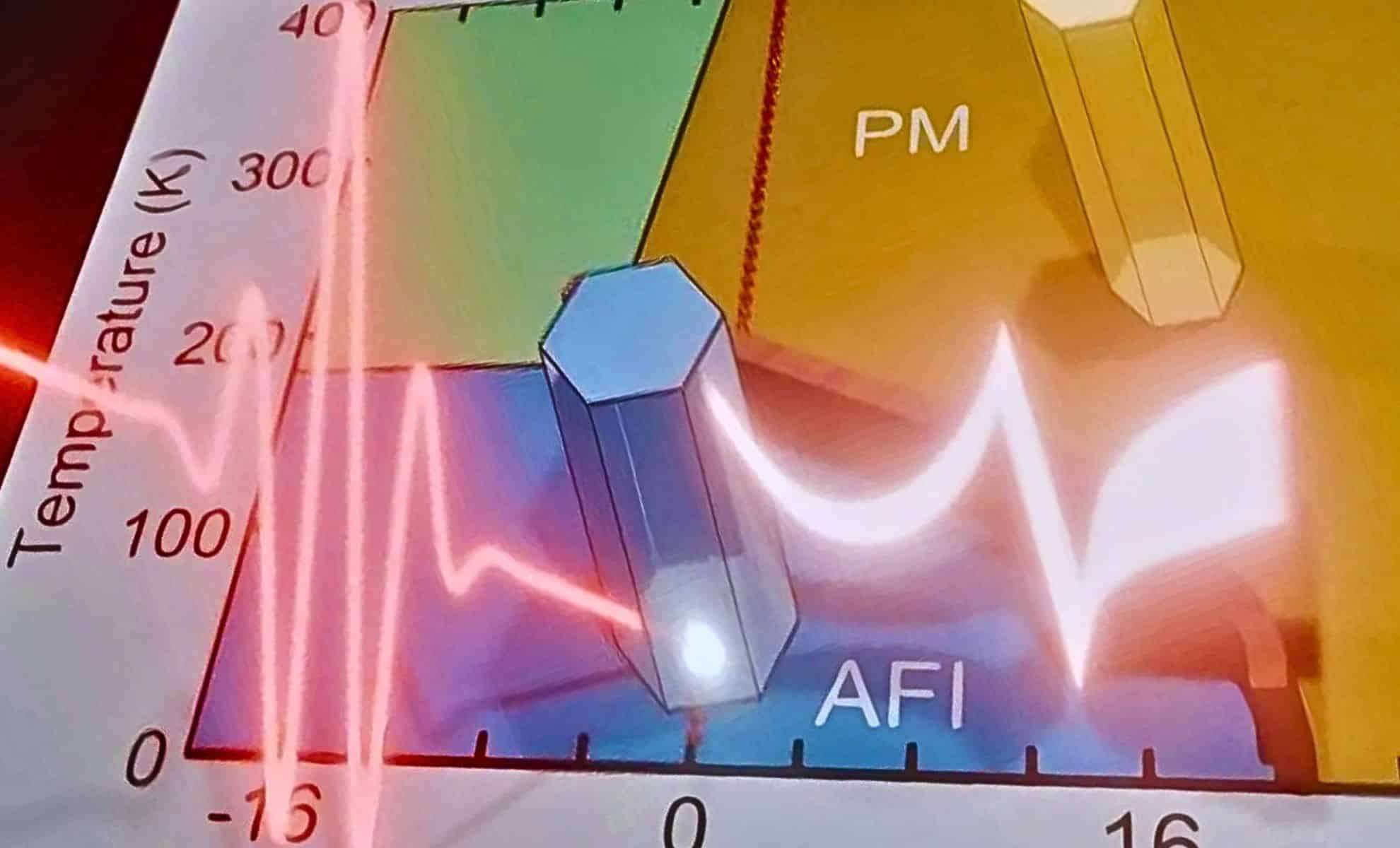
Breakthrough research in ultrafast electronics has demonstrated a material switching from an insulator state to a metallic state in an astonishingly brief interval—far faster than typical electronic switching speeds. Remarkably, this transformation unfolds in just 100 femtoseconds, a timescale almost instantaneous to human perception.
Light-Induced Rapid Material Shift
Scientists from an international collaboration have discovered that a quick burst of light pulses can trigger an incredibly fast transition in a thin film of vanadium oxide (V₂O₃), converting it from a non-conductive insulator into a metal. This transition happens within 100 femtoseconds (with 1 femtosecond equaling 10-15 seconds), which is far quicker than any conventional light flash.
The findings, detailed in Nature Physics, represent a significant advance in quantum material science. The project was headed by researchers at the French CNRS (National Centre for Scientific Research) alongside partners from Japan, operating through the DYNACOM International Research Laboratory.

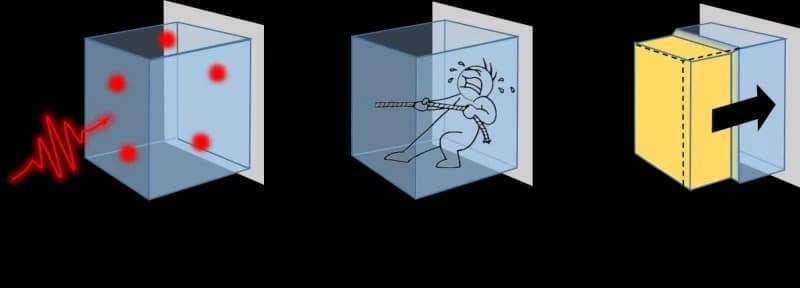
What sets this mechanism apart is its independence from heat-driven processes. Instead, it is propelled by deformation waves traveling through the crystal lattice at sonic velocities, which reconstruct the internal molecular arrangement, effectively turning an insulator into a metal.
Potential to Revolutionize Electronic Devices
The consequences of this research are far-reaching. It opens possibilities for devices to switch rapidly between insulating and metallic states, impacting areas such as data storage, electronics, and artificial intelligence. This could herald a new generation of high-speed, energy-efficient electronics.
Key advantages of this discovery include:
- Exceptional speed: The phase shift occurs within 100 femtoseconds, vastly surpassing current electronic switching speeds.
- Low energy consumption: The process happens without substantial heating, allowing for more sustainable tech solutions.
- Advancement in quantum tech: Gaining insights into Mott insulator transitions may fuel progress in quantum computing and AI applications.
- Innovative material control: Manipulating electronic states without thermal input offers groundbreaking material engineering possibilities.
Understanding Mott Insulators
At the heart of this discovery lies the nature of a Mott insulator, materials that should conduct electricity given their electron count but don’t due to strong electron repulsion. Normally insulating, these materials can rapidly change to a conductive state when influenced by external forces like light.
Vanadium sesquioxide (V₂O₃) is a classic Mott insulator, behaving as a metal at ambient temperatures but becoming an insulator when cooled. This study reveals that ultrafast laser pulses can reverse this state instantly without temperature shifts.
Using advanced methods such as X-ray diffraction and optical spectroscopy, the researchers monitored the structural simplification that induces the metallic phase in the V₂O₃ film.
Key Contributors and Research Centers
- CNRS (France): Offered critical expertise in quantum materials and condensed matter physics.
- DYNACOM International Research Laboratory: French-Japanese cooperative lab specializing in ultrafast material dynamics.
- Prof. Jean-Claude Charlier (CNRS): Principal investigator known for work with quantum systems and high-speed spectroscopy.
- Dr. Tetsuya Ishihara (University of Tokyo): Co-lead focusing on Mott insulator phenomena and phase transitions.
Transforming the Landscape of Electronics
The ability to toggle materials between insulating and metallic phases so rapidly ushers in a transformative era for electronic technologies. This breakthrough enhances our command over quantum materials, promoting innovations that were once thought unachievable.













0 comments
Sign in to Comment