
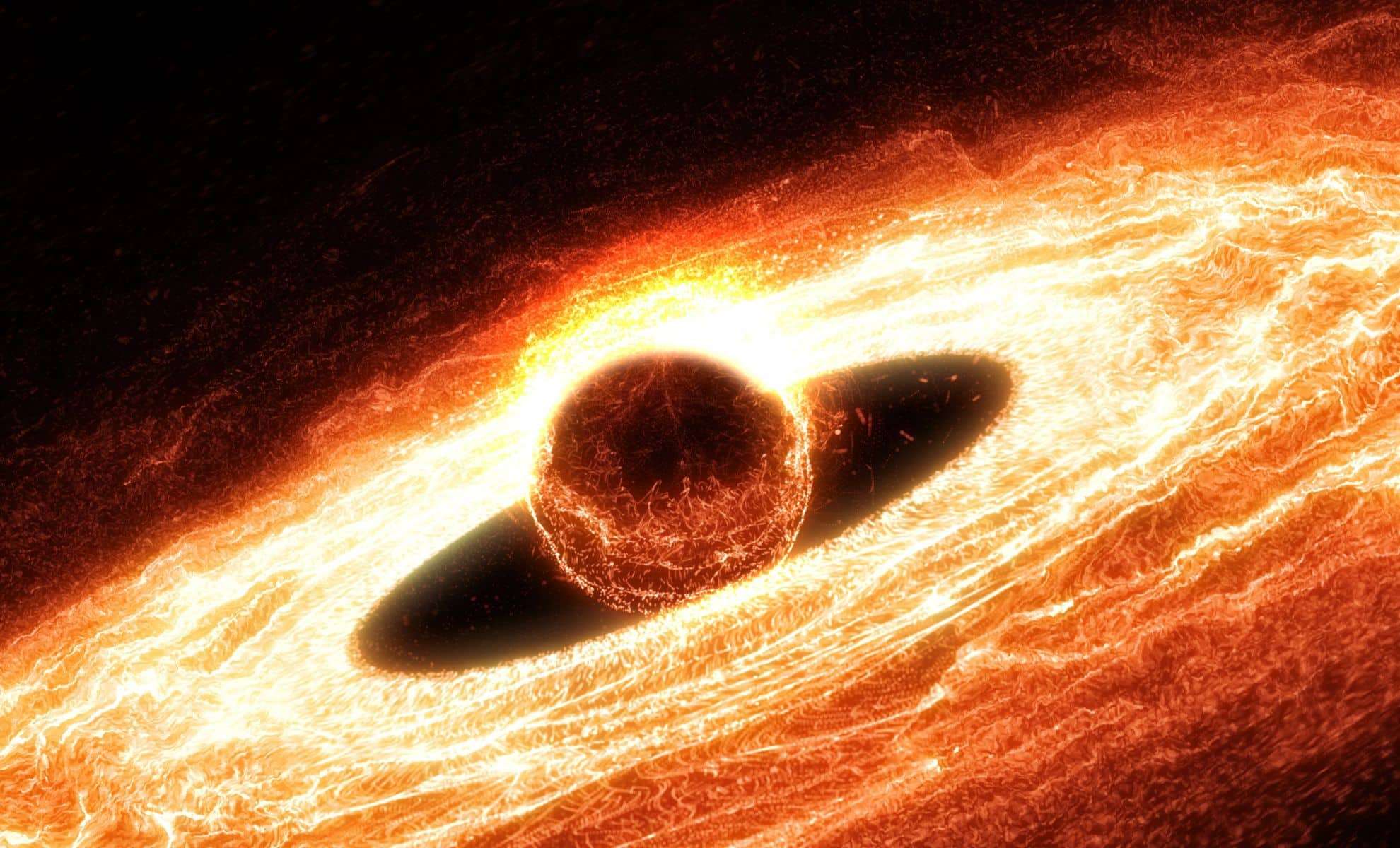
Recent research indicates that primordial black holes (PBHs), which are theoretical remnants formed shortly after the Big Bang, may soon undergo explosive events detectable with existing observational tools. Combining astrophysical modeling with fundamental theory, scientists suggest these minute black holes could emit intense bursts of Hawking radiation, granting an unprecedented observational window into phenomena anticipated over 40 years ago. This prospect is reinforced by studies in Physical Review Letters that examine the effects of a dark electric charge on PBHs, offering new insights into their stability and final life stages.
What Are Primordial Black Holes and How Do They Radiate?
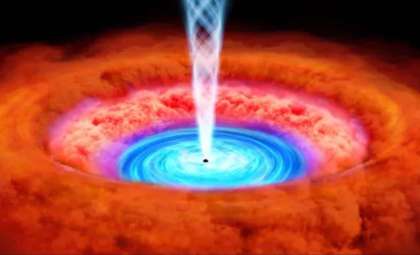
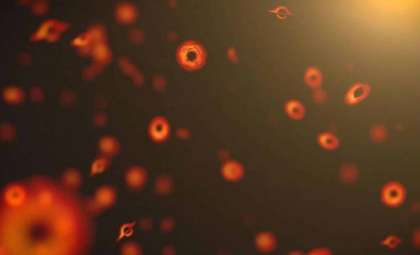
Primordial black holes are distinct from their stellar counterparts, which arise from the gravitational collapse of massive stars. Instead, PBHs are thought to have formed due to density fluctuations in the universe’s infancy, possessing masses typically much smaller than conventional black holes. Their diminutive size means they can emit Hawking radiation, a quantum effect causing them to shrink over time.
“The smaller the black hole, the hotter it becomes, releasing more particles,” explains Andrea Thamm, assistant professor of physics at UMass Amherst and study co-author. “As PBHs evaporate, they accelerate this process until an explosive finale. This Hawking radiation is exactly what our instruments might detect.” This self-amplifying emission implies that once a PBH’s mass dwindles below a threshold, it could erupt in a powerful explosion ejecting diverse particles across the electromagnetic spectrum.

Unlike explosions linked to dying stars, these events arise naturally as PBHs conclude their evaporation, presenting rare opportunities to directly witness fundamental physical processes.
Utilizing Today’s Technology to Spot Black Hole Bursts
While detecting Hawking radiation has traditionally been out of reach, current technologies are approaching the sensitivity needed to identify PBH explosions. “Our existing telescopes can capture this Hawking radiation,” states Joaquim Iguaz Juan, postdoctoral physics researcher at UMass Amherst. “Since only primordial black holes are capable of detonating now or in the foreseeable future, any detection of this radiation would confirm an exploding PBH.”
Monitoring gamma-rays and energetic particles over wide areas of the sky enables observatories to pinpoint the distinctive signatures of such explosions. Capturing these signals would not only verify the presence of PBHs but also provide direct evidence of Stephen Hawking’s 1974 prediction, bridging concepts in quantum mechanics and general relativity through observable phenomena.
Dark Electric Charge and PBH Stability
Emerging theoretical models propose that PBHs might carry a minuscule dark electric charge, temporarily halting their evaporation before a final outburst. “Our approach differs from previous assumptions,” notes Michael Baker, UMass Amherst assistant professor of physics and co-author. “If such a charge exists on a primordial black hole, our model predicts a phase of temporary stabilization prior to its explosive end.”
Taking into account all relevant experimental observations, this model shortens the expected interval between PBH explosions from roughly 100,000 years to approximately every decade. This revision raises the chances of witnessing such an explosion within the near future and highlights the importance of vigilant high-energy astrophysical monitoring.
Consequences for Physics and Cosmology
Documenting a PBH explosion would mark a pivotal advancement for both astrophysics and particle physics. Iguaz Juan stresses, “It would represent the first direct detection of Hawking radiation and a primordial black hole, delivering comprehensive data on the elemental particles constituting the cosmos. Such a discovery could revolutionize physics and reshape our understanding of cosmic history.”
These observations could offer critical insights into the universe’s particle makeup, refine dark matter theories, and constrain models describing the universe’s earliest moments. By melding quantum principles with astronomical observations, scientists aim to unravel long-standing questions about cosmic origins and architecture.
“While not guaranteed this decade,” adds Baker, “there’s about a 90% likelihood that it will occur. Given that the necessary technology is already at our disposal, preparedness is essential.” Combining forecasted theory, technological capability, and the prospect of imminent observation, this represents an extraordinary opportunity for deepening astrophysical knowledge.
- Categories:
- News





0 comments
Sign in to Comment