
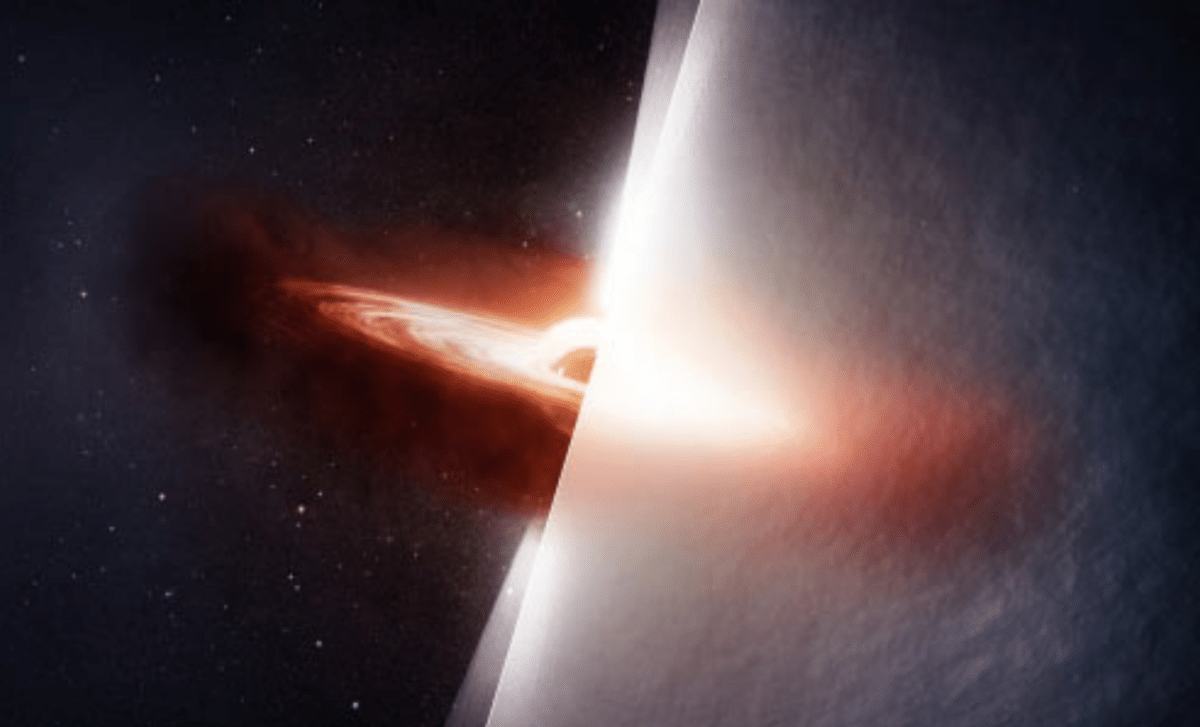
Astronomers have unveiled detailed new insights into how the turbulent interstellar medium within our galaxy alters and bends the light traveling from far-off celestial objects. By examining almost a decade’s worth of archival observations, researchers demonstrated that radio emissions from a quasar located 10 billion light-years away are influenced by chaotic clouds of ionized particles and electrons in the Milky Way. This breakthrough, featured in the Astrophysical Journal Letters, offers a novel approach to investigating the unseen forces shaping the space between stars.
Following a Distant Quasar Through the Milky Way’s Turbulent Regions
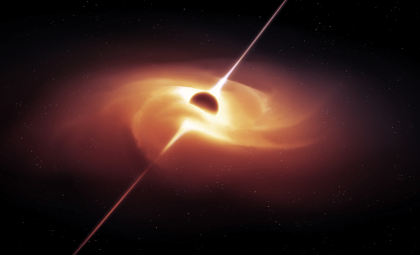
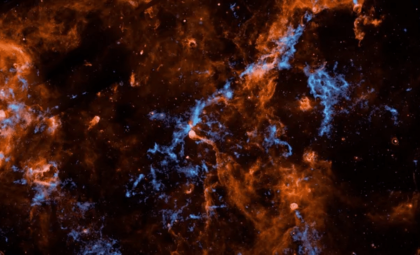
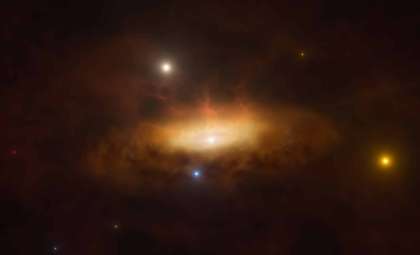
The quasar known as TXS 2005+403 shines brightly in the Cygnus constellation, energized by a supermassive black hole at an immense distance. As its radio signals journey through the Milky Way, they encounter the highly turbulent Cygnus area, one of the galaxy’s strongest scattering zones. Instead of simply blurring, the radio waves exhibit patchy and intricate distortions, allowing researchers an exceptional chance to explore the mechanics of interstellar turbulence.
“Most of what we see in the radio data isn’t coming from the quasar itself, it’s coming from the scattering caused by the turbulence in this region of the Milky Way,” Dr. Alexander Plavin of Harvard & Smithsonian’s Center for Astrophysics said. “That scattering and the distortions that come with it are what allows us to study the turbulence and better understand and infer its structure.”
Add Cosmo Herald as a Preferred Source

Through meticulous analysis of data gathered over nearly ten years by the NSF’s Very Long Baseline Array (VLBA), the investigators tracked shifts in the quasar’s emission. This extensive timeline uncovered that turbulence imposes consistent patterns rather than random interference, challenging earlier views of the interstellar medium as purely chaotic.
Persistent Patterns Defy Previous Expectations
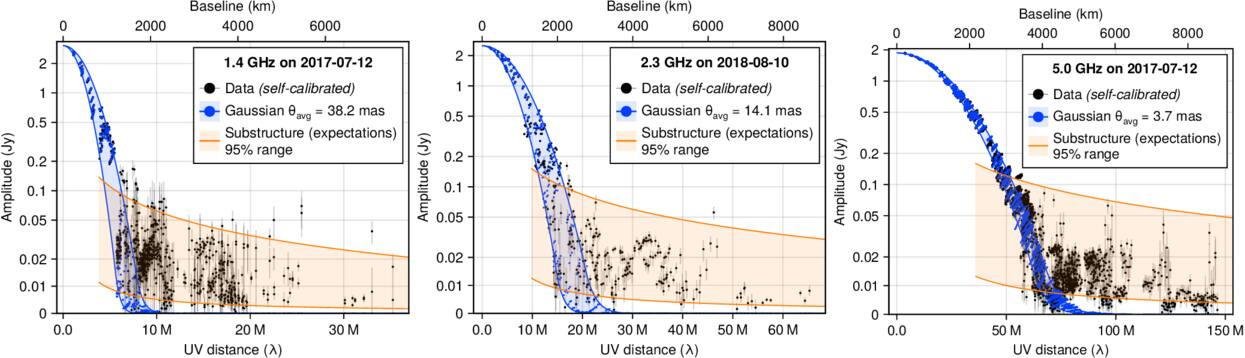
Earlier assumptions predicted that the quasar’s radio waves would simply blur into obscurity when passing through turbulent regions. Yet, researchers observed clear signals even at the longest telescope pair separations.
“The most distant pairs of telescopes should not have seen the quasar image, but to our surprise, they clearly detected its signal, or faint glow,” Dr. Plavin said. “It can’t be explained by simple blurring or by the quasar itself, and it behaves the way turbulence is expected to, which is how we know we’re seeing the effects of interstellar turbulence.”
These stable distortions serve as a distinctive tool for studying the Milky Way’s ionized gas clouds, exposing details on scales that were previously inaccessible. Furthermore, the research suggests that similar turbulent dynamics could influence observations of other distant galaxies, supernova explosions, and cosmic radio emitters.
Impact on Astronomy and Prospects for Future Study
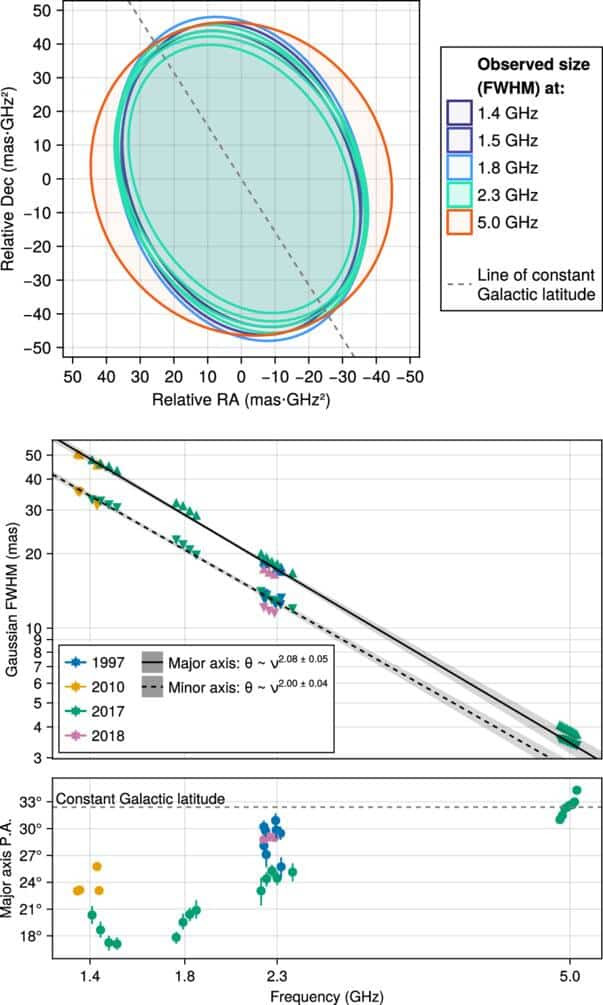
Decoding how interstellar turbulence behaves is vital for astronomers interpreting radio-wave data. This research confirms that even bright, remote sources like quasars have their observed signals reshaped by the interstellar environment they traverse. Published in the Astrophysical Journal Letters, the findings highlight the durability of turbulent scattering features along this sightline through the galaxy.
“The scattering properties along this line of sight through the Galaxy remain persistent over time,”
demonstrating that certain turbulent characteristics remain stable within a highly dynamic setting.
The research team aims to motivate further comprehensive long-term campaigns utilizing the VLBA and complementary radio telescopes. Mapping turbulence across varied directions will enable construction of a three-dimensional model of the Milky Way’s ionized medium, enhancing understanding of star formation, cosmic ray travel, and overall galaxy evolution.
- Categories:
- Astronomy




0 comments
Sign in to Comment