
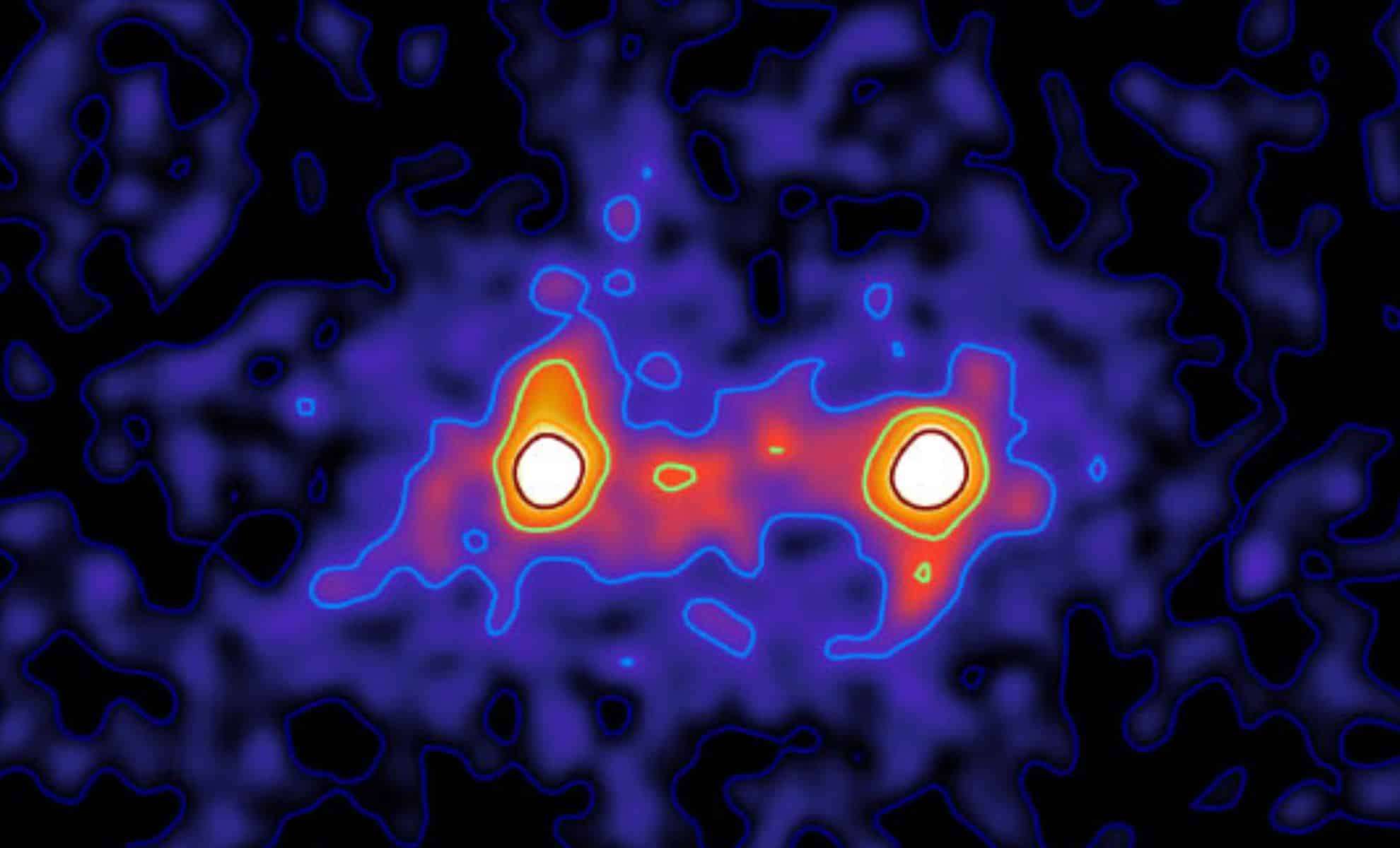
Researchers have uncovered a remarkable feature within the Perseus galaxy cluster, situated 240 million light-years away. For the very first time, a bridge composed of dark matter has been observed connecting two galaxies undergoing a collision.
A Groundbreaking Discovery: The Dark Matter Connection
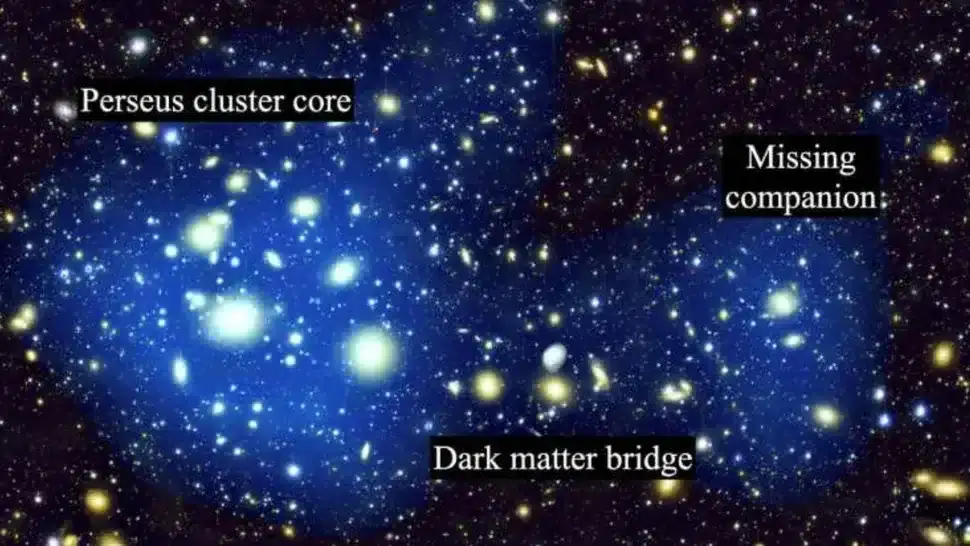
The findings, published on April 16 in Nature Astronomy, detail a newly identified subcluster located 1.4 million light-years to the west of NGC 1275, the central galaxy within the Perseus cluster.
This subcluster is connected to the core of Perseus by a faint yet significant material bridge, primarily made up of dark matter, which is critical in shaping the universe’s structure.
James Jee, part of the investigative team, commented, “This is the missing piece we’ve been looking for.” He added that with the dark matter bridge, “the unusual formations and swirling gases observed in the Perseus cluster are now understandable within the framework of a significant ongoing merger.”
Using Gravitational Lensing to Expose Invisible Structures
Jee’s group employed the Subaru Telescope’s Hyper Suprime-Cam to capture the most profound images ever taken of the Perseus cluster. The pivotal technique enabling this breakthrough was gravitational lensing, a concept first predicted by Albert Einstein.
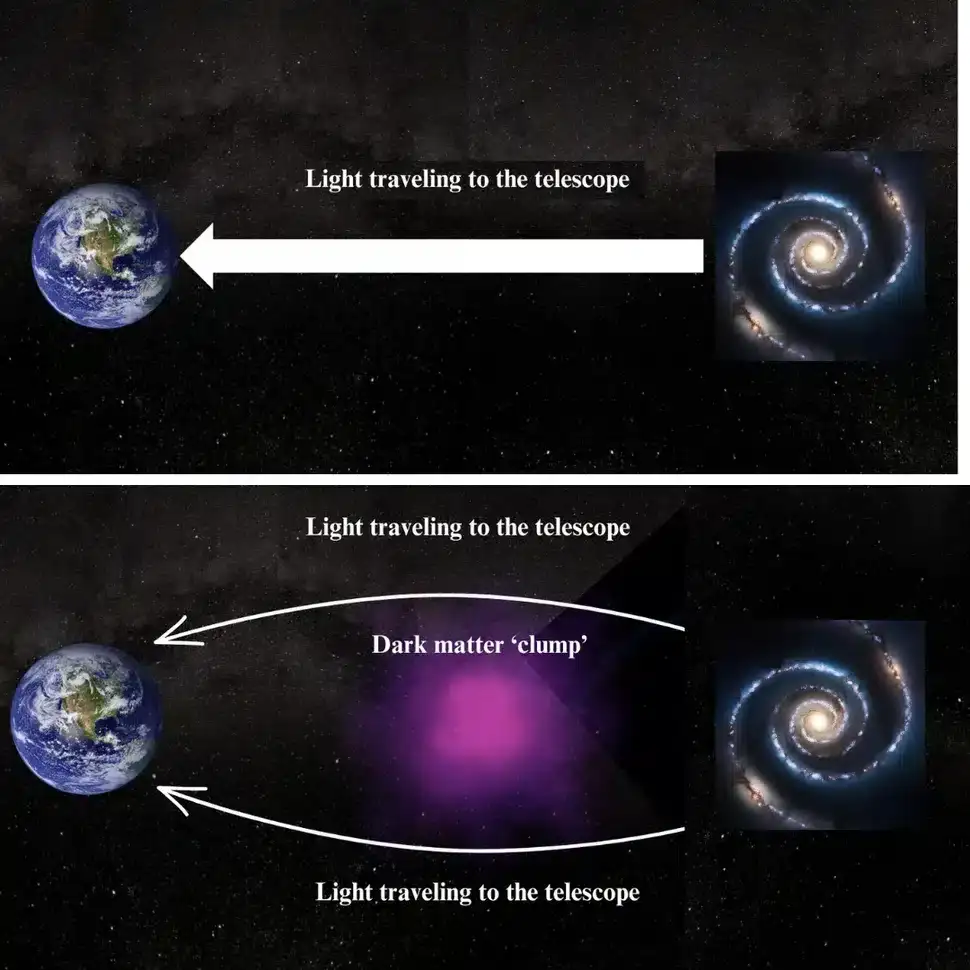
Gravitational lensing happens when the gravity of a massive object, such as a galaxy cluster, bends light coming from distant sources.

Through gravitational lensing, the team identified a dark matter concentration weighing approximately 200 trillion times the mass of our Sun. This clump connects to Perseus’s core via the faint dark matter bridge.
Further analysis revealed that this dark matter concentration collided with the Perseus cluster roughly 5 billion years ago, and the aftermath of that collision continues to influence the cluster’s current structure.
The Turbulent Past of Galaxy Cluster Mergers
Galaxy clusters rank among the universe’s largest formations, consisting of thousands of galaxies held together by gravitational forces.
These colossal structures primarily grow through energetic mergers, second only to events like the Big Bang. For decades, scientists suspected that the Perseus cluster’s growth was fueled by such mergers, but conclusive proof was missing — until this discovery.
The Perseus cluster, with a mass estimated at 600 trillion times that of the Sun, has often been considered the “archetype” of galaxy clusters.
Despite its enormous size, definitive evidence confirming its growth via mergers hadn’t been found — that is, until the dark matter bridge was observed.
Unleashing the Potential of Gravitational Lensing to Investigate Dark Matter
According to Jee, “This achievement was made possible by combining Subaru Telescope’s deep-imaging capabilities with our enhanced gravitational lensing methods — highlighting lensing’s effectiveness in revealing the hidden dynamics of the universe’s largest structures.”
This breakthrough not only deepens our knowledge of the Perseus cluster but also opens new pathways to explore dark matter, one of the universe’s most enigmatic elements.
- Categories:
- Physics



0 comments
Sign in to Comment