

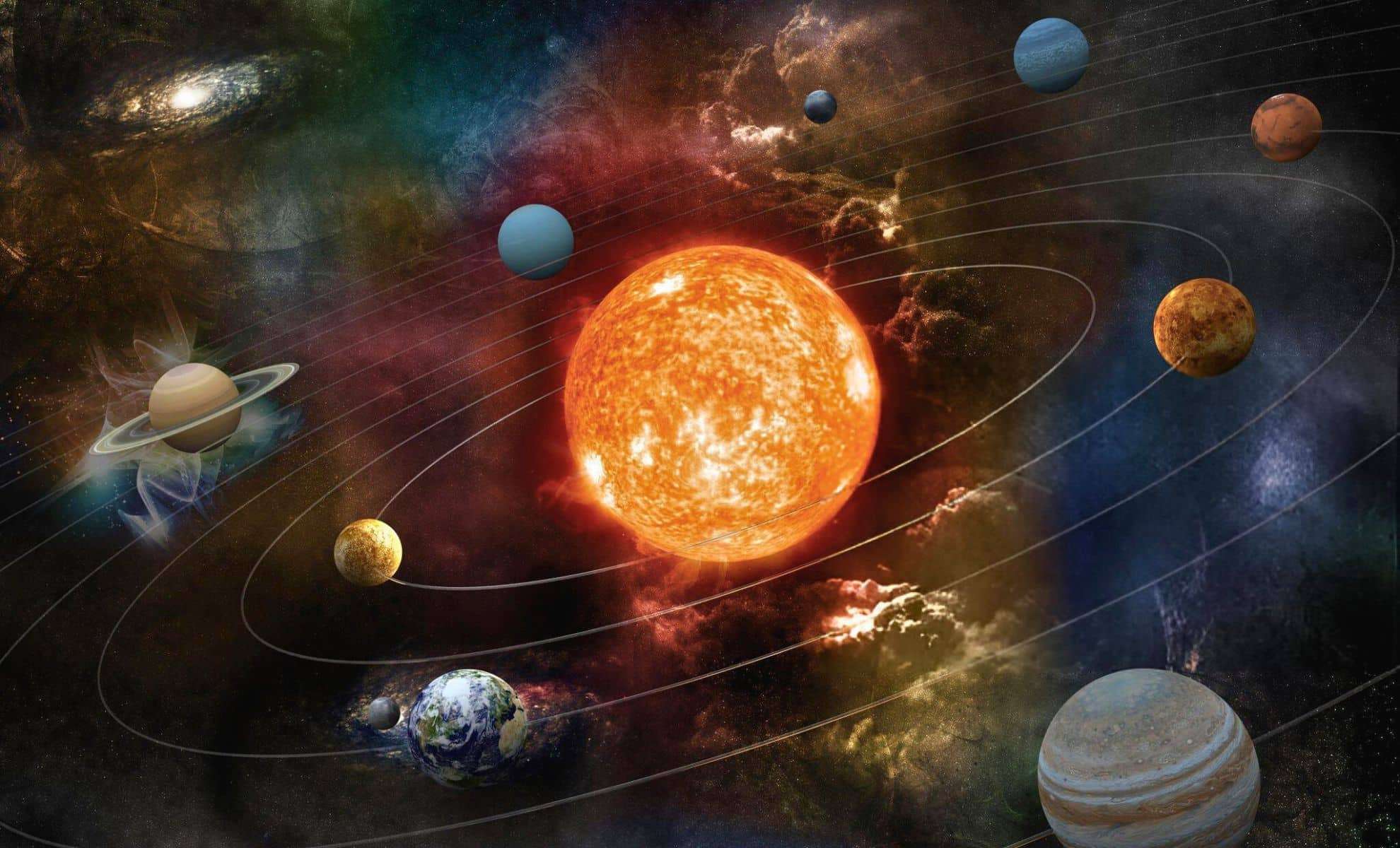
The concept of a hidden ninth planet, often called Planet Nine, at the fringes of our solar system has intrigued both scientists and enthusiasts for a long time. With recent leaps in astronomical instrumentation, researchers may soon be able to verify its presence and expand our knowledge of the cosmic landscape we call home.
The Enigmatic Planet That Evades Detection
Once considered part of the nine-planet lineup, Pluto’s reclassification in 2006 left a gap in the outer solar system. However, this space might not be empty. The existence of a distant planetary body—a massive gas or ice giant—has been theorized, orbiting far beyond the known planets. This hypothetical planet could be around seven times Earth's mass, tracing an orbit so vast it requires thousands of years to circle the Sun.
Though direct observation has been unsuccessful, the gravitational influence of Planet Nine is suspected from the peculiar clustering of objects within the Kuiper Belt, a distant ring of icy bodies beyond Neptune.

Evidence Supporting Planet Nine:
- Size and gravitational effect: Its mass could explain odd orbital paths seen in distant solar system residents.
- Orbital period: Completing one orbit every thousands of years makes spotting it a significant challenge with existing technology.
Next-Generation Observatories on the Hunt
The upcoming Vera C. Rubin Observatory in Chile, set to start operations in 2025, heralds a new chapter in astronomical searches. It boasts the largest digital camera ever constructed, enabling astronomers to capture extraordinarily clear images of distant cosmic phenomena.
Valued at $473 million, the observatory will perform systematic sky surveys, enhancing the chance of detecting faint bodies like Planet Nine. Paired with ongoing research at Hawaii’s Subaru Telescope, the combined efforts promise greater accuracy than ever before.
Mike Brown, the Caltech astronomer credited with proposing the Planet Nine theory, expressed his confidence: “It’s incredibly hard to explain current solar system patterns without Planet Nine. But the ultimate proof will come only once we observe it directly.”
Why the Vera C. Rubin Observatory is a Game-Changer:
- Enhanced detection capability: Its cutting-edge imaging tech can uncover faint light invisible to existing telescopes.
- Exceptional range: Able to capture detailed visuals of objects billions of miles away.
Challenges in Finding Planet Nine
The main hurdle remains its immense distance from the Sun. The planet’s faint reflected light grows nearly undetectable by the time it reaches Earth. Current telescopes lack the necessary power to view such a dim object. Moreover, because of its extensive orbit, Planet Nine could be located in a section of the sky that hasn’t yet been thoroughly observed.
Scientists remain hopeful. The Vera C. Rubin Observatory could bring the sensitivity required to finally locate this elusive world.

Potential Impact of Discovery
Identifying Planet Nine would have far-reaching scientific consequences, including:
- Marking the first newly discovered planet in our solar system since Neptune’s identification in 1846.
- Revolutionizing our understanding of solar system formation and the gravitational interplay of giant planets.
If efforts succeed, experts anticipate pinpointing Planet Nine by 2027. For now, the search continues with heightened enthusiasm aided by cutting-edge technology.
- Categories:
- Astronomy ,
- Astronomy ,
- Space ,
- Space








0 comments
Sign in to Comment