
Researchers from Queen Mary University of London and University College London have uncovered evidence that humans can sense objects concealed beneath sand without physically touching them. This ability depends on detecting faint vibrations and pressure shifts, revealing a novel sensory faculty dubbed remote touch that challenges existing views on human tactile perception.
The findings, shared at the 2025 IEEE International Conference on Development and Learning, were inspired by shorebirds like sandpipers and plovers, which locate hidden prey by sensing mechanical cues through sediment. Until now, this sensory skill had not been demonstrated or measured in humans.
In carefully controlled experiments using fine sand and hidden objects, the team tested how well participants could identify the location of buried shapes without touching them directly. Beyond expanding biological understanding, this discovery could impact fields such as robotics, archaeology, and space exploration, especially in situations where vision or contact is restricted.

“This is the first documented instance of remote touch in humans, which alters our understanding of perceptual boundaries—the so-called receptive field—in living organisms,” stated Dr. Elisabetta Versace, senior psychology lecturer at Queen Mary and lead author of the study.
Humans Detect Hidden Objects Up to Nearly 7 cm Away Through Touchless Cues
During the study, twelve volunteers gently moved their fingertips across sand surfaces to locate a small hidden cube without pressing deeply or making direct contact. Surprisingly, participants succeeded in pinpointing the object in 70.7% of attempts at an average range of 6.9 centimeters (2.72 inches). The median detection distance recorded was 2.7 centimeters.
These results corresponded well with models based on granular media particle interaction theory, which indicate that mechanical tactile signals can propagate up to 7 centimeters via reflected movements in the material. The researchers noted, “This sensitivity nearly reaches the theoretical boundary for detecting mechanical ‘reflections’ in granular substrates.”
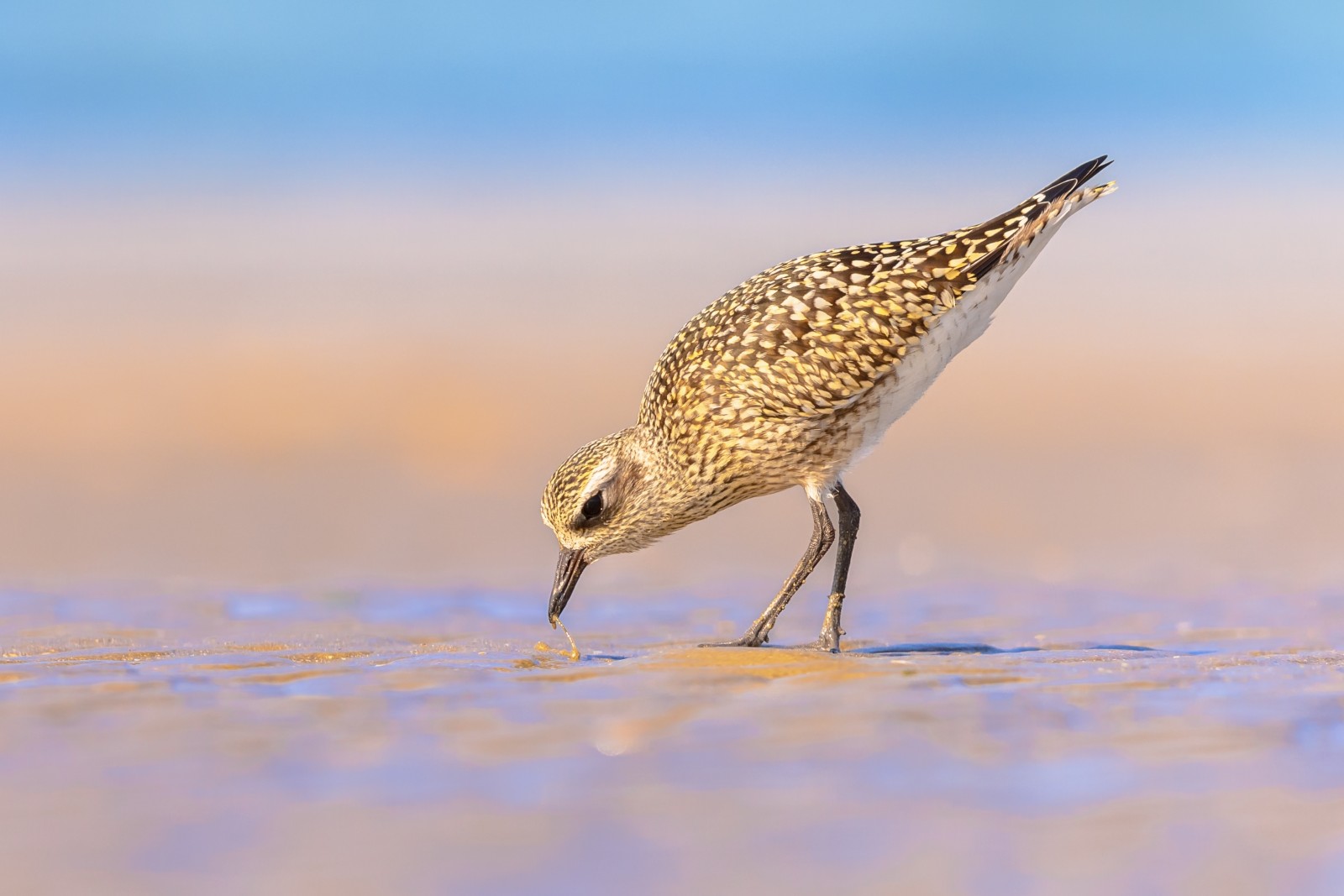
Queen Mary University highlights that this points to a far greater mechanical sensitivity in human touch than previously recognized, resembling the beak-sensing mechanisms observed in certain birds.
Artificial Tactile Sensors Fall Short in Accuracy Compared to Humans
In a related experiment exploring potential applications in robotic sensing, scientists used a robotic tactile device guided by a Long Short-Term Memory (LSTM) neural network. The robot underwent training on tactile patterns and was then tasked with detecting concealed cubes within sand solely from mechanical feedback.
Though the robot detected objects from an average distance of 7.1 centimeters, its accuracy slipped to 40%, with many false positives. This contrast between greater detection range but lower reliability reveals fundamental differences in how living and artificial systems interpret complex sensory noise.
“A key strength of this research lies in how human and robotic studies complemented each other,” explained Dr. Lorenzo Jamone, Associate Professor of Robotics and AI at UCL. “Human findings shaped the robot’s learning process, while the robotic outcomes shed light on interpreting human sensory data.”
Applications in Space Missions and Assistive Technology
The scientists anticipate remote touch sensing can be harnessed for scenarios where visibility is poor or physical contact is impractical—such as underground environments or other planets. Robots equipped with such tactile skills could conduct non-destructive archaeological excavations or explore Mars’ surface without direct contact or visual cues.
“This discovery paves the way for new tools that extend human tactile capabilities,” said Zhengqi Chen, a PhD researcher at the Advanced Robotics Lab at Queen Mary. “These insights may guide the creation of sophisticated robots able to perform delicate tasks, like locating fragile artifacts or investigating granular terrains on Mars or ocean floors.”
This sensory breakthrough also holds promise for enhancing robotic designs used in search-and-rescue missions, extraterrestrial rovers, and prosthetics. By integrating subtle tactile algorithms, machines may soon navigate challenging surfaces without depending solely on cameras or direct sensors.
Expanding the Definition of Human Perception and Its Robotic Counterparts
The research challenges long-held assumptions about the limits of human sensory perception, traditionally viewed as linked only to direct contact. The emergence of remote touch reveals that our perceptual world extends beyond immediate physical interaction, mediated instead by mechanical disturbances sensed at a distance.
The study also highlights an intriguing conundrum: despite significant advances in AI-driven tactile technology, human fingertips continue to outperform artificial systems in discerning fine, context-dependent sensory information amid noisy environments. This measurable gap sets a new benchmark for developing more sensitive robotic tactile systems.
- Categories:
- Science










0 comments
Sign in to Comment