
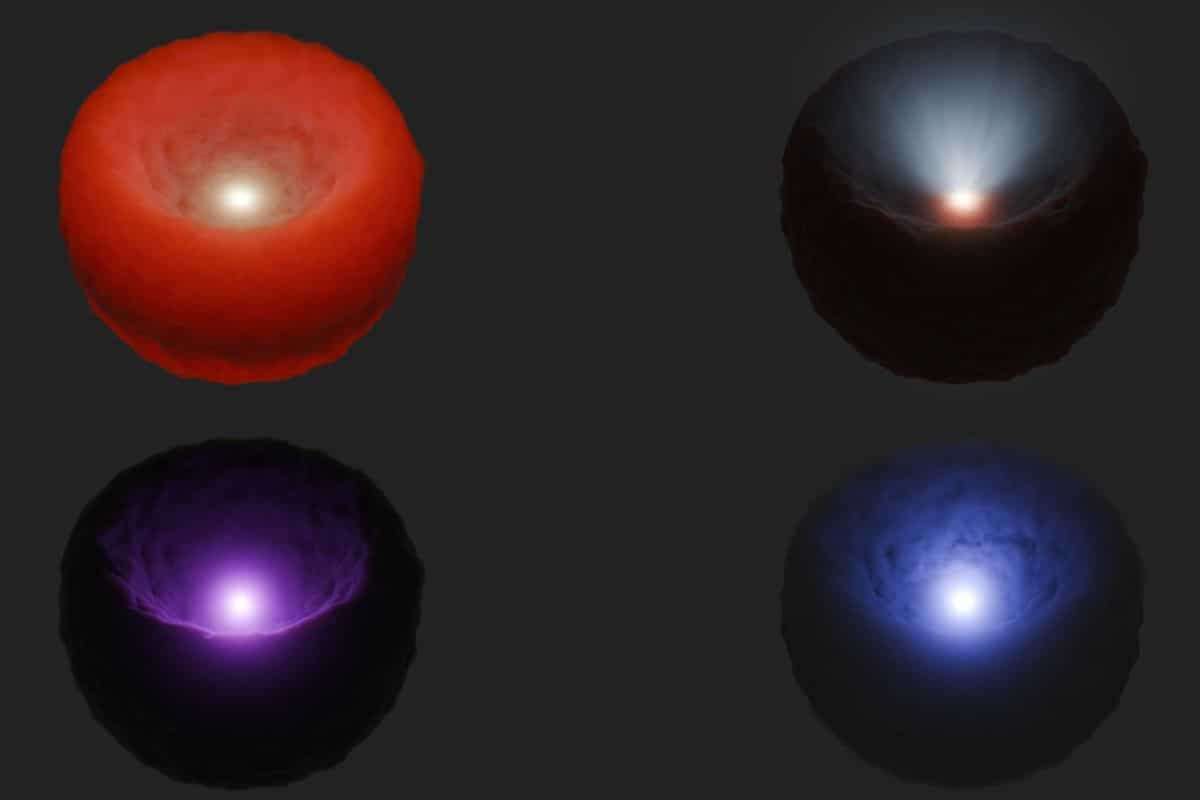
Recent astronomical research has identified hundreds of previously undetected supermassive black holes concealed deep in space. These black holes are obscured by thick layers of gas and dust, which has made them difficult to spot until now.
Advanced observational methods have enabled scientists to penetrate this cosmic veil, uncovering these extraordinary celestial objects. Remarkably, the total number of such hidden black holes could reach into the billions or even trillions.
The Difficulty in Detecting Black Holes
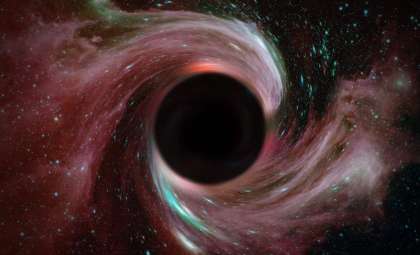
Black holes rank among the most enigmatic phenomena in the cosmos. They emerge when massive stars collapse under immense gravity, creating regions where the gravitational force is so intense that not even light can escape. Detecting these objects is challenging because they emit no light, rendering them invisible to traditional telescopes.
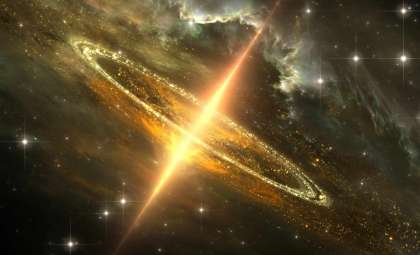
They can be indirectly observed in some instances. When surrounding material, like gas and dust, is heated as it spirals toward the event horizon, it emits radiation, including visible and X-ray light. This glowing matter can form a bright halo, making the black hole identifiable.

Yet, many black holes remain concealed, enshrouded by the very dust and gas that surround them. Earlier estimates suggested that only a small percentage of the largest black holes—those weighing millions or billions of times the sun—escaped detection. A new analysis in the Astrophysical Journal has significantly revised these figures, suggesting many more are hidden.
Obscured But Not Invisible
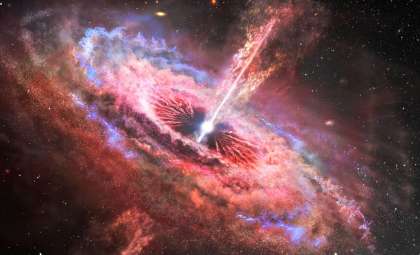
The report estimates that approximately 35% of all supermassive black holes lie concealed behind dense, obscuring layers of gas and dust—more than double previous projections of about 15%. The study’s authors propose that the actual number might be closer to 50%. These elusive giants could be residing in the cores of distant galaxies, eluding detection with standard techniques.
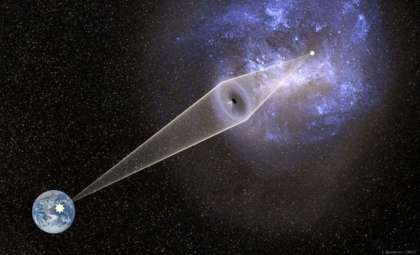
Their secret lies in the cold, opaque nature of the enveloping material, which prevents visible light from escaping. Alongside this, the viewing angle of distant galaxies limits our ability to observe these hidden giants directly.
Uncovering Black Holes via Infrared
Researchers have developed a new approach that leverages infrared light to trace these concealed black holes. While visible light is blocked, the surrounding clouds still emit infrared radiation, providing a means to locate these objects.
In their investigation, scientists analyzed archival information from NASA’s Infrared Astronomical Satellite (IRAS), which surveyed the sky in infrared from 1983 to 1984. Despite its brief operational period, IRAS delivered invaluable infrared data. They complemented this with observations from NuSTAR, a NASA X-ray telescope that detects high-energy emissions from matter spiraling into black holes.
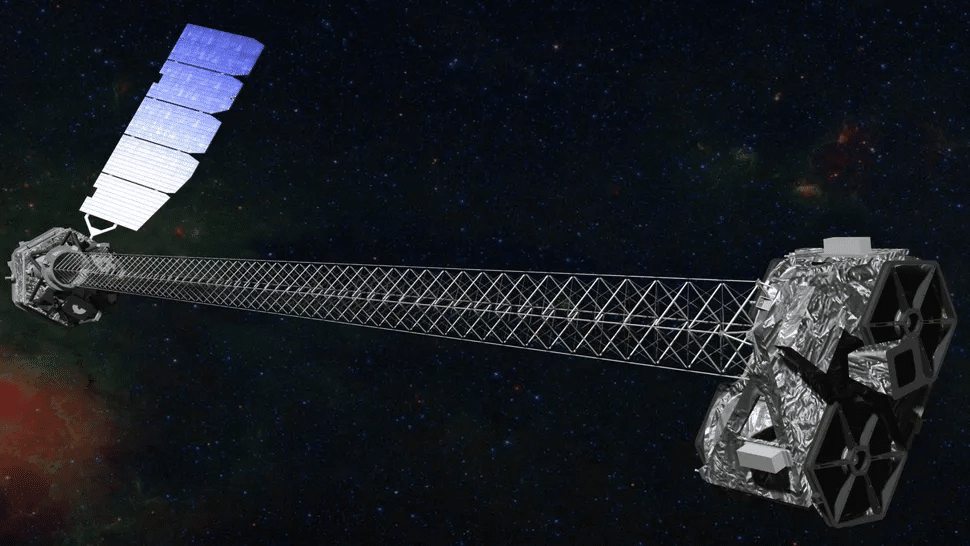
By integrating data from these sources, the team pinpointed hundreds of candidate hidden black holes. Follow-up observations using ground-based telescopes eliminated some false positives, such as galaxies with intense star formation, while confirming many obscured supermassive black holes.
The Impact of Supermassive Black Holes on Galaxies
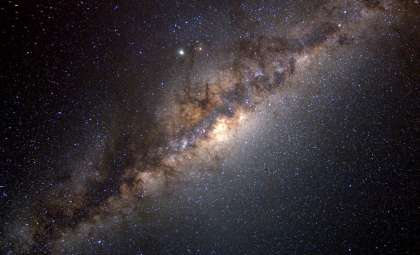
This breakthrough holds significant implications for understanding cosmic evolution. Supermassive black holes are believed to lie at the cores of most large galaxies, including the Milky Way. These collapsed stars not only shape their cosmic neighborhoods but may influence the growth and development of their host galaxies.
The research indicates that these hidden black holes play a role in regulating galactic size. For instance, without the supermassive black hole at the center of our Milky Way, the galaxy might have formed a far larger number of stars, potentially changing its structure.
“If we didn’t have a supermassive black hole in our Milky Way galaxy, there might be many more stars in the sky,” explains study co-author Poshak Gandhi, a professor of astrophysics at the University of Southampton in the U.K.
- Categories:
- Space



0 comments
Sign in to Comment