
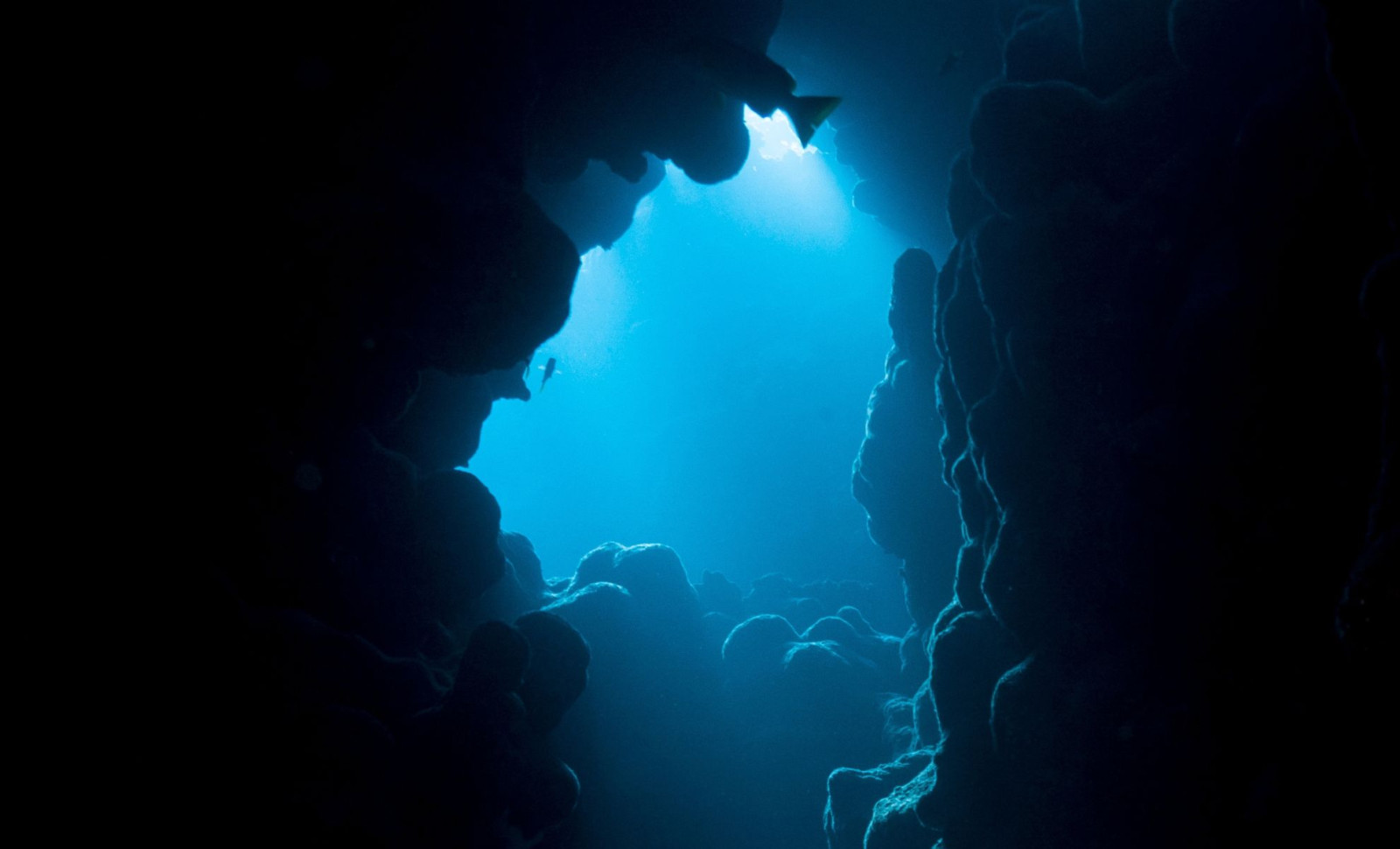
A vast underwater canyon concealed beneath the Atlantic Ocean has puzzled scientists for years. Recent studies now shed light on the forces behind its formation, offering new insights into one of the ocean floor’s most impressive geological features.
Situated approximately 1,000 kilometers off Portugal’s shore, the King’s Trough complex spans around 500 kilometers across the ocean bed. This expansive formation, often referred to as the “Grand Canyon of the Atlantic” due to its dramatic appearance, had an unclear origin despite being well-mapped within the eastern North Atlantic.
Researchers at the GEOMAR Helmholtz Centre for Ocean Research have revisited this enigmatic structure, employing advanced data and refined mapping techniques.

An Extensive Submarine Canyon System
The King’s Trough complex (KTC) consists of elongated valleys and deep depressions shaping the Atlantic seafloor. Key sections include Peake Deep and Freen Deep, prominent basins located toward the complex’s eastern edge.
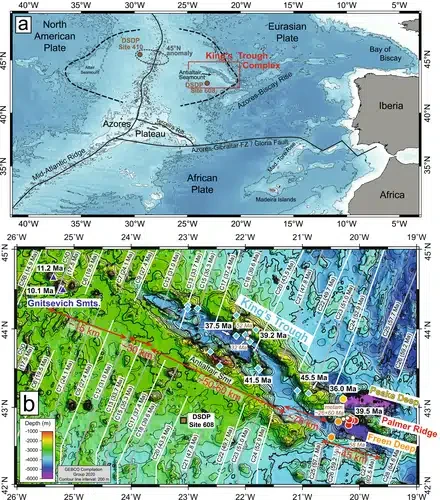
Previous theories posited that the system originated from the gradual stretching of oceanic crust due to tectonic movements. While consistent with known tectonic dynamics in the North Atlantic, this explanation alone didn’t fully account for the canyon’s exact place and scale.
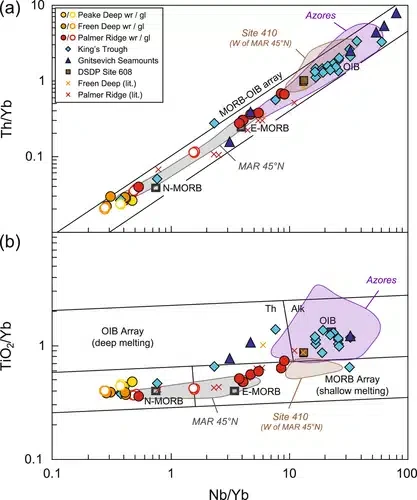
To better understand its genesis, the team conducted precise sonar surveys along with gathering volcanic rock samples at various points within the trough. Published in the journal Geochemistry, Geophysics, Geosystems, their chemical analyses helped establish the rocks’ age and formation process.
Traces of a Former Tectonic Plate Boundary
The evidence suggests that the King’s Trough complex formed between 37 and 24 million years ago. Scientists propose that a temporary tectonic plate boundary once traversed this area.
This shifting boundary generated significant fracturing and extension in the seafloor crust, contributing to the canyon’s formation. Marine geologist Antje Dürkefälden remarked:
“Researchers have long suspected that tectonic processes – that is, movements of the Earth’s crust – played a central role in the formation of the King’s Trough.”
Afterward, the plate boundary shifted southward toward the modern Azores region, causing the intense geological activity in this trough area to diminish.
Influence of a Deep Mantle Plume
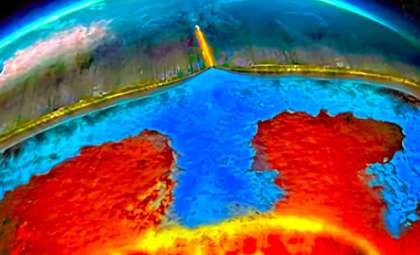
The team also proposes that a key reason for the plate boundary’s path through this zone was the presence of a mantle plume—a column of high-temperature material rising from deep within Earth’s interior. The heat emanating from this plume likely weakened the crust, rendering it more susceptible to tectonic fracturing. Marine geologist Jörg Geldmacher suggested the thermal influence mechanically softened the crust.
This mantle plume is thought to be an early offshoot of the Azores mantle plume, which remains active roughly 700 kilometers south of King’s Trough today.
“Large submarine canyon-like troughs are still poorly understood features on the ocean floor,” the researchers report in their paper.
The scientists note the Terceira Rift near the Azores as a present-day analog, where trench systems of comparable scale are actively forming.
- Categories:
- Science






0 comments
Sign in to Comment