
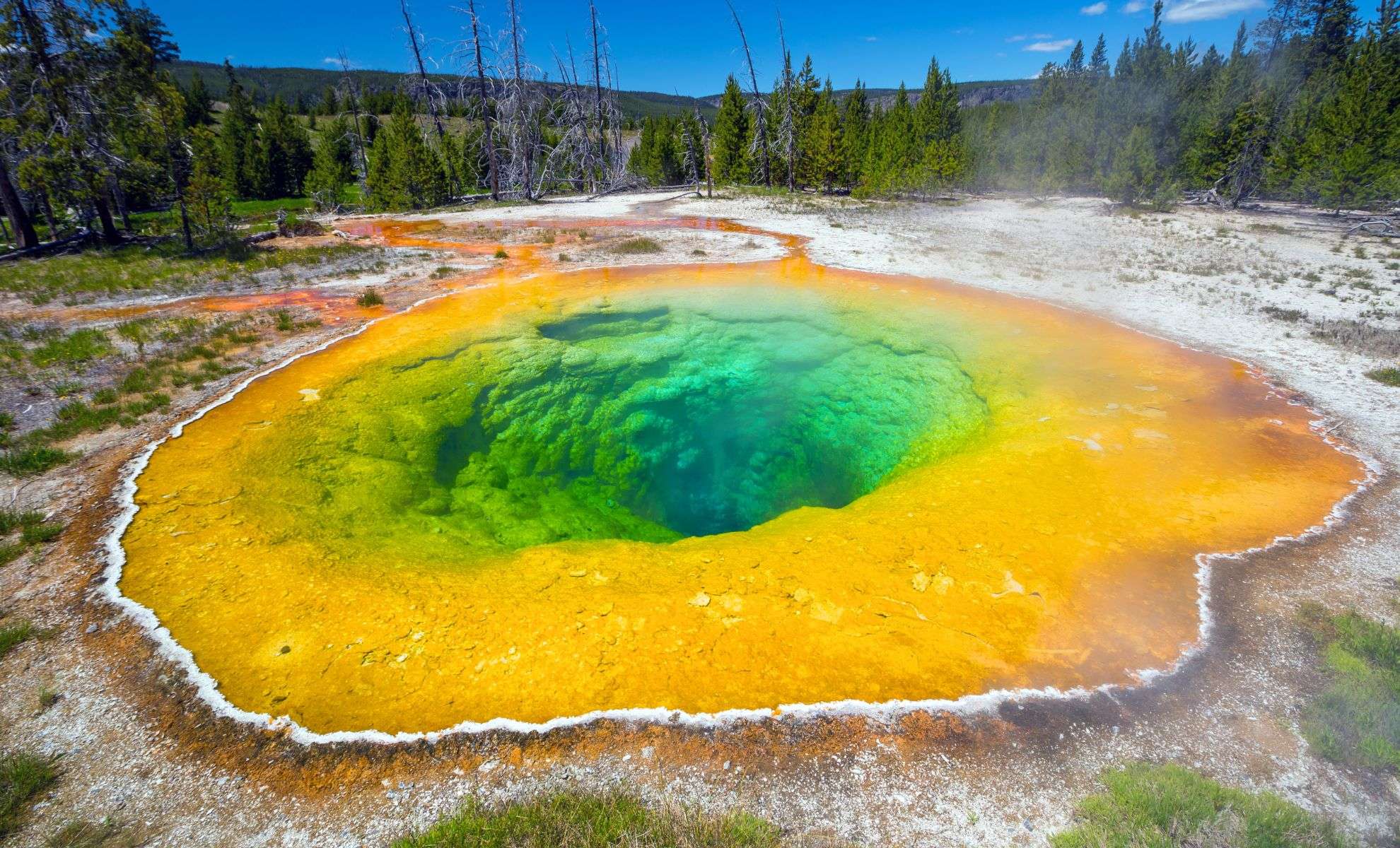
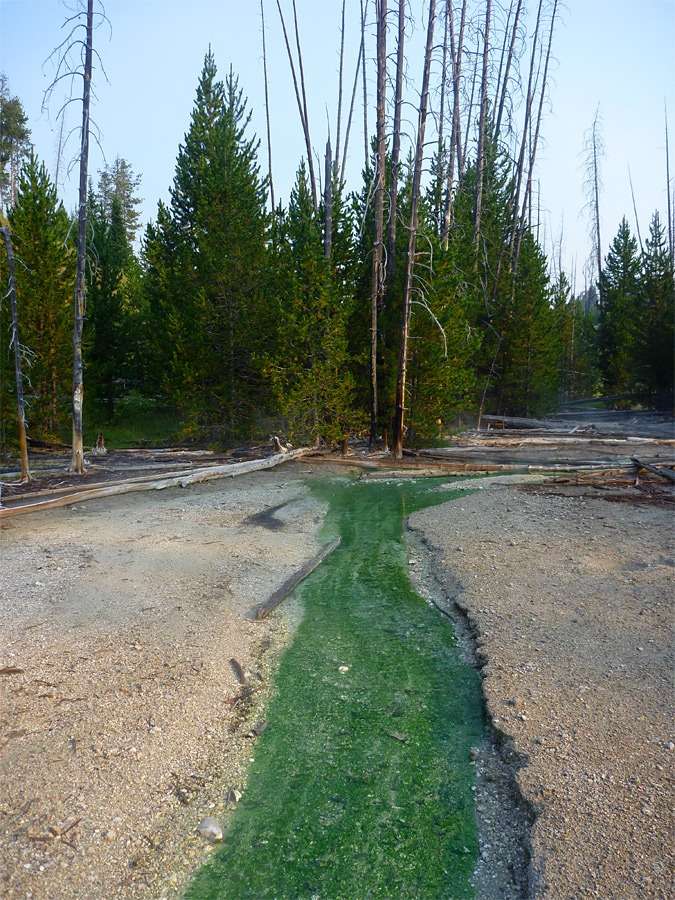
Yellowstone National Park is famous for its vivid geothermal springs, captivating both tourists and scientists alike. For microbiologists, these extreme habitats provide a portal into the conditions that shaped the emergence of early life on our planet. At Lemonade Creek, a narrow, acidic stream with temperatures around 112 °F (44 °C) and a pH near 2, a team has identified a variety of colossal viruses living in association with red algae and other thermophilic microorganisms. Remarkably, these enormous viruses are so large they evade typical filtering methods and originate from lineages more than a billion years old.
Genomic analyses of samples taken from green algal mats, adjacent soils, and rock crevices allowed researchers to exclude known bacterial, archaeal, and algal DNA sequences, revealing approximately 3,700 viral fragments. Nearly two-thirds correspond to the giant virus clade Megaviricetes. Rutgers University genome expert Debashish Bhattacharya explains, “The evolutionary ties between these viruses and their hosts run deep,” highlighting specialized proteins that facilitate survival in consistently hot conditions. This evidence supports that these gigantic viruses are original inhabitants of Yellowstone’s hot springs rather than recent migrants from cooler environments.
Enduring Viral Lineages Thrive in Scorching Conditions
DNA recovered from Lemonade Creek viruses exhibits genetic code usage closely matching that of resident microbes, suggesting a lengthy ecological association within this rigorous habitat. Phylogenetic reconstruction places the Lemonade Creek viruses near the base of their evolutionary tree, implying a red algae-virus partnership dating back roughly 1.5 billion years.

Simon Roux, a microbiologist at the Department of Energy’s Joint Genome Institute who was not involved in this research, comments, “Studying ancient viral evolution is crucial for unraveling life's earliest chapters.”
Researchers at Heinrich Heine University Düsseldorf propose that giant viruses act as gene carriers, facilitating horizontal gene transfer from bacteria or archaea to infected algae. Andreas Weber characterizes thermal springs as “natural archives offering insights into primordial eukaryotic existence” and emphasizes the viruses’ role in preserving microbial community stability over geological time.
Sampling efforts at Lemonade Creek identified three separate viral populations residing in algal mats, nearby soils, and rock crevices. Weber acknowledges surprise at the distinct separation of these viral communities despite their close locations, underscoring how much remains unknown about viral diversity and ecological functions in such extreme ecosystems.
Yellowstone’s Viral Enigmas and Their Broader Implications
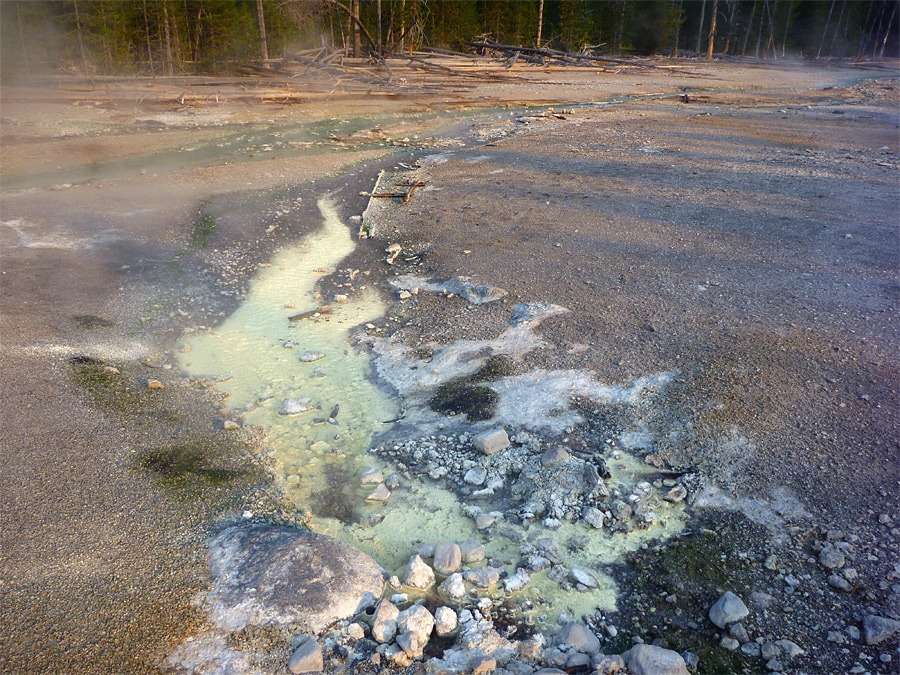
Giant viruses represent only one facet of Yellowstone’s viral realm. In the Midway Geyser Basin, scientists George Rice and Mark Young identified a virus that infects heat-adapted archaea, microbes thriving at temperatures between 158 °F and 197 °F and extremely acidic conditions. Until now, very few viruses targeting archaea have been documented—just 36 out of over 5,000 known viruses. Mark Young, an environmental virologist emeritus at Montana State University, emphasizes, “Wherever life exists, viruses are to be expected,” highlighting the significance of Yellowstone’s protected environments for uncovering new viral forms.
Rice's team discovered that the protein capsid of this archaeal virus resembles structures found in viruses infecting bacteria and animals. Young explains that thermophiles like archaea are “deeply entrenched in the tree of life,” suggesting this virus might have originated before the split between bacteria, archaea, and eukaryotes some 3.5 billion years ago. Genetic markers support this evolutionary antiquity, showing novel viral genes likely linked to distinct functional roles not observed in other viral families.
The gene transfer capabilities of viruses hold fascination for astrobiologists hunting for extraterrestrial life. As Young states, “Viruses aren’t mere passengers; they represent a primary mechanism for genetic exchange on Earth.” Discovering viruses adapted to acidic boiling waters aids NASA and other space agencies in framing strategies to detect life on planets with extreme conditions. Moreover, enzymes stable under these rigorous environments could revolutionize biomedical testing and industrial applications limited by thermal instability.
Expanding Knowledge Through Yellowstone’s Viral Worlds
The discoveries at Lemonade Creek illuminate viral roles dating back to life’s origins. Once considered anomalies, giant viruses appear to have coevolved alongside some of the earliest eukaryotes, contributing to gene exchange, nutrient recycling, and habitat formation even in resource-poor conditions. Every drop of Yellowstone’s geothermal waters contains distinctive microbial ecosystems shaped significantly by viruses, reminding scientists of the vast unknowns remaining beneath the surface steam.
The complete study was published in the journal Communications Biology, featuring collaboration among Rutgers University, Heinrich Heine University Düsseldorf, and the Department of Energy’s Joint Genome Institute. This research exemplifies how protected natural reserves like Yellowstone remain vital for advancing insights into the ancient foundations of life.
- Categories:
- Science








0 comments
Sign in to Comment