
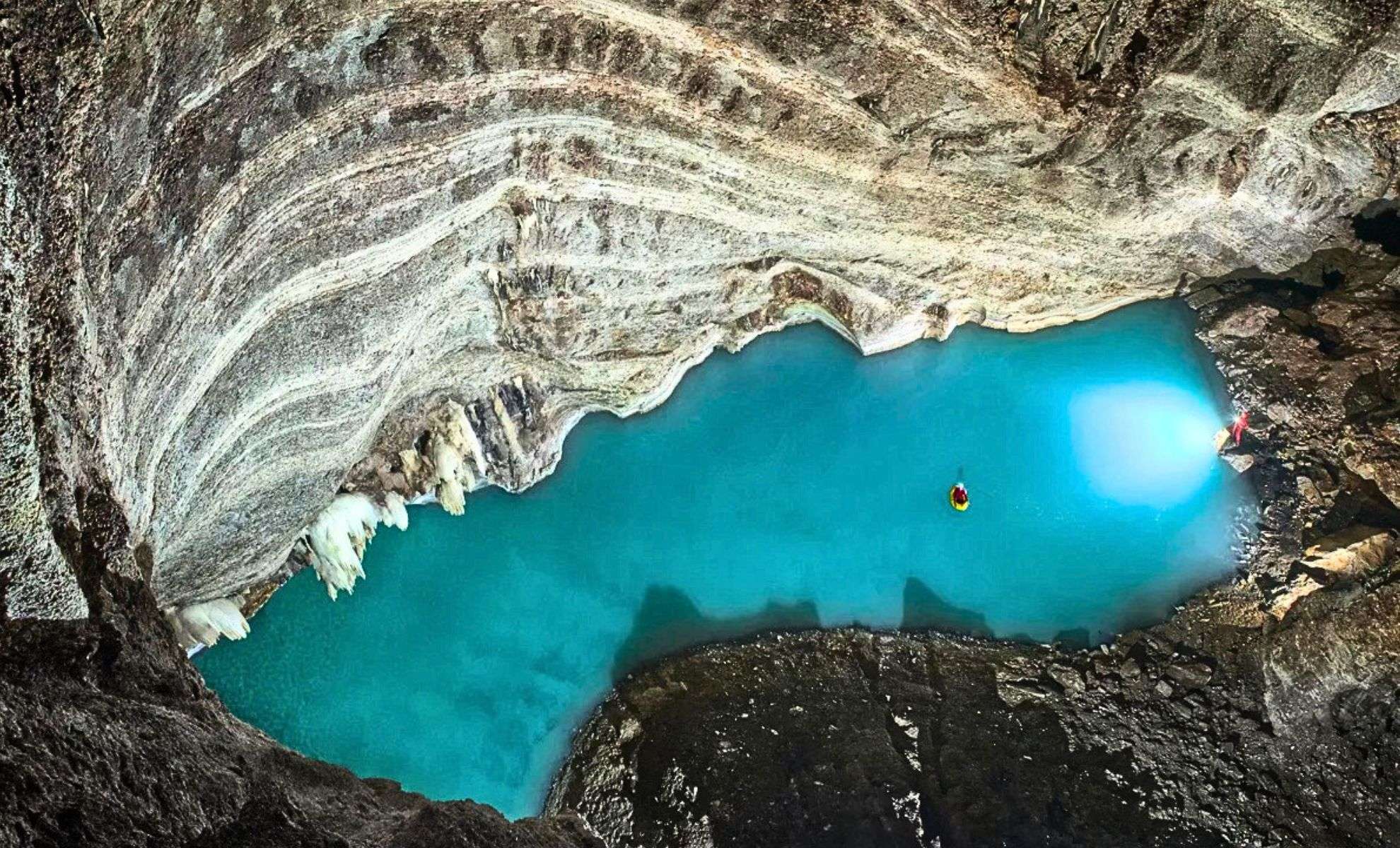
Researchers have made an extraordinary find in the Vromoner region of southern Albania, where they uncovered what is now recognized as the globe's most expansive underground thermal lake.
Termed Lake Neuron, this remarkable aquatic formation holds immense promise for advancing our comprehension of subterranean ecosystems and geological phenomena.
Where Lake Neuron Is Located and Its Dimensions
The existence of Lake Neuron was verified by a Czech scientific team in 2021. Positioned within the Vromoner Valley near the border separating Albania and Greece, this lake covers impressive ground.

Its measurements reach 138.3 meters (452.8 feet) in length and 42 meters (137.8 feet) in width, with a total perimeter of 345 meters (1,131.9 feet). Holding about 8,355 cubic meters of water, it equates to the volume of roughly three Olympic swimming pools.
These dimensions confirm Lake Neuron as the largest known underground thermal lake worldwide.
How the Thermal Lake Was Discovered
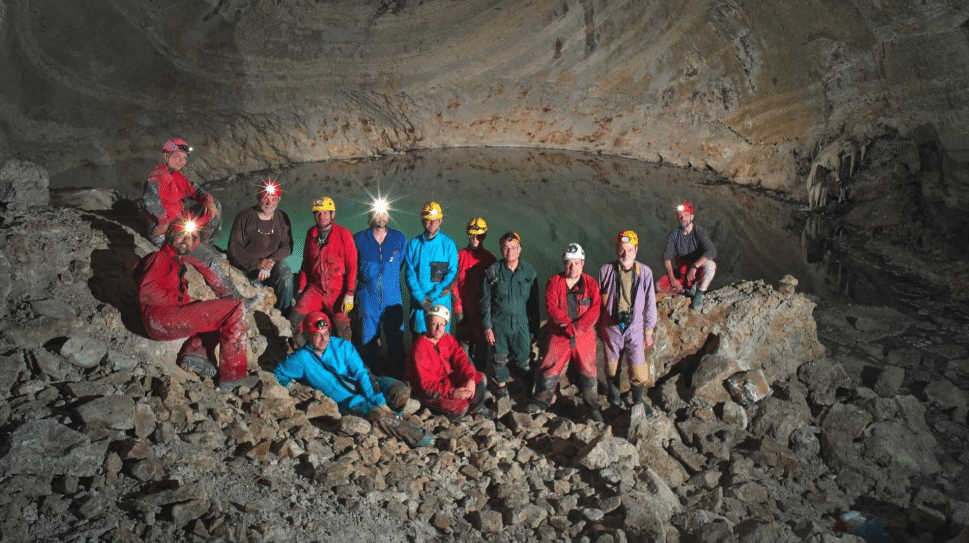
The initial finding came when Czech explorers noticed a towering steam plume rising from a concealed deep chasm. This led to the identification of a 100-meter-deep (328 feet) cavity dubbed “Atmos.”
At the base of this abyss, researchers detected a thermal water inflow feeding the vast subterranean lake. Employing specialized tools, the team created detailed maps and confirmed the lake’s scale.
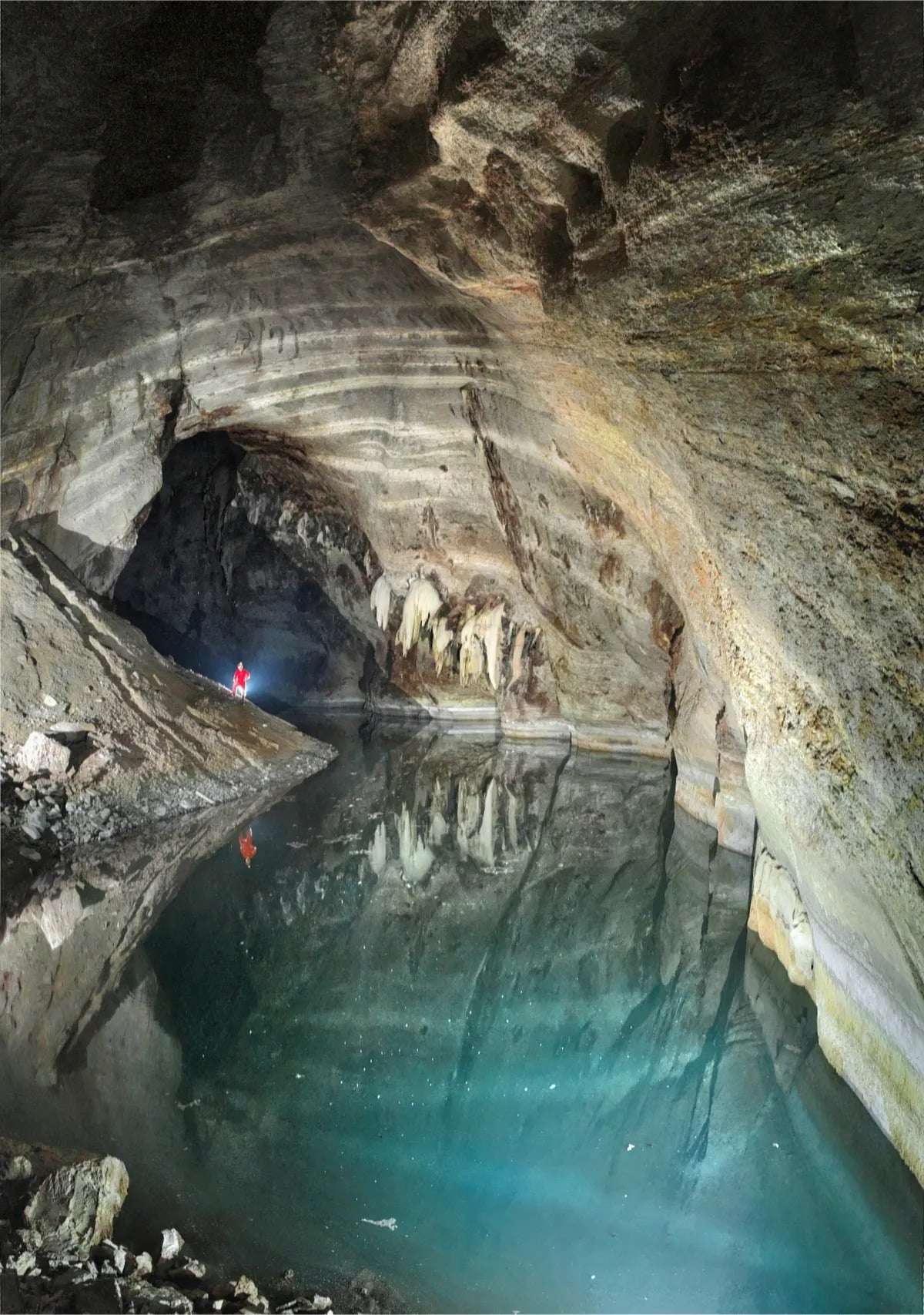
Richard Bouda, a photographer who joined the expedition, shared, “While conducting our initial survey, we generated a preliminary map with our gear and quickly recognized the significance of our discovery.”
The research group utilized a mobile LIDAR scanning system, which enabled the creation of an intricate 3D representation of the cave network, allowing precise measurement of the lake’s extent. This technology validated their preliminary measurements with exceptional accuracy.
Geological Characteristics and Prospects for Study
The waters of Lake Neuron are rich in minerals and contain significant levels of hydrogen sulfide. When exposed to air, this compound oxidizes to produce sulfuric acid, which gradually erodes the surrounding limestone, converting it into soft gypsum.
This continuous chemical activity is responsible for reshaping the subterranean geology and may eventually lead to the formation of additional caves and geological structures.
Marek Audy, the lead scientist of the exploration, emphasized that finding this lake is poised to “transform our understanding of underground biospheres and earth processes.”
The team plans to carry on with further investigations into the interactions between underground waters and surface hydrology. As Bouda points out, “This discovery could be key to protecting the site and unlocking how underground and surface water systems interconnect, an area still largely unexplored.”

Albania’s Emerging Importance in Geoscience
With the identification of Lake Neuron, Albania has emerged as a significant focus for geoscience and hydrology investigations.
The country’s abundant underground cave networks and thermal features present promising opportunities for pioneering research efforts.
The scientific community worldwide has expressed keen interest, and even National Geographic has highlighted the expedition’s outcomes.
Monika Řasa Vondráková, director of the Neuron Foundation, voiced pride in supporting the Czech expedition, stating, “It’s immensely gratifying to back Czech scientists on such a pioneering venture. This achievement underscores the value of fieldwork, where expertise and commitment produce valuable new insights.”
- Categories:
- News








0 comments
Sign in to Comment