
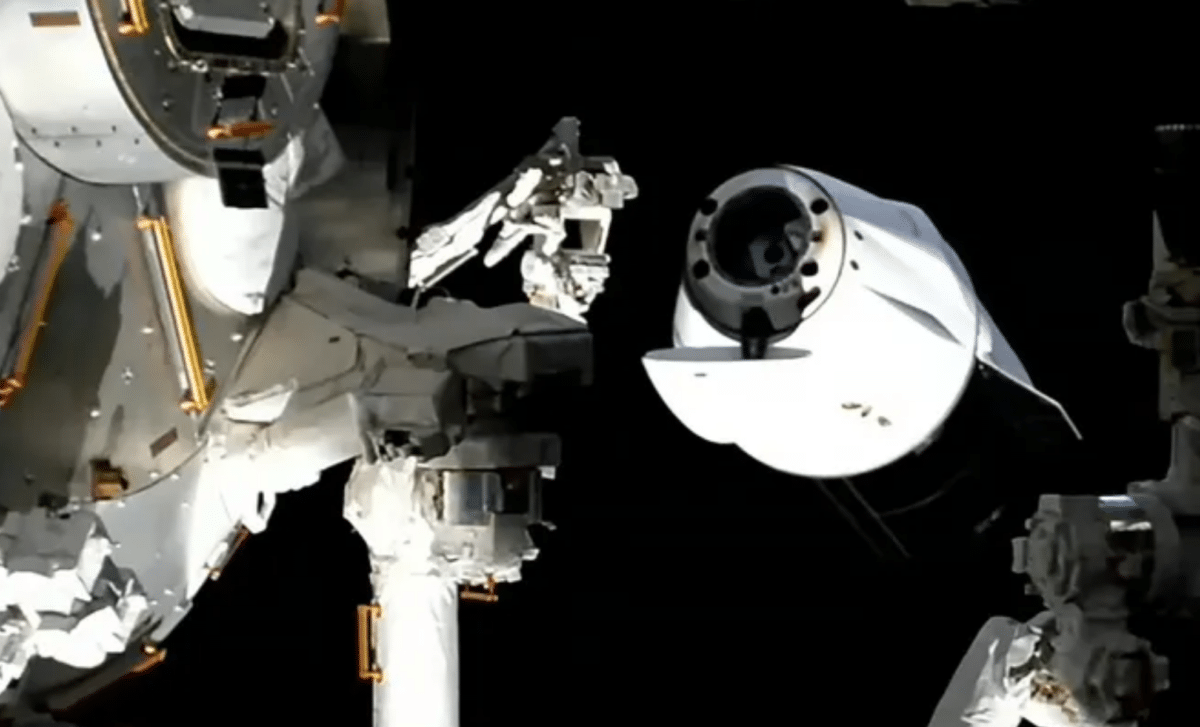
On February 26, 2026, SpaceX’s Dragon cargo spacecraft separated from the International Space Station (ISS), marking the end of its landmark six-month journey that commenced on August 25, 2025. According to Space.com, this mission was notable not just for restocking the ISS, but for introducing a vital new function: elevating the station's orbit to sustain its long-term operation.
Elevating the ISS Orbit: SpaceX Dragon’s Essential New Capability
A key highlight of the Dragon capsule’s mission was its ability to perform orbit-raising maneuvers for the ISS. This task, traditionally handled by Russia's Progress spacecraft, is crucial for combating atmospheric drag that gradually lowers the station’s altitude. Regular orbit boosts protect the ISS from premature atmospheric reentry, preserving its position safely in low Earth orbit.
Splashdown of Dragon confirmed, completing SpaceX’s 33rd Commercial Resupply Services mission to the @Space_Station!
— SpaceX (@SpaceX) February 27, 2026Add Cosmo Herald as a Preferred Source

NASA emphasized the relevance of this innovation in a statement on February 23, 2026: “This advancement introduced a fresh approach to reboosting the station, maintaining its altitude to counteract atmospheric drag, which is vital for safe operation and sustaining the orbiting complex over time.” This capability reflects the Dragon capsule’s adaptability and reusability as it evolves to fulfill new space exploration roles. SpaceX’s success here demonstrates that commercial entities can shoulder mission-critical responsibilities historically managed by government space programs.
Proven Track Record: Dragon’s Multiple Reboost Operations
While docked to the ISS, the Dragon capsule completed six orbit-raising maneuvers. These procedures occurred throughout 2025, with the last one performed on January 23, 2026, only weeks prior to undocking. The capsule’s performance during SpaceX’s CRS-33 mission showcased its ability to expertly execute complex tasks alongside its core resupply objectives for NASA.
“During its time docked to the station, Dragon performed six reboosts — five in 2025 and a final maneuver on Jan. 23 — before preparations for its departure began,” NASA officials added.
This sequence of successful orbit boosts not only highlights technological prowess but also underscores the necessity for precise altitude management in maintaining ISS functionality. As Russia's role in ISS operations adapts, Dragon’s contribution in orbit maintenance is becoming ever more vital.
The Importance of Orbit Maintenance for ISS Longevity
The ISS serves as an orbital science platform, enabling research not viable on Earth due to gravity. However, orbiting through the wispy upper atmosphere generates drag that gradually lowers the station’s altitude. Without timely corrections, the ISS risks losing orbit and re-entering the Earth’s atmosphere where it would disintegrate. Orbit-raising maneuvers are therefore indispensable to preserving the station’s operational altitude.
NASA's recognition of this new capability highlights the critical need to maintain the ISS through the next decade. With plans to deorbit the station around late 2030, preserving its altitude and stability is essential for continued scientific research and international cooperation. SpaceX’s groundbreaking role reflects how private space firms are increasingly entrusted with responsibilities once reserved for government agencies.
Dragon’s Scientific Contributions: Returning Experiments to Earth
Beyond orbit raising, the Dragon capsule’s mission also focused on delivering important scientific samples back to Earth. Notable among them was the Euro Material Aging experiment, which subjected 141 samples to space conditions to analyze material degradation. Findings from this work could inform the development of more durable spacecraft materials.
Another vital study was Thailand’s Liquid Crystals experiment, investigating how electronic materials behave under microgravity. Insights gained could enhance both space technologies and terrestrial electronics. These scientific returns illustrate the dual purpose of such missions—supporting resupply while advancing cutting-edge research and technological progress.
Commercial Spaceflight: Transforming ISS Operations
The success of the CRS-33 mission points to a transformation in how ISS activities are managed. Traditionally handled by NASA and partners like Russia, resupply and station upkeep now increasingly involve private companies like SpaceX. This shift brings greater adaptability and sustainability, particularly as international partnerships evolve.
SpaceX’s demonstrated ability to manage duties once in government hands signals a new era of collaboration between public agencies and commercial entities. This approach could define the framework for space operations in the decades ahead as commercial spaceflight continues to expand.
- Categories:
- Space





0 comments
Sign in to Comment