
SpaceX has recently confirmed its groundbreaking plan to establish data centers in space utilizing its upcoming Starlink V3 satellite network, as announced by Elon Musk. What once seemed like a futuristic concept is quickly becoming a tangible project as SpaceX gears up to vastly expand its satellite presence in low Earth orbit.
Currently, enormous data centers occupy expansive facilities on terrestrial soil, but looking ahead, some data storage and processing activities could be relocated hundreds of kilometers above Earth. The role of space is evolving beyond communication and Earth monitoring, toward becoming a hub for actual computational tasks.
Larger, Faster, and More Advanced Satellites
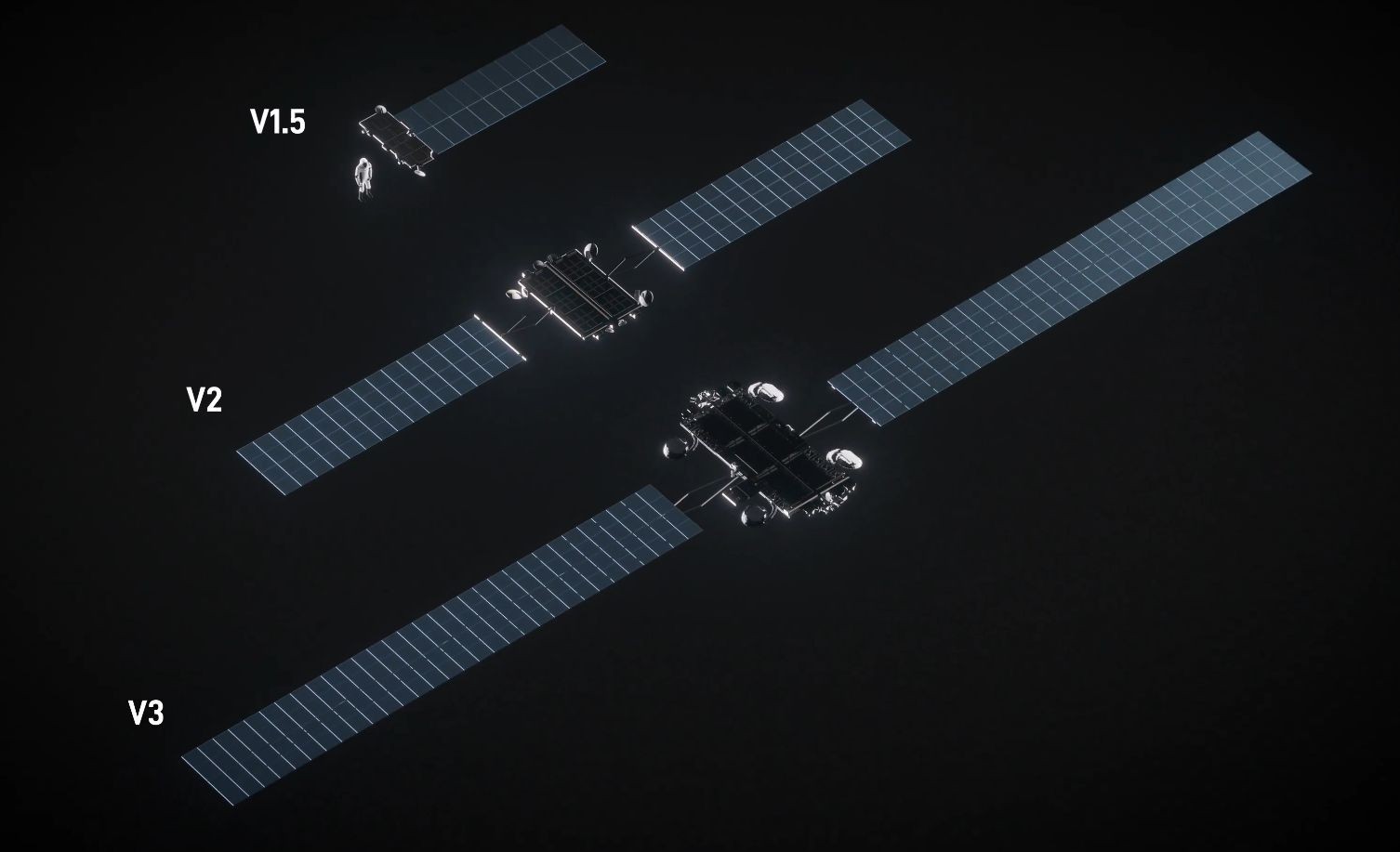
The technological leap from one generation of Starlink satellites to the next is impressive. Presently, the Starlink V2 mini satellites support around 100 Gbps download speeds—more than sufficient for standard internet service. However, the forthcoming Starlink V3 satellites are projected to deliver a remarkable 1 Tbps capacity, increasing throughput tenfold.

For comparison, Viasat-3, a massive geostationary satellite with comparable bandwidth, took nearly a decade to develop and cost hundreds of millions of dollars. SpaceX, in contrast, plans to launch dozens of Starlink V3 satellites in a single mission. As Caleb Henry from Quilty Space notes:
there’s simply “nothing else in the rest of the satellite industry that comes close to that amount of capacity.”
Considering that the initial Starlink satellites launched a few years back weighed roughly 300 kg and provided 15 Gbps throughput, this rapid advancement is extraordinary. The true game-changer is the potential to utilize this vast bandwidth for satellites to function as computing hubs, rather than mere signal relays.
Growing Momentum from Earth to Space
Henry emphasizes that the increasing engagement from major technology corporations “is very much worth paying attention to.” This is not just speculation; if leading cloud providers start investing in off-planet infrastructure, it could revolutionize how and where data is managed.
Satellites already manage substantial data flows. For example, imaging satellite constellations accumulate extensive datasets before transferring them to ground stations. Some newer satellites even preprocess data onboard, compressing or filtering it prior to transmission. However, the concept of a comprehensive orbital data center takes this further by enabling autonomous storage, processing, and possibly data routing in space—transforming satellites from simple conduits into dynamic computing resources.
The trend is unmistakable: with growing satellite capabilities and decreasing launch expenses, space is emerging as a practical environment for more than just data transmission.
Starship: The Backbone of SpaceX’s Ambitious Expansion
The key driver behind SpaceX’s orbital data center plans is likely Starship, the company’s reusable heavy-lift launch system. Although still in its development phase, Starship has completed multiple suborbital and experimental flights. Recent tests have focused on a satellite deployment system, signaling readiness for mass Starlink V3 satellite launches.
Importantly, each Starship launch is expected to carry approximately 60 Starlink V3 satellites. This reflects a major increase in deployment capacity. As reported by Ars Technica, these missions could commence as early as 2026. With each Starlink V3 satellite weighing about 1,500 kg, the scale of the orbital infrastructure will be industrial-level rather than experimental.
Starship’s combination of heavy payload capacity and reusable launch capability grants SpaceX an unparalleled advantage in deploying high-performance satellites. Controlling both manufacturing and launch operations enables the company to realize ambitious goals like creating operational data centers in orbit, a concept that is rapidly transitioning from visionary to feasible.
- Categories:
- News












0 comments
Sign in to Comment