
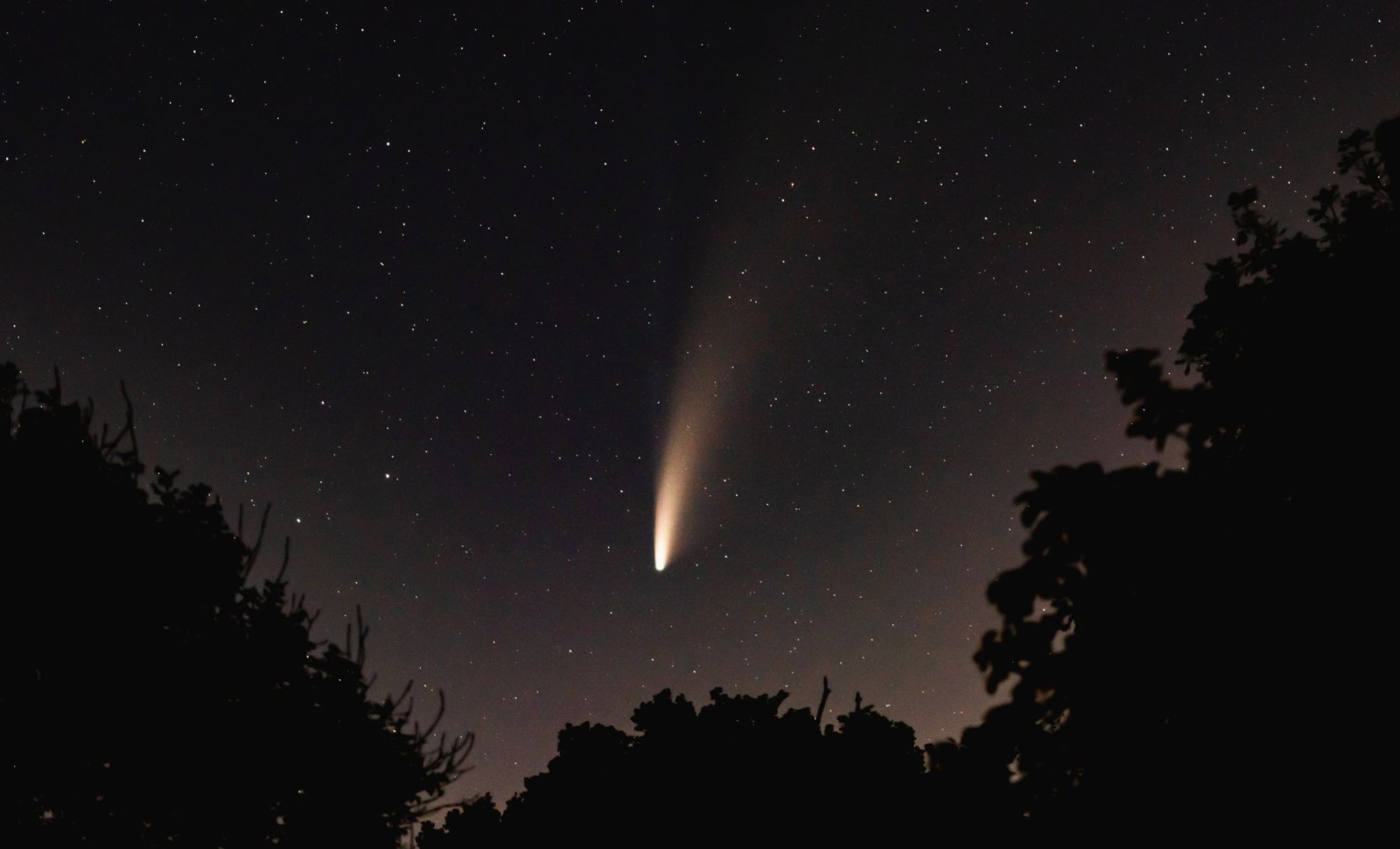
An extraordinary event in our solar system has thrilled astronomers and space enthusiasts: comet C/2025 K1 (ATLAS), first observed in May 2025, originates from the distant Oort Cloud—an expansive zone of icy bodies encircling our solar system. During its recent solar approach, the comet began to disintegrate dramatically.
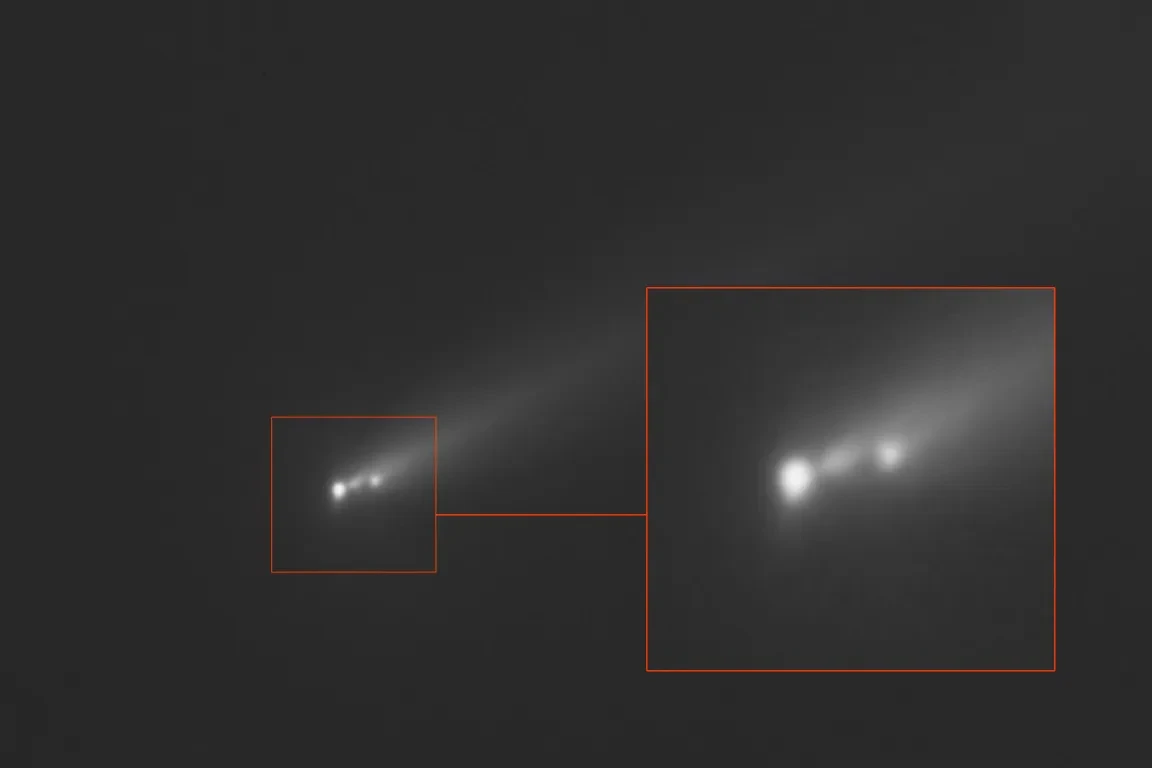
The Virtual Telescope Project provided remarkable images revealing that the comet's nucleus fragmented into three prominent, luminous pieces, offering a breathtaking spectacle visible through advanced telescopes.
Telescope Observations Expose Comet’s Nucleus Splitting
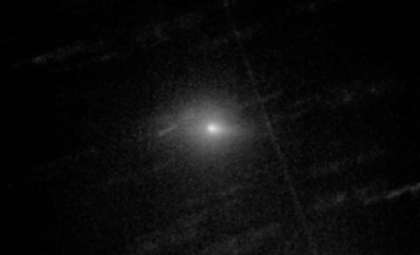
Gianluca Masi, an Italian astronomer and the mastermind behind the Virtual Telescope Project, captured vivid photographs on November 19 that clearly display the comet’s nucleus fractured into three radiant segments.

As reported by Sky & Telescope, these images, taken with powerful telescopes, highlight the fragments glowing intensely against the surrounding darkness, resembling the bright beams from halogen headlights. Such a distinctive breakup event is uncommon, making it a noteworthy phenomenon.
The fragmentation stems from the comet’s inherent makeup. Approaching the Sun exposes it to intense heat and tidal forces causing the icy body to heat, sublimate, and shed material, often resulting in breakup. The case of C/2025 K1 (ATLAS) is especially remarkable due to the size of the fragments and the clarity with which this disruption was documented.
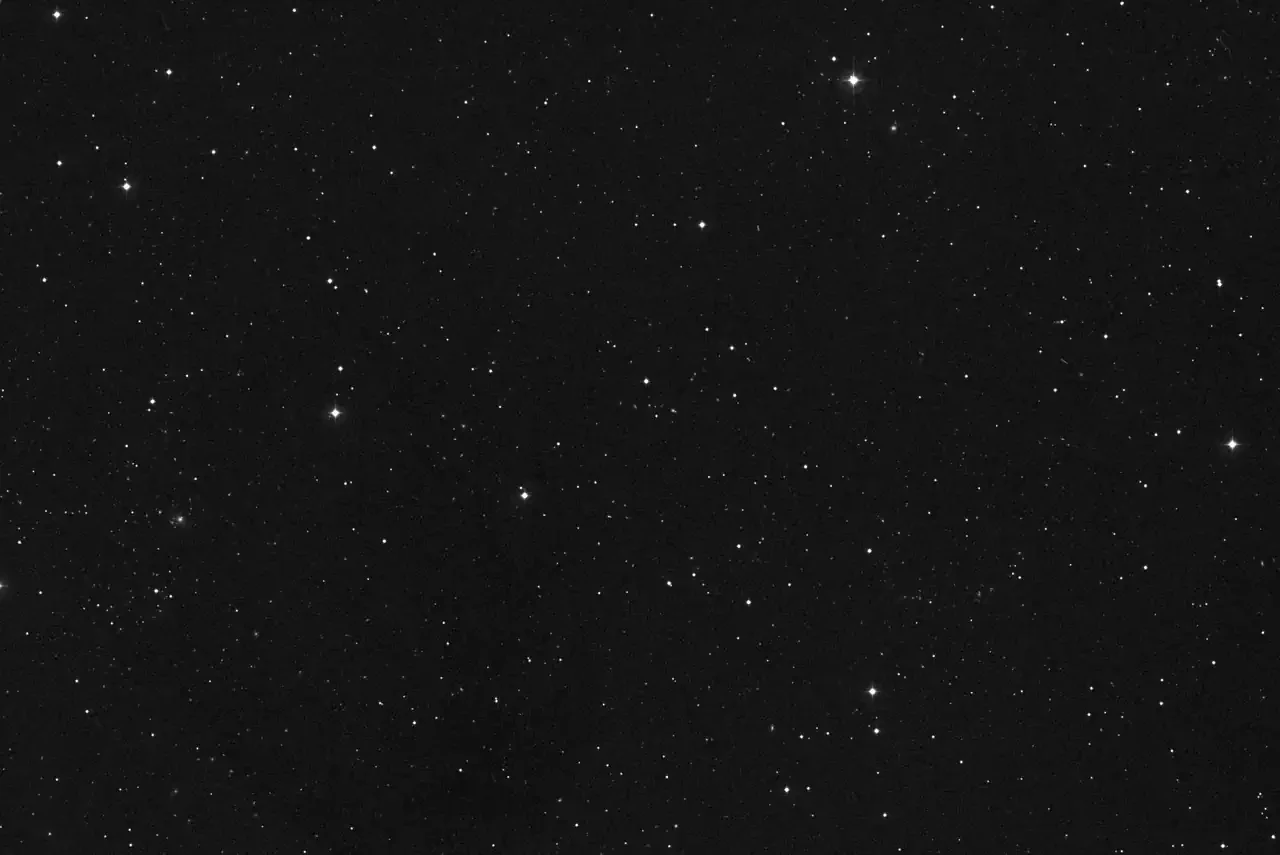
Rare Breaking Event of Comet C/2025 K1 (ATLAS)
Comets consist of a mix of ice, dust, and rock, and they frequently fracture when nearing the Sun. The sublimation driven by solar heating and gravitational stresses often causes these celestial wanderers to lose chunks of material.
For C/2025 K1 (ATLAS), astronomers noticed early signs of fragmentation during late October and early November characterized by two bright outbursts. These were captured with sophisticated telescopes, including those managed by Gianluca Masi and the Virtual Telescope Project.
The resulting fragments emit a striking glow against the blackness of space, evoking the visual of halogen headlights piercing the night.
“Comet C/2025 K1 ATLAS experienced a dramatic fragmentation event, becoming one of the most interesting objects of its kind seen in recent years,” Masi wrote in a blog post.
Coming from the Outer Reaches: The Oort Cloud
C/2025 K1 (ATLAS) is not an interstellar traveler but rather a native of the Oort Cloud, a remote zone ringing far beyond Pluto chronicling icy remnants that sporadically plunge toward the Sun. This comet’s inbound path enabled Earth-based telescopes to observe and track its journey closely.
The Oort Cloud is believed to birth many comets, and the journey of C/2025 K1 (ATLAS) exemplifies how gravitational disturbances can slingshot these frozen objects inward after millions of years. The intense solar radiation and gravitational pull often spell a comet’s undoing on its approach, as seen in this dramatic fragmentation.
Watch the Dramatic Disintegration Live
Anyone eager to witness this cosmic spectacle can join live streams hosted by the Virtual Telescope Project, founded by Masi. On November 25, as C/2025 K1 (ATLAS) reaches its closest point to Earth, live coverage will be available online—even for those without telescopes.
Historical precedent exists for spectacular comet breakups. For instance, in 1994, Comet Shoemaker-Levy 9 disintegrated before impacting Jupiter. Although C/2025 K1 (ATLAS) poses no risk of collision with planets, its shattering remains a captivating event for astronomers and the public alike.
- Categories:
- News





0 comments
Sign in to Comment