
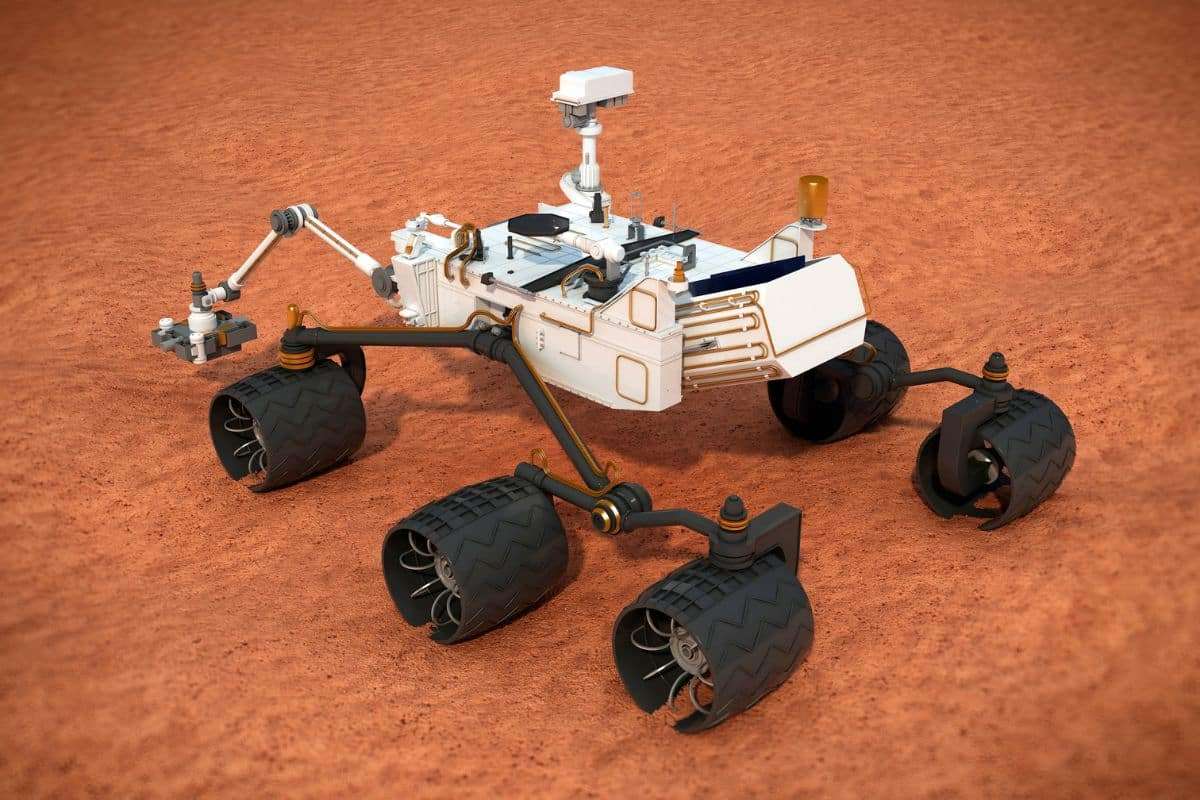
NASA's Curiosity rover has revealed the presence of sulfur crystals within Martian rocks, lending support to the idea that ancient Mars might have once sustained microbial life.
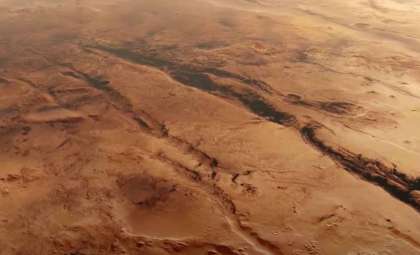
Discovered inside Gale Crater, these minerals point to chemical reactions likely driven by water, shedding new light on the planet’s early environmental conditions.
Mineral Discoveries Advance the Quest for Martian Life
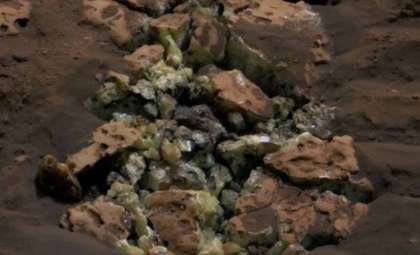
Earth reports that these sulfur deposits are more than geological oddities; they may be vital clues in unraveling Mars’ potential for life. A NASA researcher remarked, “Encountering pure sulfur stone fields is akin to stumbling upon an unexpected oasis. Their presence demands an explanation and fuels the excitement of space exploration.”
The crystals were identified filling cracks in the rock, offering insights into Mars’ geological and possible biological past. Instruments on Curiosity detected notable amounts of calcium sulfate and magnesium sulfate, minerals typically formed in environments influenced by evaporating water. Such water-related processes could have fostered habitats conducive to microbial life.

The Significance of the Sulfate Unit
Researchers are particularly intrigued by the Sulfate Unit, the site where these minerals formed. This region is believed to represent a drying phase in Mars’ climate history, characterized by receding lakes that left behind mineral-rich salt deposits.
On Earth, similar sulfate minerals often support ecosystems in extreme settings like deep-sea vents and acidic hot springs. Although this does not prove life existed on Mars, it suggests the necessary chemical environment that might have nurtured it.
Becky Williams of the Planetary Science Institute explained, “Mars was far from dormant during this era. Evidence shows multiple water flows, including dynamic floods carrying boulders, shaped the landscape here.”
The layered chemistry in Gale Crater also reflects a complex history involving alternating wet and dry phases, which could have provided stable conditions permitting microorganisms to thrive or leave evidence behind.
Guiding Future Explorations
While scientists have not confirmed these minerals as direct proof of life, their discovery enhances Gale Crater’s importance as a research site for upcoming missions. NASA and the European Space Agency are focusing on plans to bring Mars samples back to Earth for detailed study.
By pinpointing these sulfate-rich deposits, Curiosity aids scientists in selecting the most promising locations to investigate for biological signatures. If life ever arose on Mars, such minerals might contain its strongest remnants.
- Categories:
- News








0 comments
Sign in to Comment