
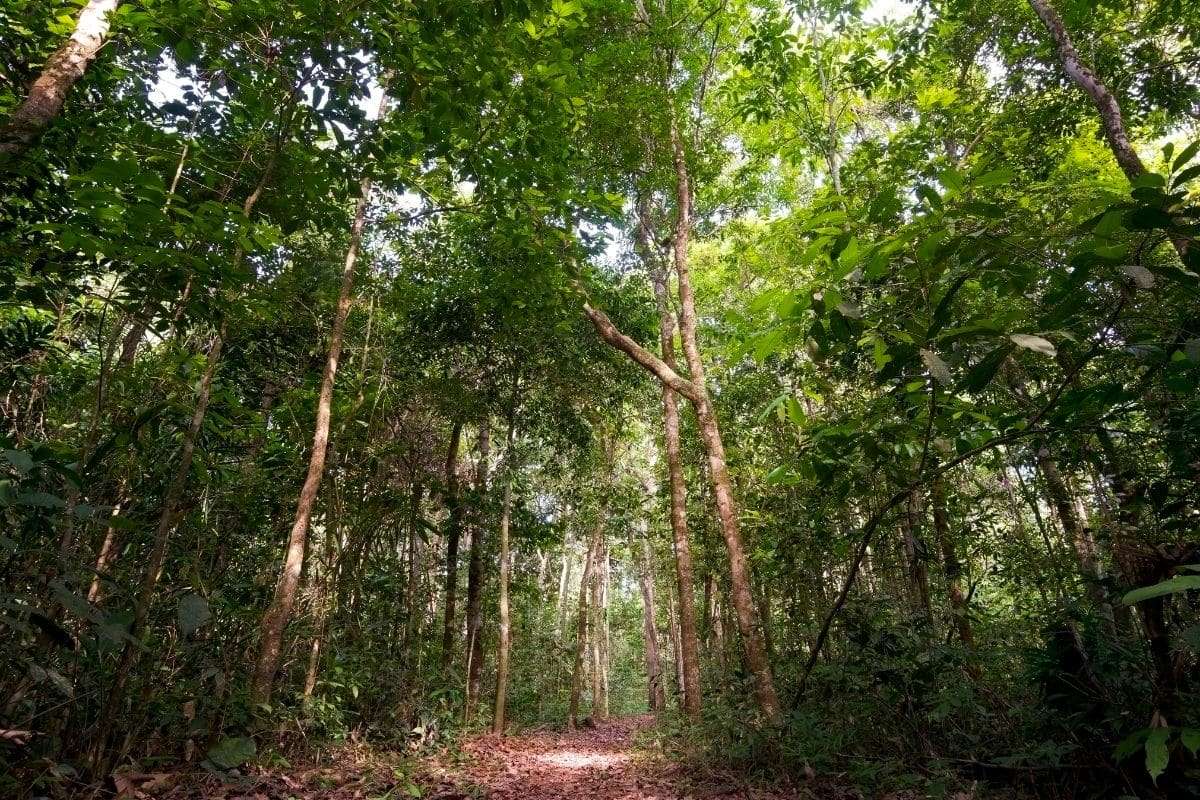
Deep within the Amazon rainforest, trees are proving to be vital indicators of environmental damage caused by unauthorized gold extraction. Recent studies reveal that toxic mercury, a harmful byproduct of this mining, accumulates within tree rings.
Unveiling Mercury Contamination
Gold mining has long been associated with ecological degradation. However, accurately assessing mercury pollution, especially stemming from small-scale illicit mining, has been challenging.
During gold retrieval, miners combine liquid mercury with crushed ore, then heat the mixture to separate the gold, releasing mercury—a potent neurotoxin—into surrounding air, soil, and waterways.

Though mercury pollution is largely unseen, its environmental consequences are widespread. “This method could potentially reveal when mining activity intensifies,” explains Jacqueline Gerson, a Cornell University scientist.
Currently, mercury emissions from gold mining have overtaken those from coal power plants, marking it as the largest emitter globally.
Using Trees as Mercury Monitors
While the mercury released lacks visible markers, certain trees such as the wild fig (Ficus insipida) can absorb airborne pollutants, including mercury.
Gerson's team investigated if analyzing tree cores could uncover reliable evidence of mercury contamination. By sampling trees near active mining zones, they detected heightened mercury levels embedded within the growth rings of trees adjacent to mining communities.
“The tree is just reflecting what the atmosphere is doing,” Gerson notes.
Charting Mercury Concentrations Over Years
The research published in Frontiers in Environmental Science centered on three mining locations within Peru’s Amazon, with core samples taken from wild fig trees. Findings showed the highest mercury traces in trees closest to mining, especially near towns where mercury burning is common.
According to Luis Fernandez of Wake Forest University, “You can trace back changes corresponding to the start of mining.” The scientists noted a clear increase in mercury deposition in trees around mining areas post-2005.
A New Tool for Environmental Assessment
Tracking mercury through trees introduces a groundbreaking approach to gauge gold mining’s environmental footprint in the Amazon.
“You can use trees to determine where we need to have interventions,” Gerson points out.
Mapping mercury hotspots via tree data enables targeted measures, such as deploying mercury-free extraction technologies or enforcing policies to minimize mercury emissions.
This technique may also establish baseline mercury levels, helping distinguish natural background mercury from contamination caused by mining operations.
Worldwide Consequences of Gold Mining Pollution
Mercury pollution from artisanal gold mining poses risks beyond the Amazon basin. Fernandez emphasizes, “Artisanal gold mining crosses borders and threatens communities; it represents a global mercury pollution source.”
Yet addressing this problem is complicated. In the U.S., funding for mercury research has been reduced. Fernandez's group, the Center for Amazonian Scientific Innovation, recently lost USAID support.
He warns this is a shortsighted decision: “Mercury pollution is a worldwide challenge,” calling for international collaboration to confront this escalating threat.
- Categories:
- News







0 comments
Sign in to Comment