
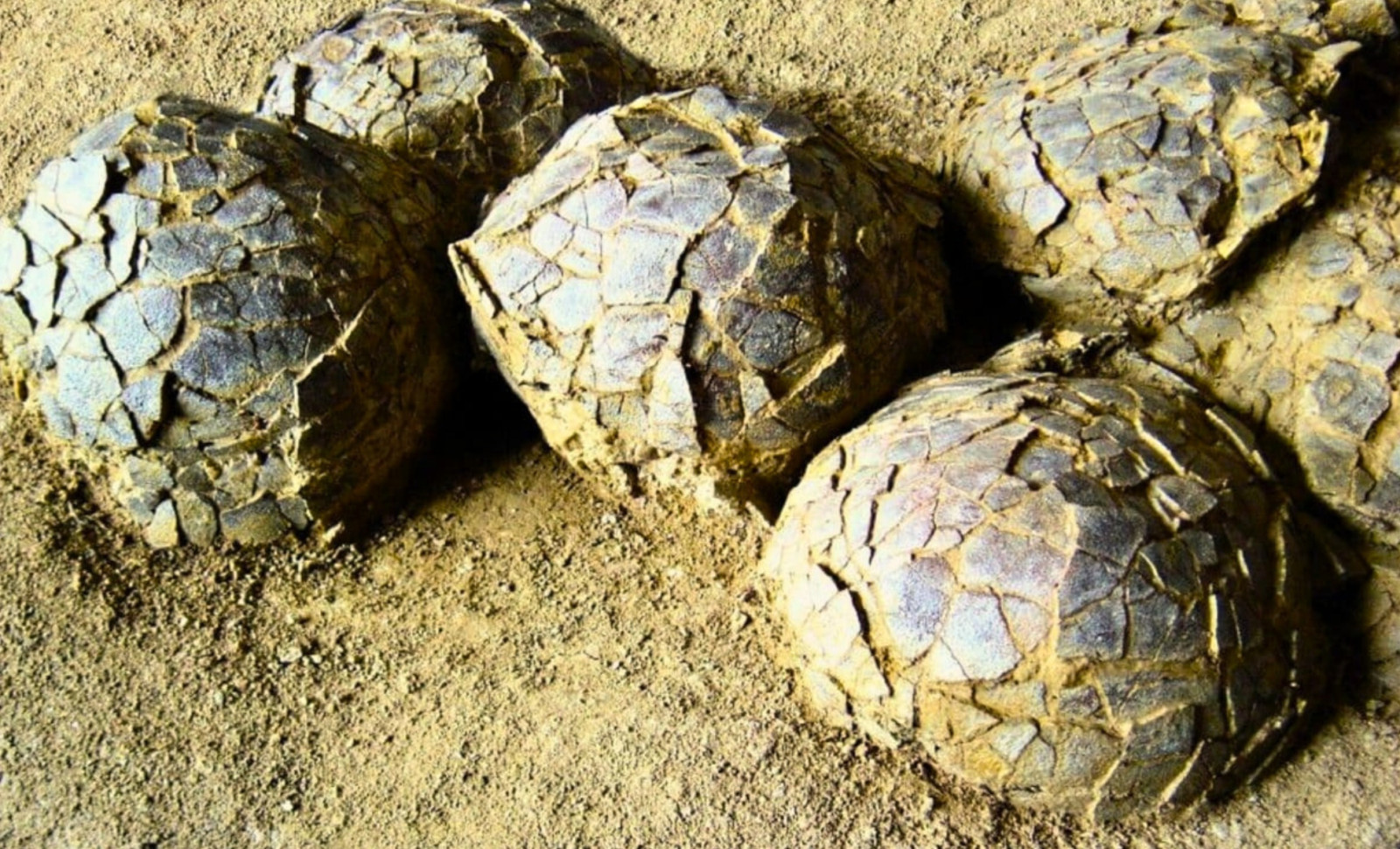
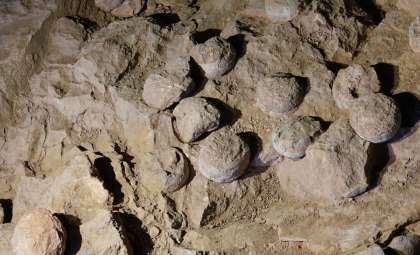
Despite frequent interruptions caused by slick mud and winter rainfall, paleontologists working in southern France persevered, revealing a remarkable fossil deposit teeming with hundreds of dinosaur eggs representing at least three distinct species. Announced in March 2026, this extraordinary discovery confirms the Mèze site as one of Europe’s premier dinosaur nesting locales.
Currently, over 100 eggs have been excavated from the trench, though the fossil layer extends far beyond the accessible area. Scientists at the Musée-Parc des Dinosaures anticipate the total number of eggs could reach into the hundreds or even thousands as work continues.
This discovery offers a glimpse into the last days of the dinosaur era, dating back approximately 70 million years to the end of the Cretaceous Period. Mèze's significance lies not only in the abundance of eggs but also in the diversity of species that nested on this ancient shore.

Giant Herbivores, a Bipedal Grazer, and a Small Predator
Researchers identified eggs from at least three dinosaur species by analyzing shell characteristics and dimensions, guided by techniques perfected over many years at the site. The largest, spherical eggs measuring up to 20 centimeters in diameter, belong to titanosaurs, massive long-necked plant-eaters prevalent in southern Europe during the Cretaceous.
Accompanying them are smaller, oval eggs ascribed to Rhabdodon priscus, a modestly sized bipedal herbivore sharing this coastal habitat. The third group, represented by Prismatoolithus caboti, comprises carnivorous dinosaurs first identified at Mèze in 1998. That year, Alain Cabot, director and custodian of the Musée-Parc des Dinosaures, discovered the smallest dinosaur egg known then.
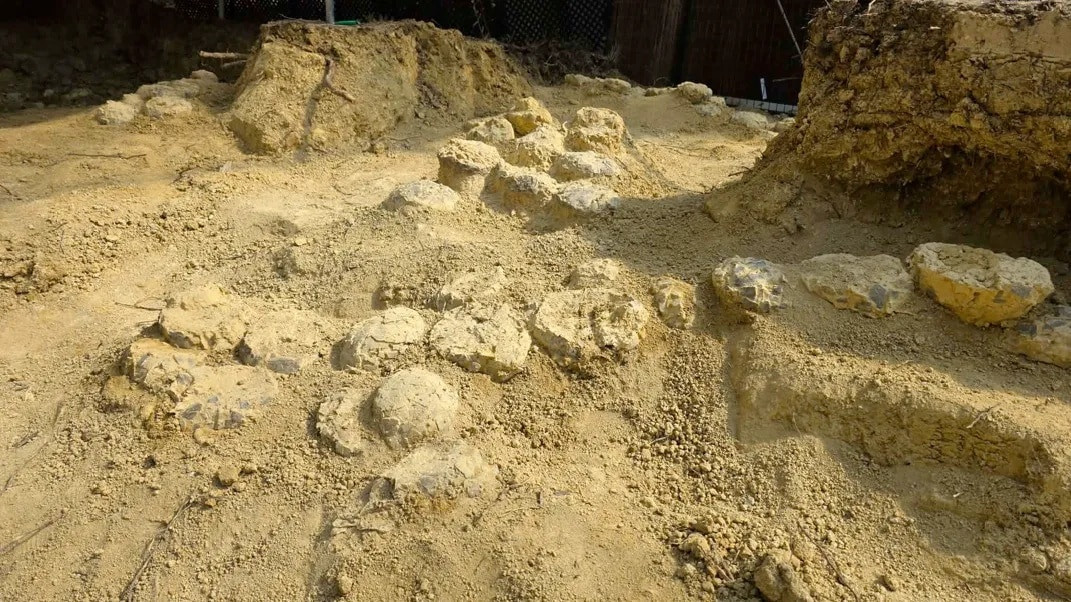
The coexistence of multiple species within the same sediment layer suggests that this was a shared nesting site, with different dinosaurs returning seasonally to this favorable ground. Speaking to GEO magazine, Cabot noted the remarkable concentration: “While we expected richness, the sheer volume of eggs from several species in one layer surpasses all previous findings.”
A massive flood rapidly covered the nests with fine clay marl, preserving the fragile calcium carbonate shells from destruction. This sudden burial was crucial for fossilization, protecting the eggs from scavengers and weathering they otherwise would not have survived.
From Hobby Discovery to Major Paleontological Site
Interest in the Mèze fossil beds began in 1996 when Cabot, then an enthusiast, noticed fragments of dinosaur eggshells on exposed clay slopes. His curiosity evolved into systematic excavation, revealing more than just eggs.
In 1999, the same geological layers yielded bones of Struthiosaurus, a small armored dinosaur previously unrecorded in this region of France. Close association between skeletal remains and eggs is unusual; most nesting sites worldwide contain eggs alone, leaving paleontologists to infer species. At Mèze, the connection between egg types and dinosaur species is precise.
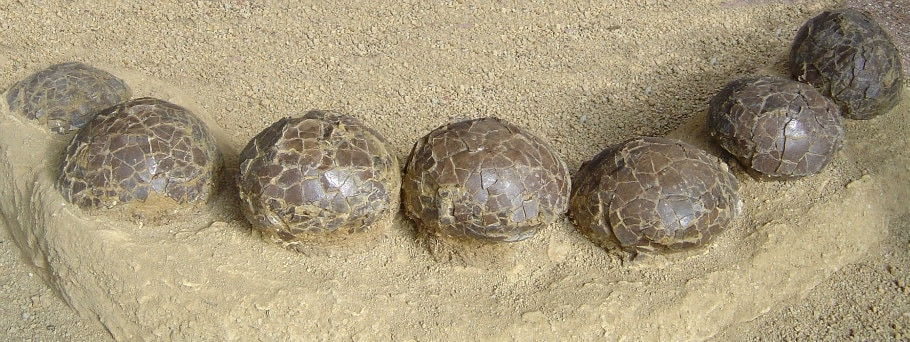
The museum team also crafted a classification system focusing on eggshell microstructure, pore characteristics, and surface patterns. Published extensively in paleontological literature over 30 years, this methodology helps identify eggs even without accompanying embryos or bones. Notably, the Prismatoolithus caboti eggs stand apart from the larger titanosaur eggs through their unique prismatic shell patterns.
Dating to Just Before the Mass Extinction
Excavations resumed in October 2025 and continued throughout harsh winter conditions, shedding new light on dinosaur reproduction shortly before their extinction. The layers correspond to approximately 72 to 70 million years ago, placing the nesting activity within two million years of the asteroid impact that ended the Cretaceous.
According to La Gazette de Montpellier, excavation plans extend for several more years. The currently exposed section is only a fraction of the entire fossil bed, which stretches into undisturbed surrounding ground. Some newly uncovered eggs remain undamaged, raising hopes that well-preserved embryonic material might be found inside.
The Musée-Parc des Dinosaures manages the location as both a research base and public exhibit. Visitors in summer can observe specialists meticulously removing clay from the delicate eggs. The museum’s galleries also feature earlier finds, such as the tiny carnivorous egg that first revealed the site’s outstanding preservation.
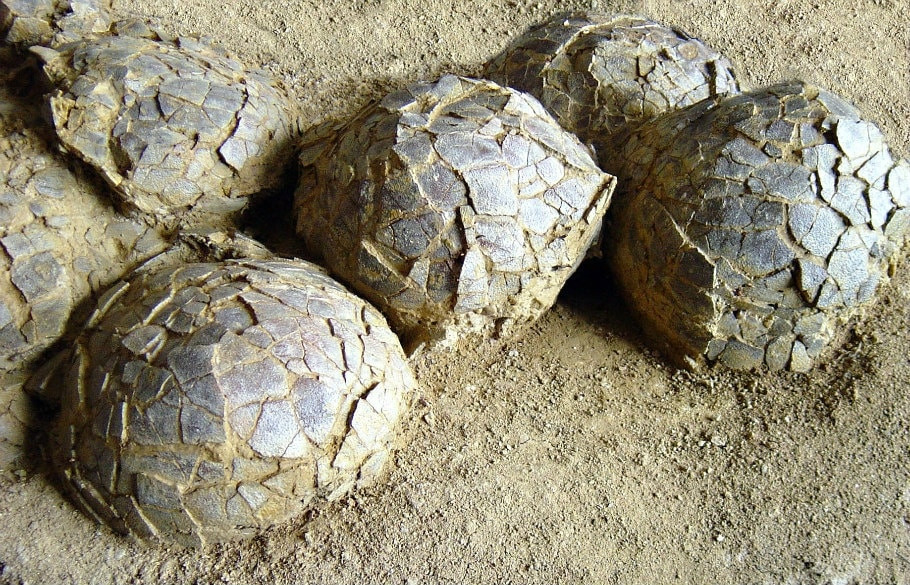
Local authorities hail the discovery as a major contribution to Hérault’s scientific heritage. A single nesting horizon containing multiple species indicates that dinosaur breeding behaviors were more complex than previously believed. Various dinosaurs may have shared the best nesting grounds instead of separating themselves within the environment.
The team documented egg clusters arranged in gentle arcs, matching known titanosaur nesting distributions at other European sites. Further research will determine if the eggs were intentionally buried for incubation or left exposed, a distinction that may illuminate dinosaur physiology and care for their young.
Still More Fossils Beneath the Surface
Fieldwork continues throughout 2026 to map the full range of the nesting deposit. Each newly uncovered egg cluster adds valuable insight into the ancient ecosystem and its inhabitants. Analyses in the museum lab involve measuring shell thickness, assessing pore density, and searching for preserved organic compounds that could reveal incubation environments.
The delicate eggs remain protected under a stabilizing cover during ongoing conservation efforts. Mèze represents a vital benchmark for dinosaur reproduction studies in Europe, capturing a rare moment when multiple species shared territory near the close of the dinosaur age.
- Categories:
- Science




0 comments
Sign in to Comment