
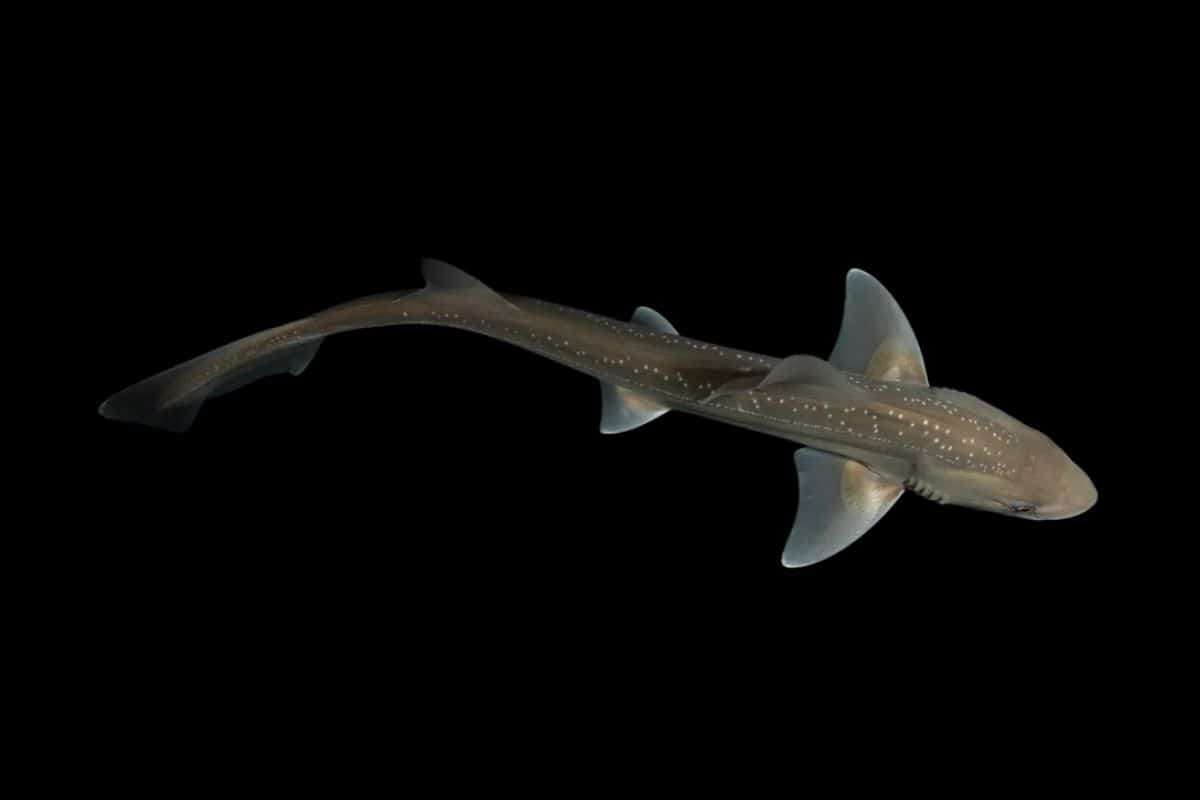
For many years, sharks were believed to be silent hunters. However, a recent discovery in New Zealand has overturned this belief. A recent study found that rig sharks (Mustelus lenticulatus) actually generate audible clicking noises, which may serve as distress signals or protective behavior.
Discovery During Unexpected Circumstances
The sounds were detected accidentally during behavioral observations at the Leigh Marine Laboratory at the University of Auckland. Scientists recorded clear, loud clicks while briefly handling ten juvenile rig sharks underwater. These clicking noises were consistent among all the sharks and faded as the experiment continued.
Lead researcher Carolin Nieder from the Woods Hole Oceanographic Institution commented, “Sharks rely more on senses like their electroreceptors, olfaction, and swimming mechanics rather than hearing.”
Investigating The Source of the Noise
Unlike many fish, rig sharks do not possess swim bladders, typically used to amplify sounds, and CT imaging revealed no obvious sound-producing organs. Scientists hypothesize that the clicking may result from rapid jaw snaps or teeth contact.
These sharks have unique, plate-like teeth known as pavement teeth designed to crush shellfish. This dental structure might produce a sharp click when the jaws snap shut, though jaw movements were not visually confirmed during the sound emissions, leaving the hypothesis tentative.

Clicks Comparable to Firearms in Loudness
Recorded clicks lasted approximately 48 milliseconds and occasionally peaked above 155 decibels, similar to the volume of a shotgun shot. Sharks emitted mostly single clicks with fewer double clicks, and nearly 70% occurred during smooth, swaying motions. Some clicks occurred without any visible motion, indicating the behavior might be subtle or automatic.
Not For Communication, But Possibly For Defense
Sharks’ hearing sensitivity drops below 1 kHz, making it unlikely these clicks function in inter-shark communication. Predators like the New Zealand fur seal (Arctocephalus forsteri) can perceive higher frequencies, suggesting the clicking might act as a startle mechanism that momentarily deters predators and helps young sharks escape.
This phenomenon resembles behaviors observed in other cartilaginous fish, such as skates and rays, known to emit clicks when disturbed.
Implications For Understanding Shark Behavior
The scientists intend to examine related shark species to determine if this clicking is more common. Adrian Gutteridge, a shark expert from the IUCN Shark Specialist Group who was not involved in the study, advised a cautious approach.
He proposed that the clicks may not be deliberate communication, but rather automatic nervous system reactions. Further investigations into similar species could reshape our knowledge of shark acoustics and their survival strategies.
“It’s too early to tell whether it’s a response, kind of saying, ‘go away,’ or if [it’s] just their nervous system is firing off which just happens to make their teeth and jaws click,” he explained Live Science.
- Categories:
- Science













0 comments
Sign in to Comment