
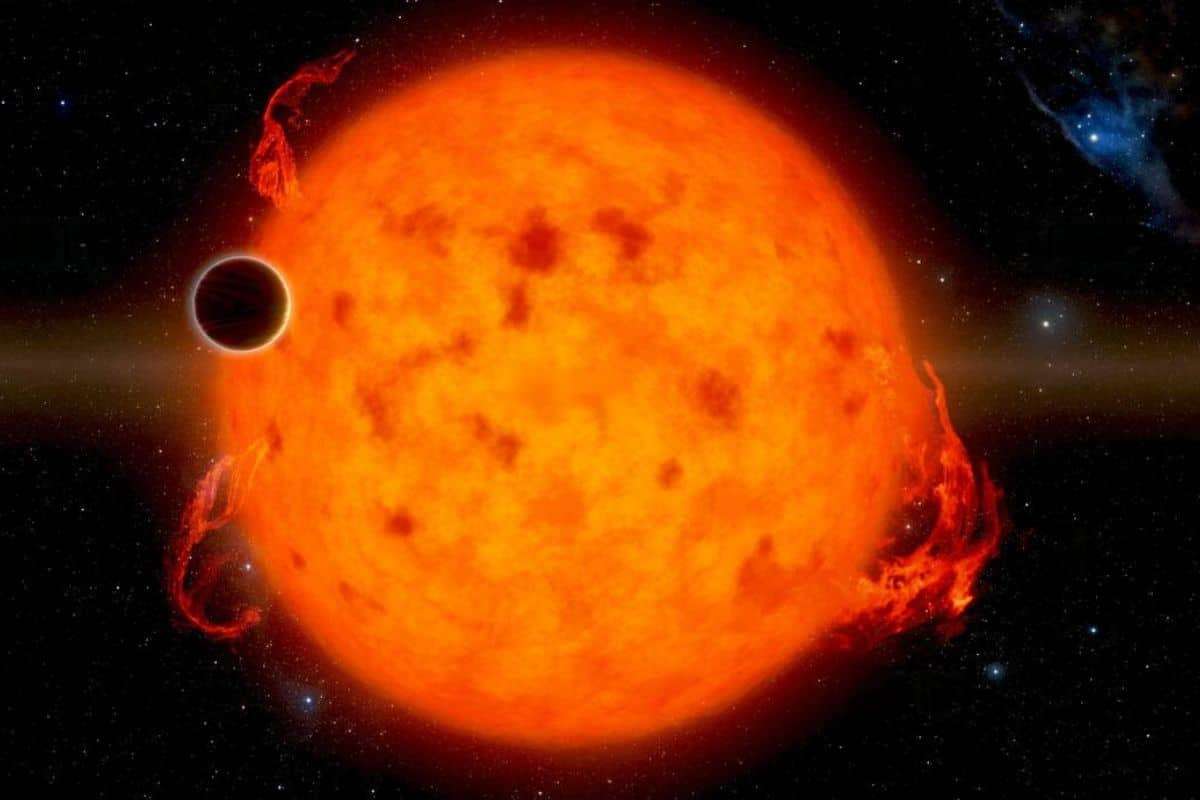
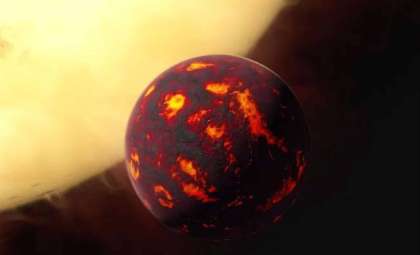
Researchers are delving into exoplanets that emerged around the era when dinosaurs inhabited Earth, shedding light on the processes of planetary birth and development.
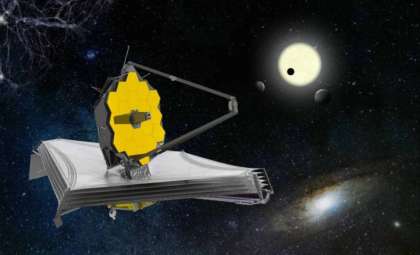
With the aid of the James Webb Space Telescope (JWST) and advanced computational techniques, the KRONOS initiative—a joint effort involving Michigan State University, Arizona State University, and Lawrence Livermore National Laboratory—is focused on examining the atmospheres of planets that are younger than 300 million years.
Challenges in Exploring Newly Formed Planets
Understanding how planets originate remains a pivotal question in astronomy. Despite the discovery of over 6,000 exoplanets, the detailed mechanisms behind their formation are still largely unknown. Young exoplanets are particularly elusive due to their faint emissions and the intricacies of their atmospheric makeup.
To tackle this, the KRONOS team has secured 154 hours of observation time on JWST to scrutinize seven youthful exoplanets with remarkable precision. By tracking how their atmospheres modify starlight, researchers aim to identify their chemical constituents and better understand their early developmental stages.

Decoding Planetary Atmospheres for Clues
During a transit—when a planet crosses in front of its star—some starlight passes through the planet’s atmosphere. Molecules such as water, carbon dioxide, and methane leave unique absorption patterns in the light spectrum, providing signatures of the planet’s atmospheric elements.
Studying these patterns across various wavelengths allows astronomers to detect the gases present and monitor their changes over time.
Harnessing Supercomputing to Interpret Data
Analyzing these atmospheric fingerprints demands sophisticated modeling and substantial computational resources. The KRONOS project has been allocated 22 million computing hours on Lawrence Livermore National Laboratory’s powerful supercomputers to generate highly accurate simulations of planetary atmospheres.
These physics-based simulations help scientists investigate how temperature, pressure, and chemical processes interact within exoplanet atmospheres, refining our understanding of planetary evolution by linking observations with theoretical predictions.
Broadening the Horizons Beyond Initial Targets
While the immediate focus is on seven select exoplanets, the KRONOS team envisions a wider scope. Their goal is to develop atmospheric models for all 70 exoplanets observed to date by JWST.
"Creating a comprehensive atmospheric model covering such a diverse group of planets—from blistering gas giants larger than Jupiter to cooler, Earth-sized worlds—has never been attempted before," explained Peter McGill, lead scientist at LLNL.
Heralding a New Chapter in Exoplanet Research
Scientists are probing planets less than 300 million years old, formed concurrently with the age of the dinosaurs on Earth. These alien worlds may hold key insights into planetary formation and progression.
The KRONOS program exploits the capabilities of the James Webb Space Telescope (JWST) to characterize these planets’ atmospheres. Discoveries from this endeavor could also illuminate whether some of these youthful planets possess conditions favorable for life.
- Categories:
- News






0 comments
Sign in to Comment