
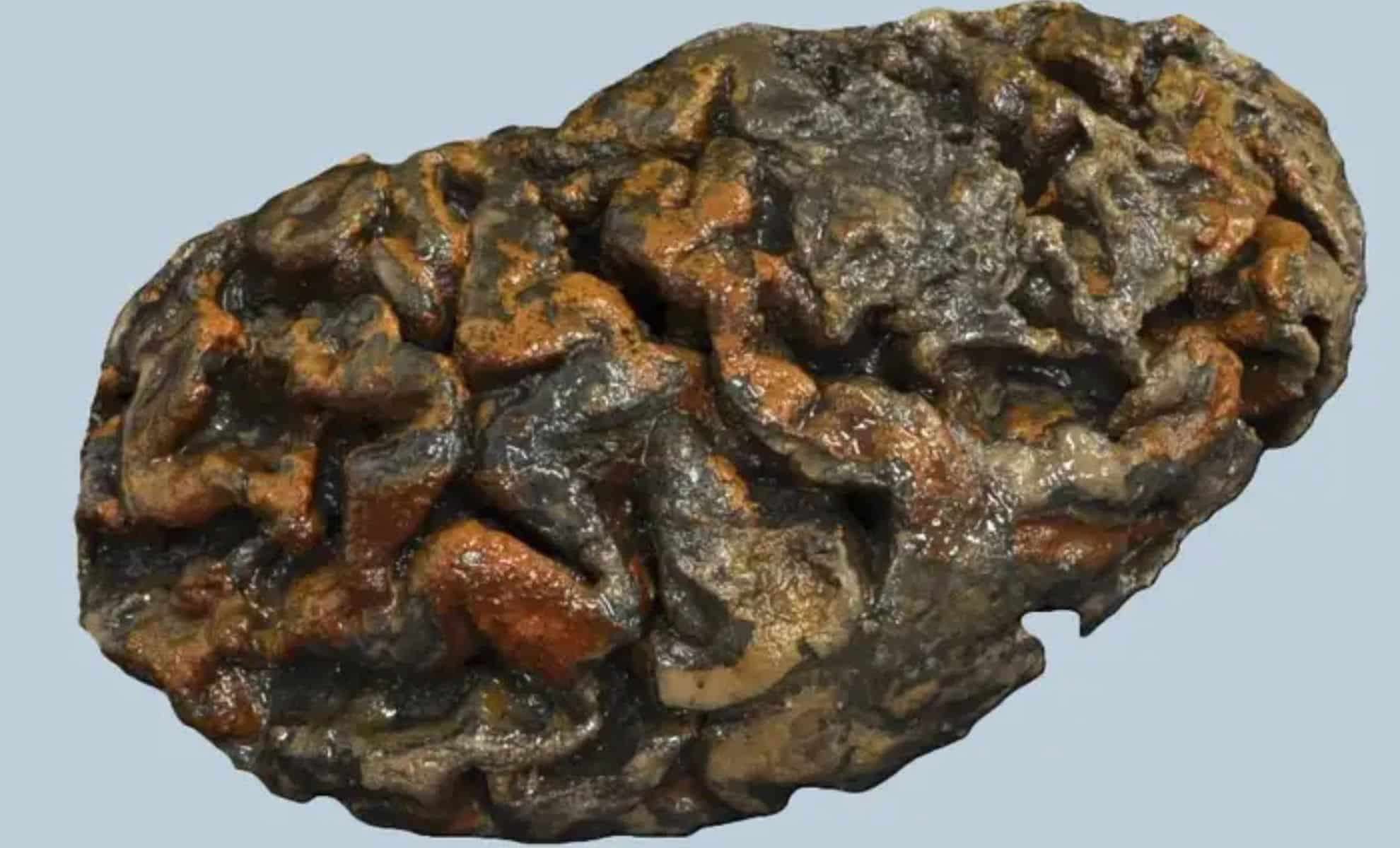
Scientists have now developed a groundbreaking method to isolate proteins from preserved soft tissues, including those from human brains, unlocking a wealth of biological information that was previously out of reach. This advancement could dramatically enhance our knowledge of evolution, diet, microbiomes, and brain cell development over thousands of years.
Exploring Concealed Biological Data
Proteins are fundamental to all life, controlling essential functions like heartbeats and nerve signaling. Typically, these proteins break down rapidly after death, but in some rare cases where soft tissue is preserved, they can survive for remarkably long periods.
Alexandra Morton-Hayward from the University of Oxford explains that “soft tissues have been preserved for over half a billion years of Earth’s existence,” offering what she calls biological treasure troves with “more than 75 percent of all human proteins.”

Until now, retrieving proteins from such delicate tissues has been challenging. Most studies in paleoproteomics have examined bones and teeth, which provide limited information—mainly about lineage or species identity. Research on skin and hair, typically preserved as leather or fur, yields little protein data. In contrast, soft internal organs may hold a far more detailed molecular history.
Innovative Use of Urea to Extract Proteins
In a recent publication, Morton-Hayward’s team successfully liberated proteins from centuries-old human brain specimens excavated at an archaeological site near Bristol, UK. Among 456 preserved brain samples, they chose 10 small samples weighing just 50 milligrams each, experimenting with various chemical methods to find the most effective protein extraction technique.
They discovered that urea, a compound naturally found in urine, can break down brain cells without damaging the proteins. Released proteins were then fragmented and identified via mass spectrometry, a technology that analyzes molecules based on mass and electric charge. This approach uncovered an unprecedented total of 1,205 proteins.
“This might be one of the very first studies to achieve this,” noted Ragnheiður Diljá Ásmundsdóttir from the University of Copenhagen, emphasizing the method’s novelty and its significant potential for future investigations.
Beyond the Brain: Expanding Protein Recovery
While this research focused on brain tissues, the technique is adaptable for extracting proteins from other soft organs like the liver and intestines. These tissues harbor a diverse array of proteins that could reveal information about ancient diets, illnesses, and bodily functions.
Morton-Hayward points out that there are numerous preserved samples worldwide, often shelved and untouched. This new extraction method offers the possibility of revisiting these archives, unlocking molecular insights previously unattainable.
The findings also raise important questions about how long proteins can persist. So far, the oldest proteins extracted come from teeth dated between 21 and 24 million years ago in the Canadian High Arctic. Some preserved soft tissues, however, date back to the Cambrian Period (about 539 to 487 million years ago) and include specimens such as trilobite digestive systems and arthropod nervous tissues. It remains uncertain whether proteins survive in these ancient tissues or if current technology cannot yet detect them.
Advancing Our Understanding of Protein Degradation
A critical challenge ahead is deciphering the process of protein decay over prolonged periods. Morton-Hayward states this is vital to reconstruct the original form of proteins before they deteriorate.
“Either proteins exist but evade our current detection methods, or no proteins survive past a certain age,” Ásmundsdóttir commented. “Determining which is true requires further research.”
This advancement paves the way for evolutionary biology to explore the biochemical and physiological changes of species, including humans, with unprecedented depth and precision.
- Categories:
- News










0 comments
Sign in to Comment