
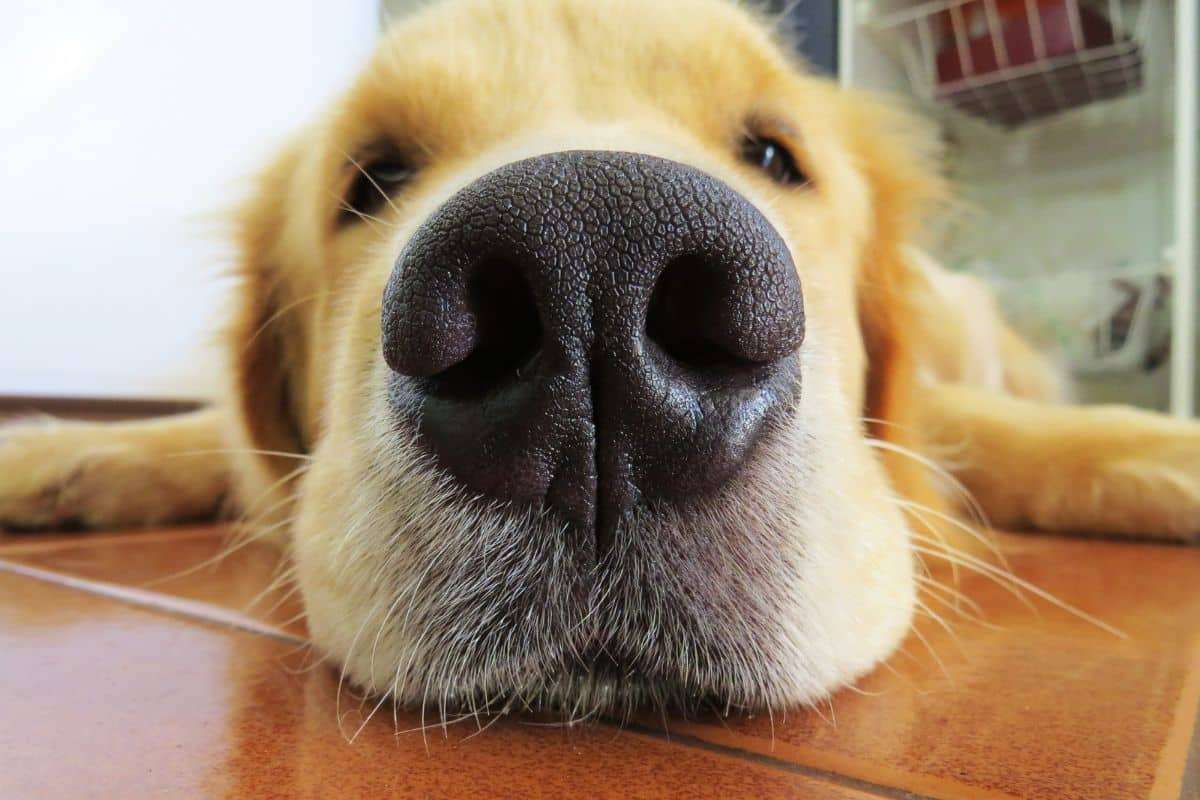
Dogs possess an extraordinary way of experiencing their environment, largely driven by their incredible sense of smell. Unlike humans who rely mainly on vision, dogs explore the world predominantly through their noses, providing them with a unique sensory perspective.
Although it’s well known that dogs have a highly developed olfactory system, new research is shedding light on how they process scents and what this means for their understanding of the environment around them.
The Extraordinary Capabilities of Canine Noses
A dog’s nose is an astonishing natural instrument. Equipped with more than 10 million scent receptors, dogs have an olfactory sensitivity that outperforms humans by over 10,000 times. This incredible detection ability enables them to identify even the slightest odors, such as quantities as tiny as 0.01 microliters of gasoline.
This heightened smell perception allows dogs to execute amazing tasks, including locating missing individuals or uncovering illicit substances. It also explains their vital roles in medical fields, where they can detect illnesses such as cancer by scent alone.

The Emotional Dimension of Scent in Dogs
What makes canine scent detection particularly intriguing is the way their brains interpret these odors. A recent investigation highlighted that emotional reactions tied to smells are integral to how dogs perceive scents.
Using AI speckle pattern analysis, researchers non-invasively monitored brain activity as dogs were exposed to different odors like alcohol, marijuana, menthol, and garlic.
The study examined three brain regions: the amygdala, olfactory bulb, and hippocampus. The amygdala, responsible for emotional processing, showed significant involvement in differentiating scents. This suggests dogs make emotional associations with certain smells, similar to humans.
Insights into Training Dogs Through Scent
Training dogs to respond to specific odors is common practice, but the emotional context of these scents can influence their performance, especially in stressful situations.
If a dog links a particular odor to a negative memory, it may struggle to focus or complete tasks efficiently during training.
Understanding how dogs emotionally process smells allows trainers to adjust techniques, ensuring dogs are mentally equipped to handle scent detection tasks.
These insights hold promise for enhancing the success of dogs in law enforcement, search-and-rescue operations, and medical scent detection work.
Looking Ahead: The Future of Canine Olfactory Research
Technological breakthroughs in brain imaging promise exciting advancements in studying canine scent capabilities. AI speckle pattern analysis is a groundbreaking, non-invasive method that allows researchers to observe brain function in freely moving dogs.
This technique could someday lead to devices capable of translating the scents dogs detect into understandable signals for humans, bridging the gap between canine sensory perception and human interpretation.
Such innovations would open new horizons in how we understand and utilize dogs’ remarkable olfactory abilities.
- Categories:
- Science










0 comments
Sign in to Comment