
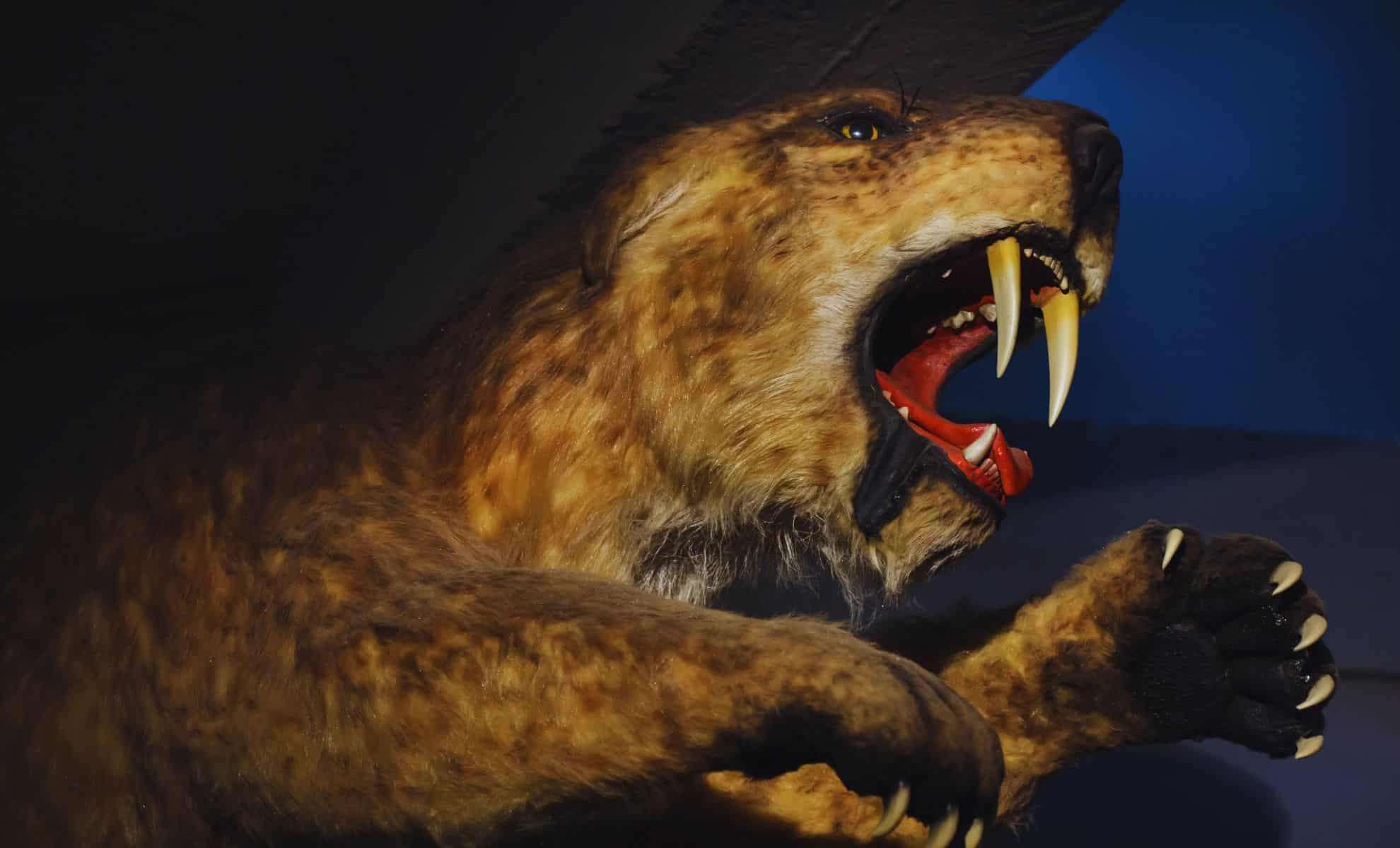
Scientists have identified a previously unknown species of massive saber-toothed cat, shedding new light on the ancient predators that roamed North America. Living between 5 and 9 million years ago, this formidable feline weighed up to 900 pounds and targeted prey that ranged from 1,000 to 2,000 pounds. The discovery emerged from a detailed examination of seven uncategorized fossil samples compared with known specimens found worldwide.
How Forearm Bones Led to the Discovery of a New Species
Interestingly, the critical factor in classifying this giant cat, named Machairodus lahayishupup, was the analysis of the humerus bone, particularly around the elbow, rather than the more commonly used dental evidence for saber-toothed cat identification. By comparing humerus fossils of various large cats— including modern-day lions, tigers, and pumas—researchers found that this species had exceptionally robust forearms unlike any other documented felid. This distinctive anatomy allowed them to confidently designate it as a novel saber-toothed cat species.
Using precise measurements and 3D modeling of fossilized remains, the team highlighted unique features distinguishing this new species. The longest humerus fossil measured exceeded 18 inches, significantly surpassing the typical 13-inch humerus length seen in adult male lions today. Such remarkable size and structure confirm Machairodus lahayishupup as a giant in the saber-toothed cat lineage.

A Dominant Predator in its Ecosystem
Experts estimate that Machairodus lahayishupup averaged about 600 pounds, yet its powerful limbs would have enabled it to hunt prey weighing up to 6,000 pounds. This saber-toothed cat likely hunted enormous herbivores such as rhinos, giant camels, and ground sloths, which thrived in North America during the era.
Jonathan Calede, assistant professor at Ohio State University and co-author of the study, described these cats as hunters of bison-sized animals. “This was by far the largest cat alive at that time,” he stated, underscoring Machairodus lahayishupup as the biggest felid present in North America during its existence.
Insights into Saber-Toothed Cat Evolution
The emergence of Machairodus lahayishupup invites new questions about how saber-toothed cats evolved across continents. While giant saber-toothed species have been documented in Europe, Asia, and Africa, this discovery confirms that North America also hosted its own colossal variant. Researchers are eager to determine whether these immense cats evolved independently on each continent or descended from a shared common ancestor.
Co-authors Calede and John Orcutt, who initiated this research during graduate studies, believe their findings significantly deepen the understanding of saber-toothed cat evolution. They suggest that the appearance of similar giant cats across multiple continents may reflect either convergent evolutionary events or a widespread ancestral lineage.
- Categories:
- News








0 comments
Sign in to Comment