

Beneath Antarctica's vast ice sheets lies a monumental mountain range that has long intrigued scientists. Known as the Gamburtsev Subglacial Mountains, recent studies published in Earth and Planetary Science Letters trace these mountains back to their origins over 500 million years ago, formed during the assembly of the ancient supercontinent Gondwana. Understanding this buried range sheds light on Earth's tectonic history, mountain-building processes, and the stability of Antarctica’s geology.
Unraveling the Mystery of the Gamburtsev Mountains
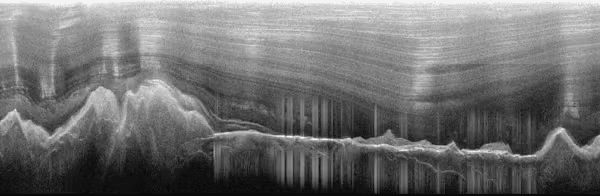
Deep beneath the ice of East Antarctica, the Gamburtsev Mountains represent one of the planet’s most intriguing geological puzzles. Unlike many mountain ranges formed at plate boundaries, this hidden range has remained undisturbed for millions of years. Comparable in size and shape to the European Alps, their ice-covered location means they have been challenging to study. Initially detected in 1958 through Soviet seismic surveys, the mountains have since captivated questions about their formation and preservation.
Origins of the Gamburtsev Mountain Chain
The Gamburtsev Mountains’ birth dates back to the early phase of Gondwana, when ancient continental collisions occurred over 500 million years ago. These massive landmass interactions triggered profound tectonic activity beneath the Earth’s crust. Unlike rising ranges such as the Himalayas, which continue to be shaped by current tectonics, the Gamburtsevs formed during ancient, intense crustal events. The collision caused molten rock to flow beneath the surface, thickening the crust and ultimately causing it to collapse while leaving a distinctive, ice-shielded mountain chain below.

Gravitational Spreading’s Impact on Mountain Structure
As the mountains formed, a process called gravitational spreading influenced their current shape. The movement of hot, plastic rocks beneath the surface spread out laterally—similar to how toothpaste is squeezed from a tube—causing portions of the mountain range to partly collapse. This led to the creation of a dense crustal "root" extending deep into the Earth's mantle, anchoring the mountains securely. Coupled with the immense ice coverage above, this dynamic helped preserve the Gamburtsevs as a uniquely ancient and stable mountain system.
Dating the Mountains Using Ancient Minerals
Researchers determined the ages of these mountains by analyzing zircon crystals found within sandstones far from the range, in the Prince Charles Mountains. These zircons, acting as geological timestamps, revealed that the mountains started forming around 650 million years ago. The range likely reached heights comparable to the Himalayas by about 580 million years ago before experiencing melting and crustal deformation that ceased roughly 500 million years ago. This analysis offers an in-depth chronology of the rise and alteration of the Gamburtsev chain.
Preservation Under Ice: Why These Mountains Remain Intact
While most mountain ranges undergo erosion or tectonic changes that reshape them over time, the Gamburtsev Mountains have remained largely unchanged due to their coverage beneath thick ice sheets. This ice acts as a protective barrier, preventing extensive erosion and weathering processes. Thanks to this preservation, the range stands as one of Earth's best-kept ancient mountain systems. Despite challenges posed by the harsh environment, ongoing scientific efforts continue to unlock the secrets hidden within this frozen geological marvel.
- Categories:
- News






0 comments
Sign in to Comment