
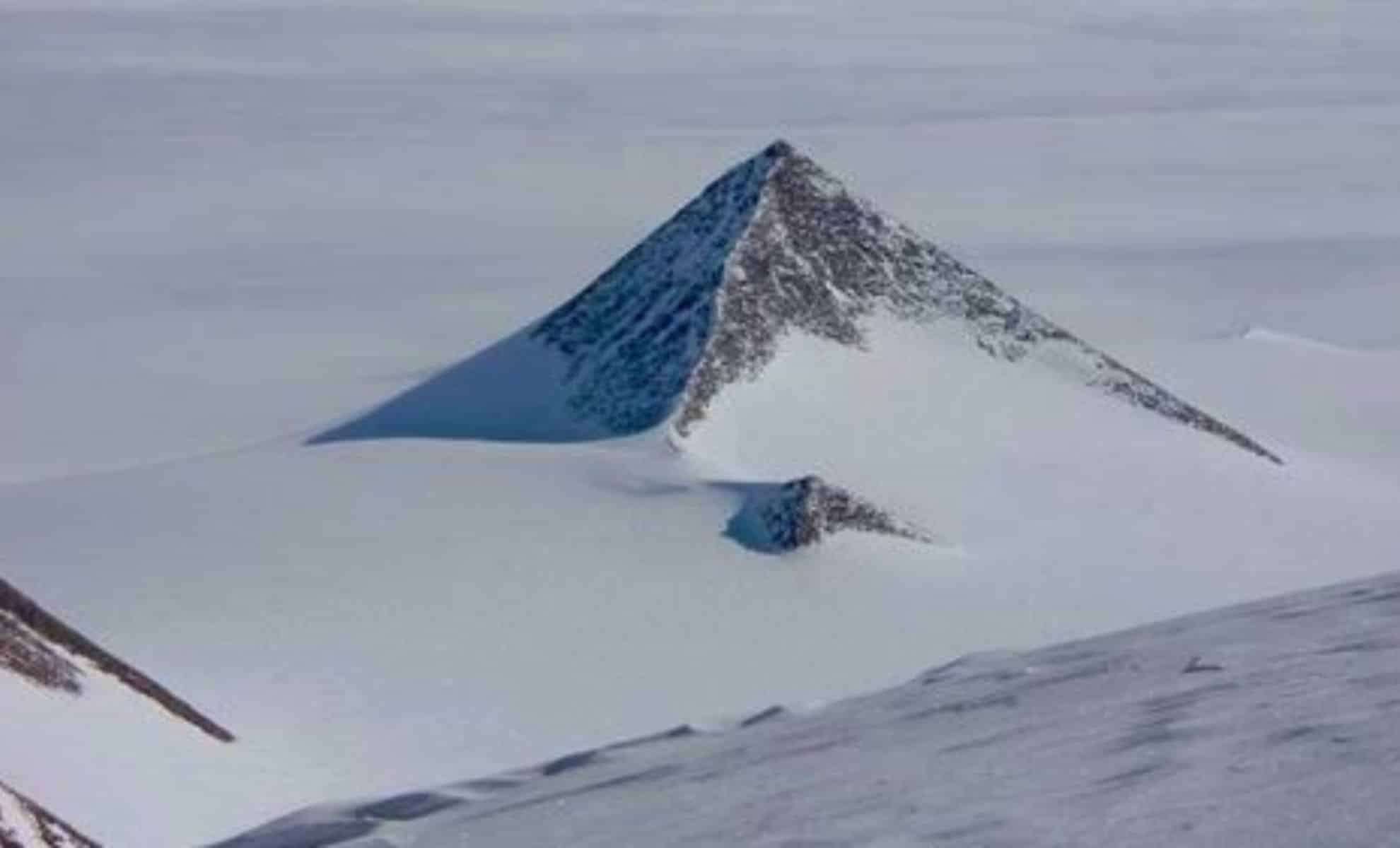
Hidden in the heart of Antarctica’s Ellsworth Mountains lies a striking mountain peak shaped like a pyramid, captivating both scientists and the public. Distinguished by its four sharply angled, evenly proportioned sides, this peak bears a strong resemblance to the iconic pyramids of ancient Egypt. This resemblance has fueled numerous theories suggesting it might be an artificial structure concealed beneath Antarctic ice. First spotlighted widely in 2016, this formation sparked a wave of internet speculation, involving ideas about ancient civilizations, extraterrestrial architects, and secret findings in Antarctica.
Although the pyramid-like appearance is impressive, experts agree that this peak is entirely natural, having been shaped by erosion over millions of years. The geological processes responsible are consistent with those that sculpt many renowned mountains worldwide, yet this peak’s almost perfect pyramid silhouette stands out as a remarkable rarity within Earth’s natural landscapes.
The significance of this Antarctic mountain is rooted not in archaeological mystery but in its ability to provide a deeper understanding of erosion, Antarctica’s unique geology, and how harsh environments mold terrain through time. Decades of research in the area have peeled back layers of history, revealing the fascinating evolution of this frozen environment.

Insights Into Antarctica’s Pyramid Formation
Sometimes dubbed the Antarctic pyramid, this mountain remains unnamed but has been extensively examined by scientists studying the Ellsworth Mountains, a rugged range first officially observed during an aerial expedition by Lincoln Ellsworth in 1935. The area has yielded fossils dating back 500 million years, shedding light on Earth’s ancient biological history.
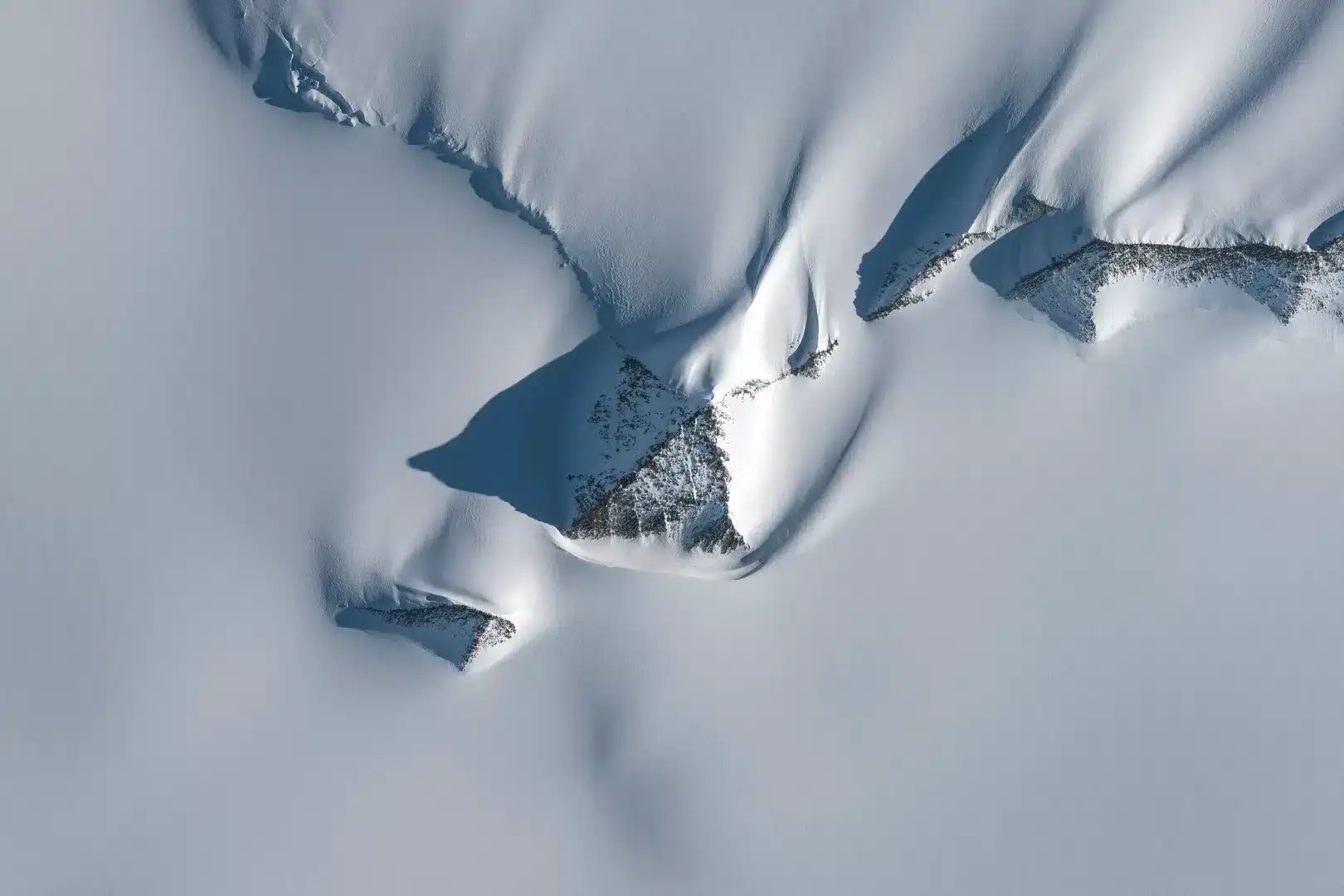
Although the peak rose to prominence on social media platforms only recently, it has long been familiar to researchers. Situated close to Patriot Hills, a location where climatologists maintain a scientific outpost, geologists explain that its distinct four-sided form emerges from a gradual and sustained process of erosion, with no indication of human construction.
Antarctic Peak: Essential Facts
Ongoing geological studies continue to clarify how natural forces gradually fashioned this uniquely symmetric pyramid shape that so many find captivating.
Understanding the Formation of the Pyramid Shape
Despite its seemingly precise proportions, the Antarctic pyramid’s balanced symmetry is a natural phenomenon, with similar formations observed in other mountainous regions around the globe. This mountain’s sharp edges and triangular faces were sculpted over millions of years by a process called freeze-thaw weathering.
In Antarctica’s harsh climate, meltwater infiltrates minute fractures during warmer intervals before freezing and expanding as temperatures plunge. This expansion exerts pressure that fractures the rock, gradually eroding it into the mountain’s iconic pyramid-like outline. Erosion proceeded roughly evenly across three of its four faces, generating an unusually symmetrical summit.
Mauri Pelto, an environmental science expert at Nichols College, highlighted the mountain's familiarity within the scientific community, noting its visibility from Patriot Hills, near where ongoing climate monitoring is conducted. “You can probably see this mountain from up there,” Pelto said, underscoring that researchers had long known about it before it rose to internet fame.
Though pyramid-shaped mountains are fairly common globally, the Antarctic peak’s distinct four-sided form is a rarity but remains a natural geological occurrence.
The Antarctic Pyramid's Rise as a Digital Phenomenon
In 2016, satellite images revealing the mountain's extraordinarily symmetric shape gained viral popularity online, sparking theories about a hidden man-made pyramid underneath Antarctic ice. Speculations flew about lost civilizations, clandestine military operations, and even alien activity.
Yet, Eric Rignot, a professor specializing in Earth system science at the University of California, Irvine and a senior NASA scientist, dismissed such claims. “This is just a mountain that looks like a pyramid,” Rignot explained. While natural pyramid-like mountains are uncommon, having four completely symmetrical sides is an exceptional geological curiosity rather than evidence of the supernatural.
Scientists remind the public that while natural formations can sometimes resemble artificial structures, this doesn’t imply human origin. From the Face on Mars to the Bermuda Triangle, numerous natural phenomena have prompted unfounded speculation—the Antarctic pyramid is just latest in this tradition.
Antarctica’s Landscape: A Repository of Ancient Geological History
Although the pyramid-shaped mountain provides no proof of ancient societies or extraterrestrial constructs, the Ellsworth Mountains remain an extraordinary scientific treasure trove. The fossils discovered here, dating to over 500 million years ago, afford scientists vital insights into life during the Cambrian era.
Beyond paleontology, researchers continue exploring Antarctica’s glaciers, permafrost, and hidden lakes, which hold clues about Earth’s past climate and could inform the search for life beyond our planet. The discovery of microbial ecosystems beneath Antarctic ice has intensified interest in similar environments on icy extraterrestrial moons such as Europa and Enceladus.
While the Antarctic pyramid is not the remnant of a lost civilization, it stands as a powerful example of nature’s ability to mold the Earth’s surface into forms that challenge our assumptions. Whether appreciated as a geological marvel or an online mystery, it reminds us of the awe-inspiring forces shaping our planet.
- Categories:
- News










0 comments
Sign in to Comment