
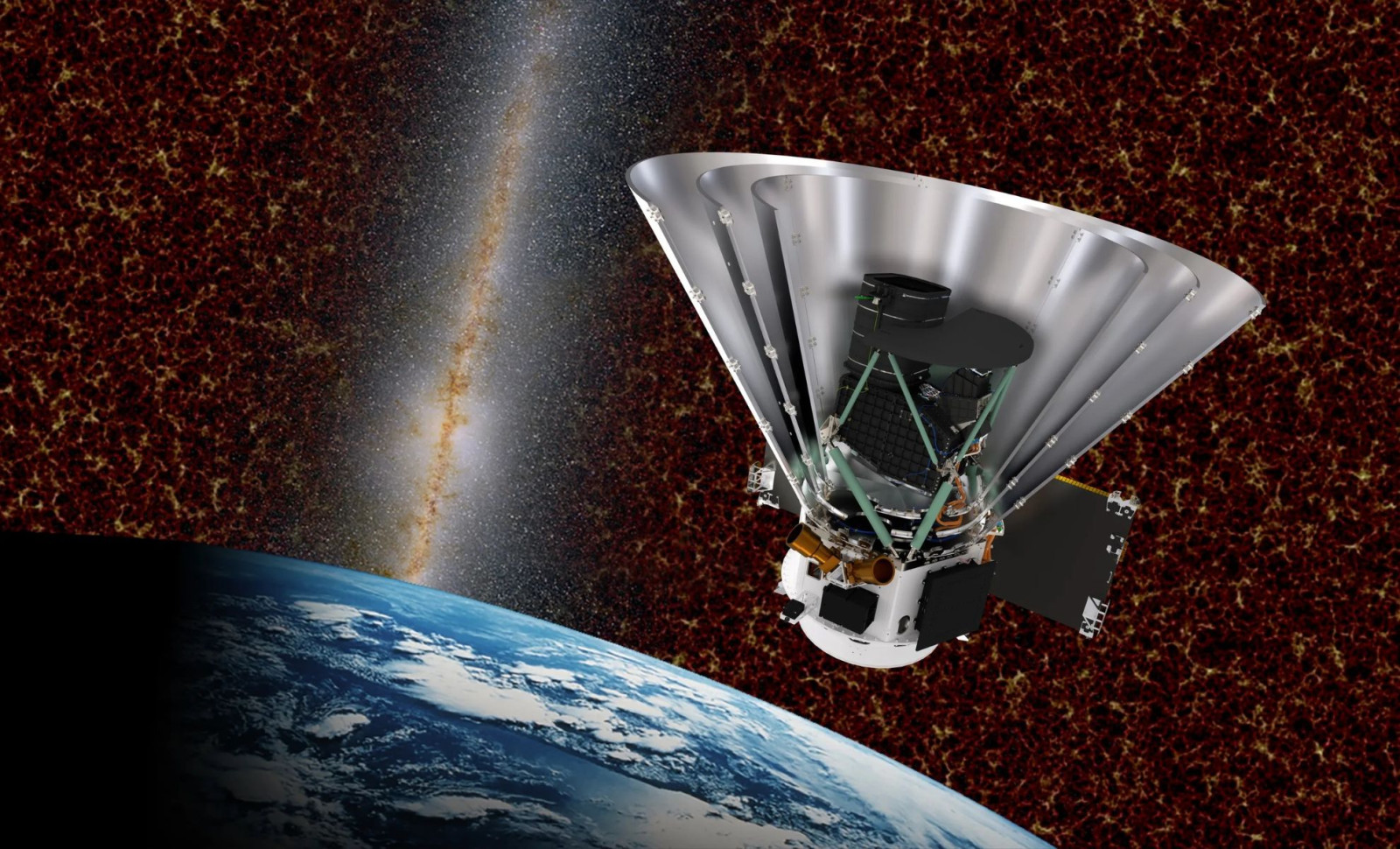
NASA’s SPHEREx mission has achieved an extraordinary milestone by detecting water ice within one of the Milky Way’s most prolific star-forming zones, Cygnus X. Employing cutting-edge infrared technology, SPHEREx has charted water ice with exceptional precision. Situated approximately 4,500 light-years away, Cygnus X is renowned for its dense dust and gas clouds, the cradle of emerging stars.
NASA notes that Cygnus X serves as an ideal environment to explore the distribution and preservation of molecules such as water ice under the influence of intense stellar radiation. Published in The Astrophysical Journal on April 15, 2026, the research highlights that water ice molecules are enveloped by dust particles comparable in size to those in candle smoke.
SPHEREx Conducts an Infrared Census of Cosmic Ice
SPHEREx, which stands for Spectro-Photometer for the History of the Universe, Epoch of Reionization, and Ices Explorer, commenced its journey in March 2025. This pioneering effort represents the first comprehensive infrared survey of the entire sky, analyzing light across 102 wavelengths.

According to the NASA report, Cygnus X’s dense clouds are an exceptional site for investigating how molecules like water ice are spread and safeguarded from harsh radiation.
“We expected to detect these ices in front of individual bright stars: The light from a star acts like a spotlight, revealing any ice in the space between us and that star. But this is something different,” as noted by lead researcher Joseph Hora, an astronomer at the Center for Astrophysics at Harvard & Smithsonian in Cambridge. “When looking along the galactic plane — where most of the stars, gas, and dust of our galaxy are concentrated — there’s a lot of diffuse background light shining through entire dust clouds, and SPHEREx can see the spatial distribution of the ices they contain in incredible detail.”
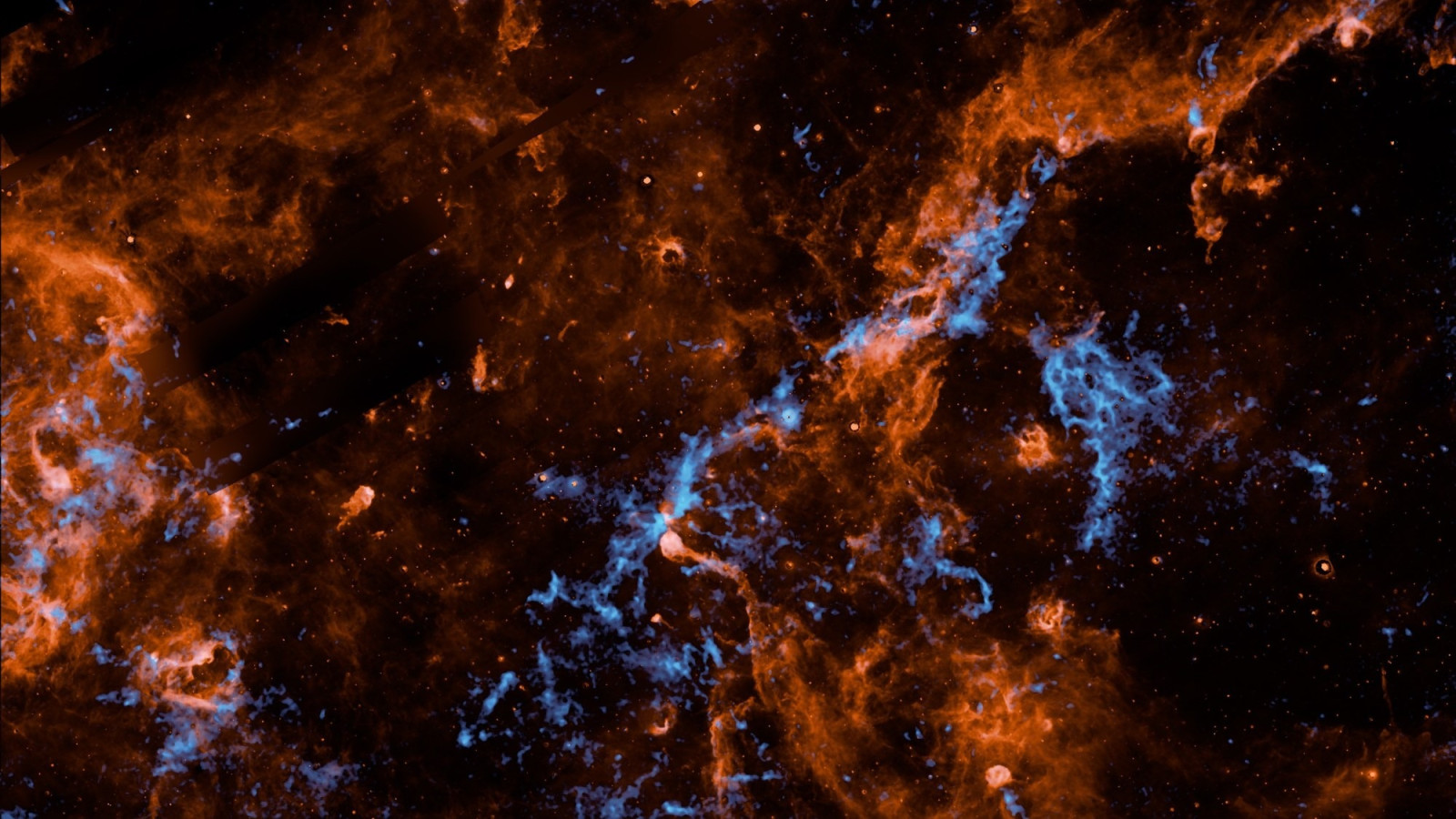
The published results confirm that water ice molecules are encased by dust particles as small as those in candle smoke. In SPHEREx images, water ice is rendered bright blue, standing out from other substances like polycyclic aromatic hydrocarbons, which show up as orange.
How Dust Protects Water Ice from Stellar Radiation
A critical outcome of the SPHEREx observations is the clarified connection between water ice and surrounding dust particles in space. Researchers detail this relationship as follows:
“The findings show the densest regions of ice coincide with the densest regions of dust, and the dust shields the ice from the intense ultraviolet radiation emitted by newborn stars.”
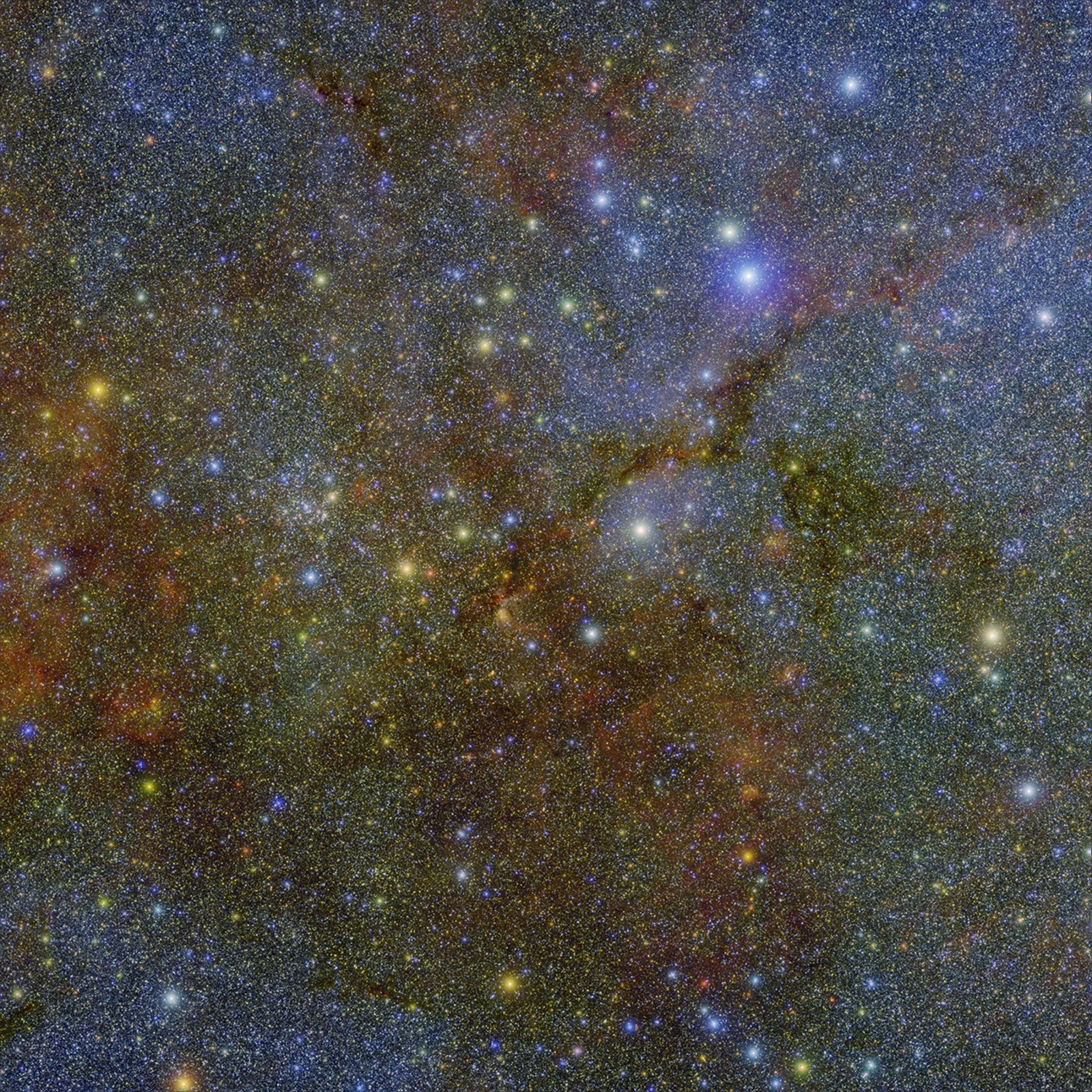
The protective dust acts as a barrier, enabling the survival of ice in otherwise inhospitable zones. This research reinforces the established theory that ice accumulates on dust grain surfaces, with these particles providing essential shelter against cosmic radiation.
“We can investigate the environmental factors that contribute to different ice formation rates across large areas of interstellar space,” said Gary Melnick, a study coauthor and astronomer at the CfA. “The SPHEREx mission’s ‘big picture’ view provides valuable new information you can’t get when zooming in on a small region.”
- Categories:
- Nasa




0 comments
Sign in to Comment