
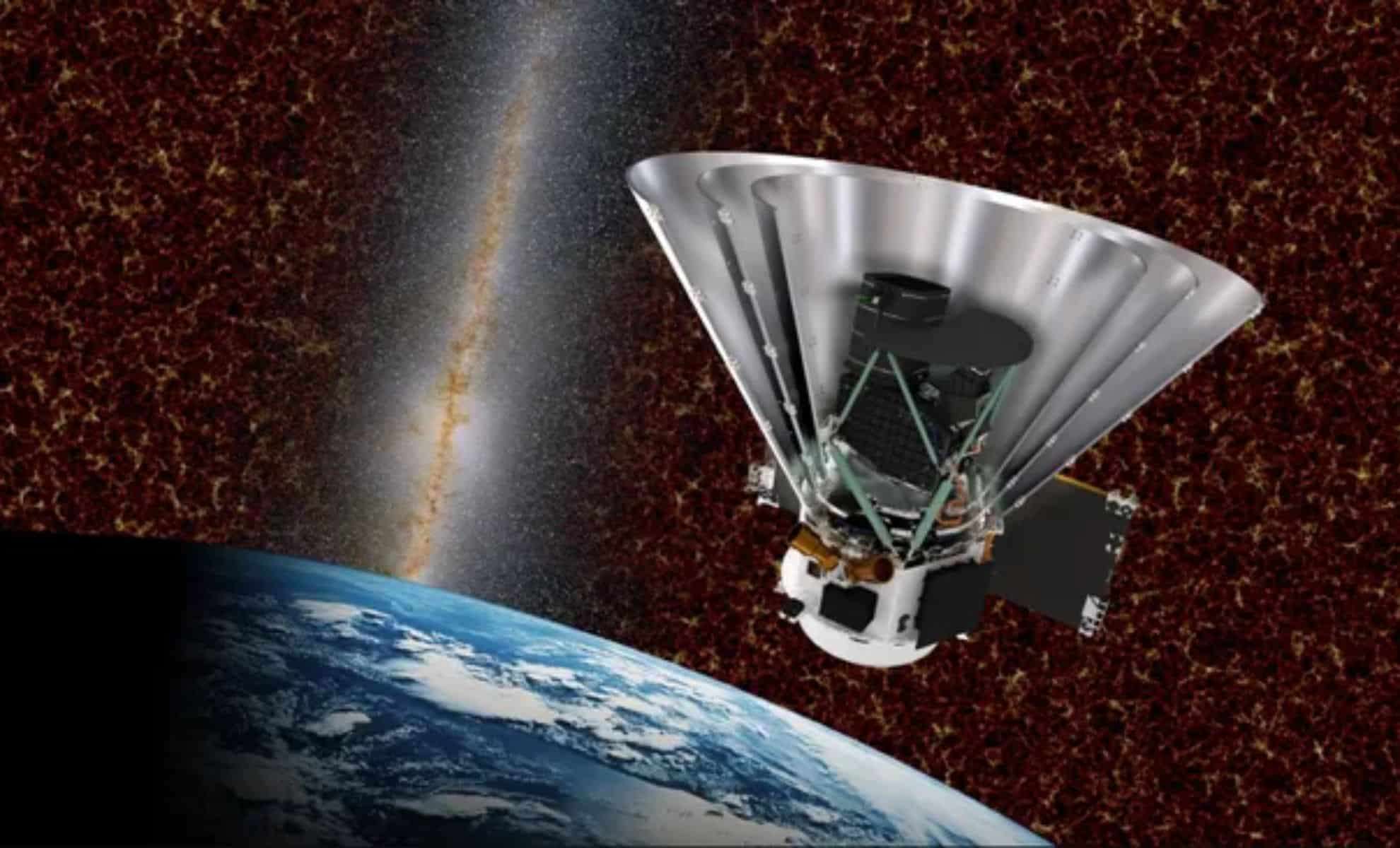
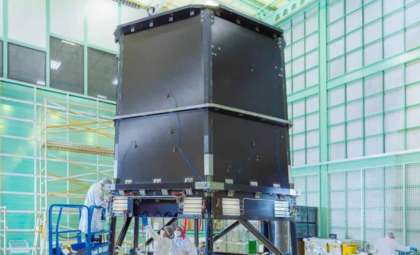
NASA is preparing to launch SPHEREx (Spectro-Photometer for the History of the Universe, Epoch of Reionization, and Ices Explorer), an innovative space telescope scheduled for lift-off in late February aboard a SpaceX Falcon 9 rocket. Unlike the James Webb Space Telescope (JWST), which targets detailed studies of specific cosmic objects, SPHEREx will perform a comprehensive infrared survey of the entire sky, mapping the universe in unprecedented detail.
The mission aims to produce a high-resolution infrared map that captures both optical and infrared wavelengths to reveal hidden cosmic structures, icy particles in interstellar space, and critical clues about the universe’s origins. This extensive survey will serve as a cosmic roadmap for astronomers, highlighting objects worthy of further scrutiny by JWST and other observatories.
SPHEREx is designed to operate for at least two years, scanning the sky biannually, and is expected to deliver valuable data on galaxy formation, cosmic inflation, and the ingredients for life.

Contrasting SPHEREx with JWST
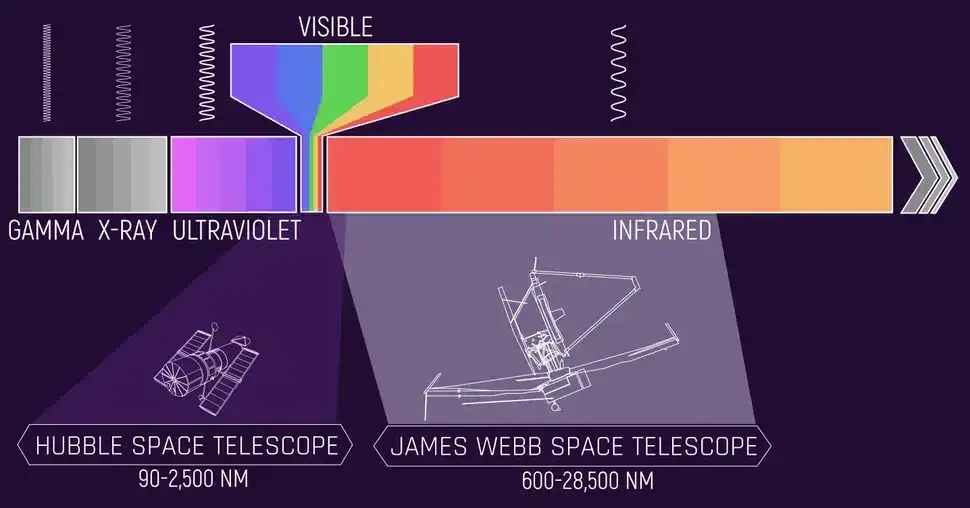
JWST has amazed the world with its incredibly detailed images of deep space, focusing on individual celestial targets. Conversely, SPHEREx adopts a broader perspective, capturing the whole sky in 102 unique infrared bands, an achievement never before attained.
“Capturing an image with JWST is like taking a portrait of a single person,” explained Shawn Domagal-Goldman, NASA’s Acting Director of the Astrophysics Division, “while SPHEREx and similar survey missions function like panoramic snapshots that encompass entire groups and surrounding environments.”
This expansive method enables researchers to:
- Discover extensive cosmic frameworks vital for understanding the universe’s expansion after the Big Bang.
- Chart the chemical makeup of interstellar space, tracking the origins and presence of water and organic molecules.
- Highlight promising targets for in-depth analysis by JWST and other future instruments.
In essence, SPHEREx will enhance JWST's capabilities by offering a comprehensive overview that informs astronomers on where to concentrate their investigations.
SPHEREx vs. JWST: Primary Features
Unlocking the Universe with SPHEREx
SPHEREx tackles a broad array of cosmic enigmas, spanning everything from the universe’s earliest seconds to detecting molecules associated with life.
Exploring Cosmic Inflation
A major goal of the mission is to examine cosmic inflation, the brief epoch following the Big Bang during which the universe experienced explosive growth. By generating a 3D map of over 300 million galaxies, SPHEREx will assist scientists in tracing the universe’s expansion history.
“Just fractions of a second after the Big Bang, the observable cosmos expanded dramatically,” noted Jamie Bock, SPHEREx lead investigator at Caltech. “What caused this rapid inflation remains a profound mystery.”
Detecting Water and Organic Compounds
The telescope will concentrate on vast interstellar territories where water and organic molecules drift through space. By studying these molecules, researchers aim to shed light on how essential life ingredients originated and dispersed throughout the galaxy.
By conducting sky scans every six months, SPHEREx will create a dynamic timeline of cosmic chemical distribution, potentially revealing how Earth acquired its own water and organic substances billions of years ago.
Charting Universe’s Large-Scale Structures
Surveying millions of galaxies, SPHEREx will provide insights into the evolution of cosmic structures and the impact of dark matter and dark energy on universal expansion.
“This unprecedented color-resolution survey will deepen our understanding of the cosmos,” said Nicky Fox, associate administrator of NASA’s Science Mission Directorate.
SPHEREx’s Role in Future Space Investigations
SPHEREx will join a suite of upcoming missions collaborating to probe the universe’s fundamental questions.
- JWST will focus on detailed follow-up of SPHEREx’s discoveries.
- The Vera Rubin Observatory, launching operations this year, will complement with surveys in other wavelengths.
- NASA’s OSIRIS-APEX mission will link asteroid analysis to SPHEREx’s chemical findings, exploring connections to the origins of life.
“No single mission can unravel all cosmic mysteries,” emphasized Domagal-Goldman. “The answers arise through the power of collaborative observations across multiple telescopes.”
Through its sky-wide mapping abilities, SPHEREx is poised to transform astronomy by delivering a comprehensive dataset that will steer astronomical research for many years ahead.
- Categories:
- Nasa










0 comments
Sign in to Comment