
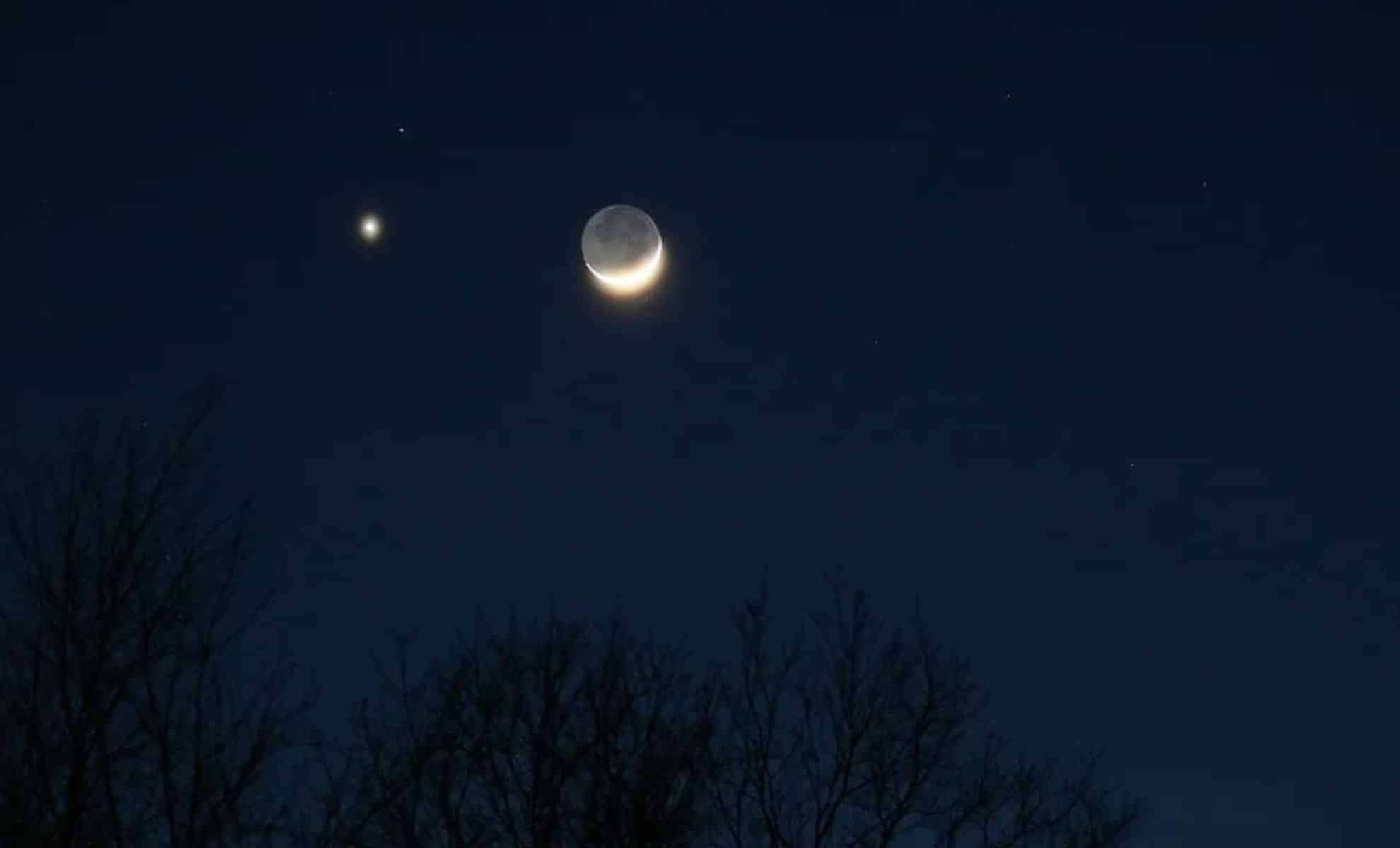
Tonight offers a unique glimpse of the solar system as a lineup of planets creates a dazzling show visible to the naked eye. In the coming weeks, Venus will fade out as it moves closer to the Sun’s glare, soon followed by Saturn, which will reach superior conjunction on March 12, 2025. Thereafter, only Mars and Jupiter will remain observable in the night sky.
If you’ve never had the chance to see such an impressive planetary alignment, tonight provides a rare occasion to witness multiple planets shining together without the use of telescopes. Similar celestial events happen every few years, but one as striking as this might not occur again for decades.
Whether you’re an avid stargazer or simply yearning to admire the splendor of the night sky, take a moment this evening to look upward—Venus and its planetary partners are staging a spectacular cosmic performance not to be missed.

Understanding This Exceptional Planetary Display
Experts consider the current planetary alignment one of the most remarkable in nearly half a century, offering an extraordinary chance to observe the solar system’s brightest planets in a single view. While alignments involving several planets arise approximately every three years, the clarity and brilliance of this configuration are particularly notable.
Six planets—Mars, Jupiter, Uranus, Neptune, Venus, and Saturn—are currently visible, yet only four—Mars, Jupiter, Venus, and Saturn—can be spotted unaided. Robin Scagell, vice president of the Society for Popular Astronomy, describes this rare view as the finest since April 1980, when a similar gathering of Venus, Jupiter, Saturn, and Mars amazed skywatchers.
What makes this event extraordinary is the chance to see several planets simultaneously, granting a breathtaking vista of our solar system’s key members. With Venus radiating at its peak, this cosmic show promises to be unforgettable.
Guidelines for Spotting Planets Tonight
The ideal time to observe is shortly after sunset. To locate the planets, cast your eyes toward distinct parts of the sky: Mars will be found low on the eastern horizon, Jupiter will hang high in the southeast, while Venus and Saturn glow near the western horizon but will set swiftly, so early viewing is essential.
For an unobstructed experience, find an open view facing west since Venus and Saturn will quickly disappear beneath the horizon. Jupiter will stay visible for a longer period, allowing ample time to admire its brightness.
Even if you’re in an urban area with light pollution, Venus’s dazzling glow should still be easy to identify, making it the evening’s most prominent attraction.
Venus Reaches Peak Brilliance
As reported by Forbes, tonight Venus will brighten to an impressive magnitude of -4.5, ranking it as the brightest object in the night sky aside from the Moon. This brilliance corresponds with Venus’s nearest approach to Earth along its 225-day solar orbit, making for a spectacular viewing opportunity.
Venus is consistently among the brightest evening objects, yet its luminosity varies as its distance from Earth shifts. The planet’s cycle involves first appearing in the evening, vanishing for a period, and later rising again before dawn.
Currently moving toward inferior conjunction, when it passes between Earth and the Sun, Venus’s glow will begin to dim over the next few weeks. By March 22, 2025, it will no longer be visible in the evening sky. Before this happens, binoculars or a small telescope will reveal Venus’s slender crescent phase—a rare and beautiful sight comparable to a Moon phase.
Additional Celestial Highlights for the Night
Besides the planetary parade, observers can enjoy several other stunning sky features, including:
- Orion’s Belt and the Orion Nebula, just beneath Jupiter, showcasing an active stellar nursery.
- The Pleiades star cluster, a dazzling assembly of young stars positioned to the right of Jupiter.
- The Gemini twin stars, which will be near Mars in the eastern sky.
On clear evenings, these cosmic wonders are visible to the naked eye, inviting everyone to explore the night sky’s beauty.
- Categories:
- News









0 comments
Sign in to Comment